10 Factors That Determine Duct System Performance
Here’s how to make sure duct systems are working at their highest potential
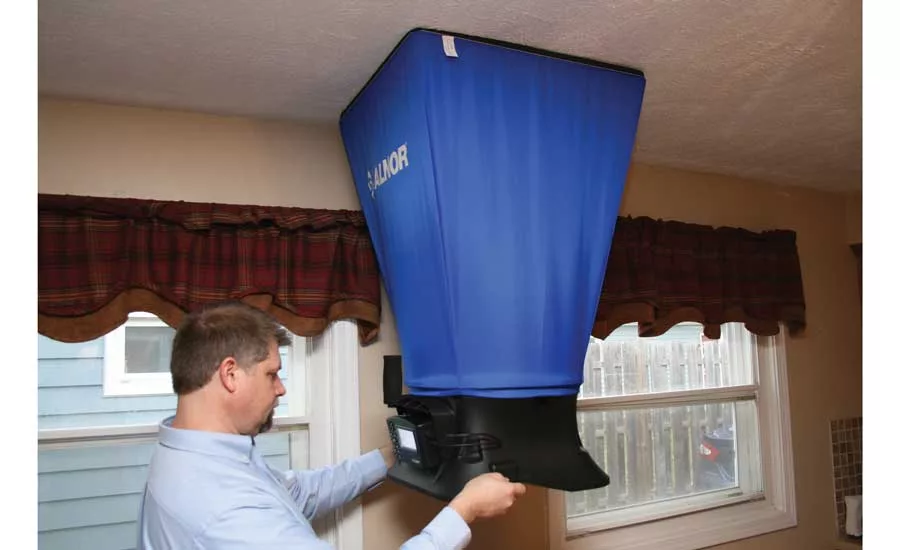
AIRHEAD: When your measured airflow is ±10 percent of design airflow, you can confidently proclaim that your duct design method works.
The duct system is one of the most important components of an HVAC system. High-performing HVAC systems reveal there are 10 factors that work together to determine duct system performance. If one of these factors is ignored, the overall HVAC system may fail to deliver the comfort and efficiency you implied to your customer. Let’s look at how these factors determine duct system performance and how you can ensure they are correct.
1. Fan Capacity
The indoor fan (blower) is where duct system performance starts. It determines how much airflow can ultimately be circulated through the duct system. If the duct is undersized or poorly installed, the fan can’t deliver required system airflow.
To ensure the fan is strong enough to move required system airflow, you’ll need to refer to the equipment’s fan table. This information is typically found in the manufacturer’s installation instructions or engineering data. Reference it to verify the fan can overcome the resistance to airflow, or pressure drop over the coil, filter, and duct system. You’ll be surprised what you can learn from equipment engineering information.
2. Indoor Coil and Air Filter
The indoor coil and air filter are two primary system components a fan must move air through. Their resistance to airflow has a direct impact on duct system performance. If they are too restrictive, they can drastically reduce airflow before it leaves the air-handling equipment.
You can reduce the chances of restrictive coils and filters with a little upfront work. Refer to the manufacturer’s coil information and select an indoor coil that delivers required airflow at the lowest pressure drop when wet. Select air filters that accommodate the health and cleanliness needs of your customers while maintaining a low pressure drop and face velocity.
To help you size your filters correctly, I would like to offer National Comfort Institute’s (NCI’s) “Filter Sizing Procedure.” If you would like a PDF copy, send me an email request.
3. Duct Design Methods
Proper duct design is the blueprint upon which a duct installation is built. It’s what the installed duct system should look like if all the pieces fit together as intended. If the design is incorrect from the start, duct system (and overall HVAC system) performance suffers due to improper airflow delivery.
Looking for quick answers on air conditioning, heating and refrigeration topics? Try Ask ACHR NEWS, our new smart AI search tool. Ask ACHR NEWS
Many professionals in our industry assume proper duct design automatically equals duct system performance — this simply isn’t the case. To verify your duct design method works, whatever it might be, you must measure the built system’s actual airflow. If measured airflow is ±10 percent of design airflow, you can confidently proclaim your duct design method works.
4. Duct Fitting Construction
Another consideration is duct fitting construction. Excessive turbulence from poorly constructed duct fittings reduces efficient airflow delivery and increases resistance the fan must overcome.
Duct fittings should allow gradual and smooth airflow turns. Avoid sharp and restrictive turns in your duct installations to improve their performance. A quick review of ACCA Manual D will help you decide which fitting configurations work best. The fittings with the lowest equivalent length allow for the most effective airflow delivery.
5. Duct Tightness
A tight duct system will keep the fan-circulated air inside the ducts. Leaky ducts decrease system performance and cause various issues, including IAQ and CO safety problems and decreased system capacity.
To keep it simple — any mechanical connection in a duct system should be sealed. If the connection doesn’t need to be tampered with, such as a duct or pipe connection, mastic works great. If the mechanical connection has a component behind it that might need future service, like an indoor coil, use a sealant that is easily removable. Don’t be the person who mastics access panels to the air-handling equipment.
6. Volume Dampers
Once air is contained inside the duct system, you need a way to control it. Volume dampers allow you to control the airflow’s path and are essential to a well-performing system. A system without volume dampers allows air to take the path of least resistance.
It’s unfortunate that many designers consider these accessories unnecessary and leave them out of many duct system installations. The right approach is to insert them in the supply and return duct branches, so you can balance airflow into and out of a room or area.
7. Duct Insulation
Up to this point, we have only looked at the air side. Temperature is another duct system performance factor that cannot be ignored. A duct system that lacks insulation cannot deliver the proper amount of heating or cooling to the conditioned space.
Duct insulation maintains air temperatures inside ducts so the temperature leaving the equipment is close to what the customer feels at the supply register.
Insulation that is installed incorrectly or has a low R-value will fail to prevent temperature-related duct losses. If there is more than a 3°F temperature difference between equipment leaving temperature and the farthest supply register temperature, the ducts probably need more insulation.
8. Supply Registers and Return Grilles
Supply registers and return grilles are an often forgotten part of duct system performance. Typically, designers use the most inexpensive registers and grilles. Many assume their only purpose is to cover the rough openings from the supply and return ducts, but they do so much more.
Supply registers control the delivery and mixing of conditioned air into a room. Return grilles don’t influence air movement but are important from a noise perspective. Make sure they don’t hum or sing when the fan is running. Refer to grille manufacturer information and choose registers that best fit the airflow and room you’re trying to condition.
9. Installation Techniques
The biggest variable that determines duct system performance is how well the ducts are installed. The perfect system will fail miserably if it isn’t installed correctly.
Attention to detail and a little planning go a long way to ensure installation techniques are correct. It blows guys away when they see how much airflow is gained from a flexible duct just by removing excess core and kinks and adding suspension. The knee-jerk reaction is to blame the product instead of the installation procedure used. This leads us to the 10th factor.
10. Verification
To guarantee successful duct system design and installation, it must be verified. This is done by comparing design data to data measured after the system is installed. Individual room airflow measurement into the conditioned space and duct system temperature change are two essential measurements you’ll need to gather. Use them to determine delivered Btu into the building and verify design conditions are met.
If you rely on your design methods to assume the system operates as it should, it will probably come back to haunt you. Heat loss/gain, equipment selection, and duct design calculations were never intended to guarantee performance — don’t take them out of context. Instead, use them as a target for what your installed system field measurements should be.
DON’T FORGET MAINTENANCE
Duct system performance can degrade over time if it isn’t maintained. Consider how the couch placed against the sidewall return or the duct damage caused by the cable guy can destroy airflow — how do you catch this?
Start measuring and recording static pressure on every call. Once a duct system has been verified for proper operation, this recurring step lets you keep tabs on any changes. It keeps you connected to the air side and causes you to look deeper at issues that reduce duct system performance.
BE AN AIRHEAD
This high-level view of how these 10 factors work together to determine duct system performance is intended to get your thoughts churning.
Be honest and ask yourself: Which of these factors are you paying attention to and which ones do you need to focus on?
Airflow is one of the most important yet misunderstood aspects of our industry.
Study these duct system factors one at a time and, slowly, you’ll become an airhead. Implement them into your installations, and you’ll achieve results that few others can match.
Publication date: 5/27/2019
Want more HVAC industry news and information? Join The NEWS on Facebook, Twitter, and LinkedIn today!
Looking for a reprint of this article?
From high-res PDFs to custom plaques, order your copy today!