Colorado’s 2026 clean air law, while reducing pollution, inadvertently sidelines propane water heater users, sparking urgent calls for legislative relief.
Heating, Air-conditioning & Refrigeration Distributors International, the Plumbing-Heating-Cooling Contractors–National Association, and the Natural Gas Association of Georgia argue that the efficiency standards would undermine statutory protections of consumer choice and access to affordable, reliable heating options.
A federal court has upheld the Department of Energy’s furnace efficiency rule, requiring all new residential furnaces manufactured after 2028 to be 15% more efficient than today’s models. The DOE says the move will save consumers an average of $350 over the life of their equipment while cutting emissions equivalent to shutting down two dozen gas power plants.
The DOE rule requires the elimination of “all non-condensing natural gas furnaces,” which could force consumers to spend thousands of dollars to be in compliance.
U.S. Senator Ted Cruz is leading the charge to assist HVAC contractors in pushing back on the final rule on gas furnace efficiency standards from the U.S. Department of Energy (DOE).
The rule will effectively ban the sale of non-condensing gas furnaces and, according to the American Gas Association (AGA), will affect 55% of U.S. households.
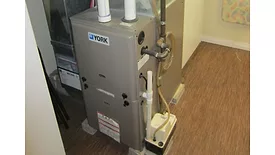
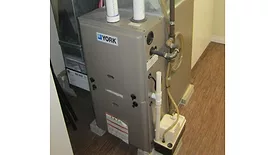
Taking a look at the major concerns around replacing an 80% furnace with a high-efficiency one such as venting requirements, drilling extra holes, and financial costs.
The final rule from the U.S. Department of Energy, issued recently, requires newly manufactured indoor residential gas furnaces to be at least 95% efficient starting in December 2028, meaning furnaces made after then will have to be condensing models.
A Google search for terms like “furnace” or “heat pump” will yield information on how the system works and its efficiency, plus side-by-side comparisons and, if applicable, available financial incentives that can defray the consumer’s costs.