ACHR News
search
Ask ACHR NEWS AI
cart
facebook twitter instagram linkedin youtube
  • Sign In
  • Subscribe
  • Sign Out
  • My Account
ACHR News
  • NEWS
    • Breaking News
    • New HVAC Products
    • Featured Products
    • Manufacturer Reports
    • HVAC Data
    • Legislation
    • ACHR NEWS Centennial
  • RESIDENTIAL
    • Air Conditioners
    • Furnaces
    • Residential Heat Pumps
    • Ductless
    • Residential IAQ
    • Testing, Monitoring, Tools
    • Components & Accessories
  • COMMERCIAL
    • Air Handlers
    • Rooftop Units
    • Chillers and Cooling Towers
    • Commercial Heat Pumps
    • Boilers and Hydronics
    • VRF/Ductless
    • Commercial IAQ
  • REFRIGERATION
    • Refrigerants
    • Refrigerant Regulations
    • Leak Management
  • CONTRACTOR PRO
    • Geothermal
    • Homeowner Study
    • VRF and VRV Ductless
    • Unitary Trends
  • EDUCATION
    • Training and Education
    • Business Management
    • Service and Maintenance
    • Continuing Education
    • Market Research >
      • HVAC Brand Awareness Report
      • VRV, VRF, VRVZ Report
      • Unitary Trends Report
      • Water Heat Professionals Report
    • Webinars
    • Sponsor Insights
    • eProducts Info
    • White Papers
  • EVENTS
    • HVAC Contractor Forum
    • Industry Events and Webinars
  • MEDIA
    • Videos
    • AHR Expo 2025 Videos
    • Podcasts >
      • ACHR News Podcast
      • HARDI Podcasts
      • AHR Expo Podcasts
      • ACCA Podcasts
    • Interactive Spotlights
    • Quizzes
    • eBooks
    • HVAC Talkback
  • HVAC GROUP
    • ACHR NEWS >
      • Current Issue
      • Digital Edition
      • Subscribe
    • Distribution Trends
    • SNIPS NEWS >
      • Join SNIPS NEWS
    • Engineered Systems News >
      • Join ES News
    • HVACR Directory
    • Contests
    • Newsletters
    • Contact
    • Advertise
    • My Account
NewsHVAC Residential MarketGuest ColumnFurnaces

How a Condensing Gas Furnace Works

Home modifications necessary for conversions will add to costs
By Lianna Schwalenberg
Gas Furnace Diagram
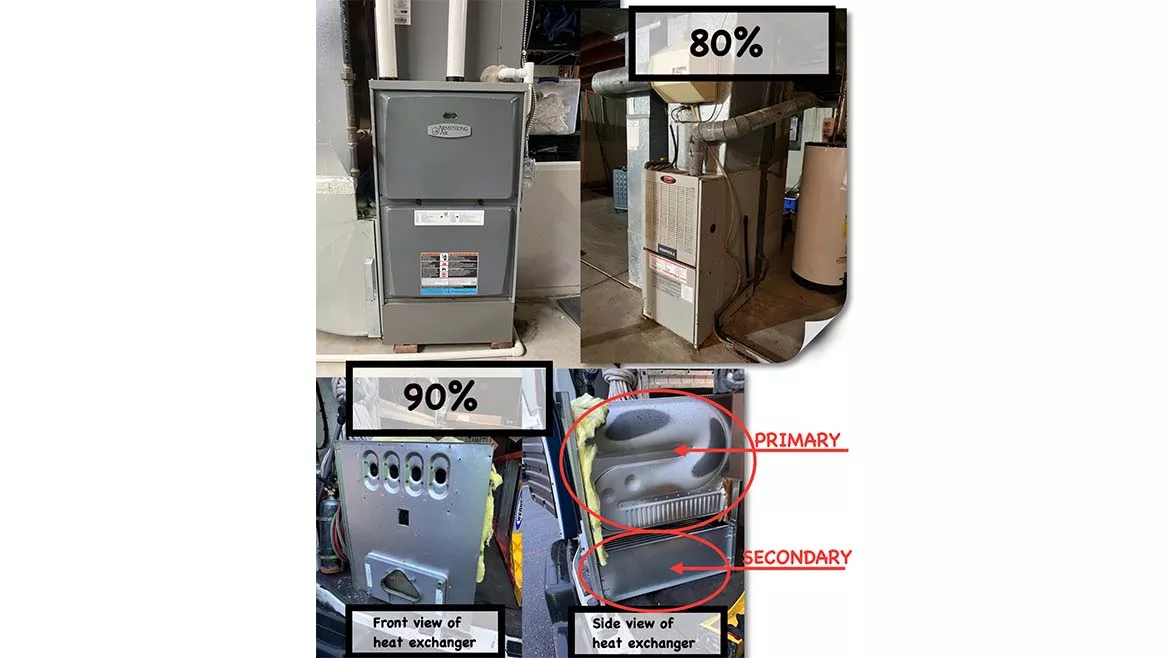
FURNACE CONCERNS: High-efficiency gas furnaces, also called “condensing gas” furnaces, produce a higher AFUE rating because while they use the same amount of fuel supplied as an 80% furnace, they can deliver between 10-18% more heat. (Courtesy of Lianna Schwalenberg)
January 14, 2024

Newly-manufactured indoor residential gas furnaces will have to be at least 95% efficient starting in late 2028 under a new rule issued by the U.S. Department of Energy (DOE).

READ MORE ABOUT

• Furnaces

• High-Efficiency Furnaces

• Furnace Standards

In an effort to save consumers an estimated $1.5 billion annually in utility costs and cut carbon emissions by 332 million metric tons over 30 years, the DOE is requiring every new residential, non-weatherized gas furnace, and every mobile home gas furnace, to have a minimum annual fuel utilization efficiency (AFUE) of 95%.


Concerns for the New Furnace Rules

Critics in the HVAC industry express concern that the DOE has not properly evaluated the true costs to consumers, as these types of furnaces usually require significant home modifications. To thoroughly understand these concerns and evaluate the cost of a high-efficiency furnace, it is imperative to first understand what a high-efficiency gas furnace looks like, how it works, and how it compares to the current standard of 80% AFUE gas furnaces.

High-efficiency gas furnaces, also called “condensing gas” furnaces, produce a higher AFUE rating because while they use the same amount of fuel supplied as an 80% furnace, they can deliver between 10-18% more heat.

How do they do this? The main trick up the sleeves of a condensing gas furnace is the ability to cool off what would be exhaust, also referred to as “flue,” gas and put that extra heat into the house. However, along with this added efficiency comes home modifications, which are necessary to the operation of a condensing gas furnace when converting from an 80%. This, as many homeowners are becoming aware, is costly.

“Major concerns for replacing an 80% furnace with a high-efficiency furnace are as follows: venting requirements, drilling extra holes in the house to the outside, and condensate water management, which can add significant financial costs and inconveniences to the homeowner.”
- Lianna Schwalenberg
HVAC technician
The K Company

Secondary Heat Exchanger, The Key Component

All high-efficiency condensing gas furnaces have the unique feature of two heat exchangers — a primary and secondary — whereas the mid-efficiency furnace only has one. The primary heat exchanger is the set of serpentine-shaped tubes off the burner section, and the secondary heat exchanger — the key component of a condensing gas furnace, which is made up of many tiny fin-tubes in a collector box — is located behind the inducer assembly. It might confuse some because the return air from the blower hits the secondary heat exchanger first, then the primary heat exchanger.

After natural gas ignites in the burner section, the hot combustion gas travels through the primary heat exchanger and then into the secondary before exiting out of Category IV flue pipe, which is made of Schedule 40 PVC and designed for positive-pressure, cooler gas. This PVC exhaust piping is the main visual cue that a furnace is a high-efficiency one. In contrast, mid-efficiency furnaces use metal pipe, which allows the flue gas to remain hot and under a negative pressure, which forces the gas to draft upwards and out of the house, usually through a chimney. In the process of exchanging heat twice, the high-efficiency furnace will, quite simply, produce more heat than a standard furnace while using the same amount of fuel supplied.

Looking for quick answers on air conditioning, heating and refrigeration topics? Try Ask ACHR NEWS, our new smart AI search tool. Ask ACHR NEWS →

The problems arise because as more heat is removed from the combustion gas, the gas will condense (hence the name) in the form of highly acidic water. This is why the flue pipe of a high-efficiency furnace must be PVC. The flue gas is significantly cooler than a mid-efficiency furnace flue, so any acidic condensation occurring inside of PVC flue piping will not damage the plastic pipe.

Major concerns for replacing an 80% furnace with a high-efficiency furnace are as follows: venting requirements, drilling extra holes in the house to the outside, and condensate water management, which can add significant financial costs and inconveniences to the homeowner.


Venting Requirements

One problem many homeowners run into with high-efficiency conversions is the so-called “orphaned,” or stranded, domestic hot water heater. Thirty years ago, masonry chimneys were designed to vent exhaust gasses from both the furnace and the hot water tank. Because the acidic condensate from the high-efficiency flue gas would damage the mortar, it is recommended to vent this type of flue out the side of the house, as chimneys usually require over 10 feet of pipe fed from the top and might require many bends in the pipe to get to, making it a highly impractical method of venting. When the flue pipe is converted from the chimney to the side of the house, the hot water tank is stranded, meaning its flue is the only gas traveling up the chimney. When this happens, it becomes significantly more difficult for the hot water tank’s exhaust gasses to draft and make it outside. When a hot water tank is stranded, a chimney liner must be dropped to reduce the size of the chimney and allow for the hot water tank’s gas to properly draft upward and out of the house


Drilling Holes in the House

When it comes to combustion, for mid- and high-efficiency gas furnaces, the combustion air needs to be pulled in, and it needs to be exhausted out. High-efficiency furnaces are typically what is referred to as “sealed combustion,” meaning the combustion intake air does not mix with the indoor air. It is pulled in from outside, used during the combustion process, then exhausted back outside. This means that typically two new holes must be drilled to the exterior wall for intake and exhaust, unless the furnace can pull combustion air from a ventilated — meaning, has access to outdoor air — attic or crawlspace, or depending on the type of vent termination, one hole can accomplish both. Though technicians will find residential furnaces out there using intake air directly from the basement (i.e., no outside air), most manufacturers recommend using outdoor air to prevent the furnace from using a significant amount of oxygen from the home. Mid-efficiency furnaces got away with using indoor air for combustion because homes were not sealed as they are today and could thus more easily suck in air from cracks and crevices. Running new exhaust pipes might also raise concerns for homes where the furnace is located in an area with finished ceilings.


Condensate Water Management

The final major concern for converting to a high-efficiency furnace is how to manage the corrosive condensate water. For every 100,000 BTU/hr of heat input, a condensing gas furnace will make roughly 1 gallon of water per hour. In other words, a 120,000-BTU furnace running for 8 hours a day will create about 10 gallons of water. This water must be able to flow out of the furnace and into a plastic drain, which involves proper piping techniques and a slight pitch forward with the furnace. If the homeowner lives in an area with metal drain pipes, the condensate must be neutralized before entering metal pipes. And again, this drain piping could be problematic for homes with finished basements.


Understanding the Added Costs

While there are many benefits to converting to a high-efficiency furnace, namely the fuel cost savings and the positive environmental impacts, consumers and technicians alike must concern themselves with the additional home modifications for a high-efficiency furnace to work properly. They need proper venting; at least one — and possibly two — holes drilled into the exterior wall; and the acidic condensate water must be treated or managed properly, which includes good piping practices to remove all condensate from the furnace. Proper estimations of the true cost savings of a high-efficiency furnace must consider these factors which vary widely from home to home.

KEYWORDS: condensate management condensing furnaces furnace efficiency furnace standards gas furnaces high-efficiency furnace natural gas ventilation control

Share This Story

Looking for a reprint of this article?
From high-res PDFs to custom plaques, order your copy today!


Lianna schwalenberg
Lianna Schwalenberg is an HVAC service technician at The K Company, located in Akron, Ohio. She specializes in residential service, but helps out with maintenance and repairs in commercial settings as needed.

Recommended Content

JOIN TODAY
To unlock your recommendations.

Already have an account? Sign In

  • HVAC-enrollment

    The Trades Are Back: HVACR Programs See Nearly 30% Enrollment Spike

    A new wave of future technicians is entering the pipeline.  
    News
    By: Matt Jachman
  • 2025 Top 40 Under 40

    2025 Top 40 Under 40 HVACR Professionals List

    The 11th annual Top 40 Under 40 list highlights those...
    HVAC Commercial Market
    By: Hannah Belloli-Oster
  • LG Ductless Mini-Split Systems

    The 9 Types of Heat Pumps

    As the U.S. moves toward electrification, heat pumps are...
    Ground Source Heat Pumps
    By: Joanna R. Turpin
Subscription Center
  • Create an Account
  • Start a Subscription
  • Manage My Account
  • Sign Up for Newsletters
  • Visit Customer Service
  • Update Preferences

More Videos

Sponsored Content

Sponsored Content is a special paid section where industry companies provide high quality, objective, non-commercial content around topics of interest to The News audience. All Sponsored Content is supplied by the advertising company and any opinions expressed in this article are those of the author and not necessarily reflect the views of The News or its parent company, BNP Media. Interested in participating in our Sponsored Content section? Contact your local rep!

close
  • Piggy Bank
    Sponsored byWatercress Financial

    Energy Prices, Inflation, and HVAC: What Today’s Homeowners Care About

  • Refrigerated Food
    Sponsored bySolstice Advanced Materials

    R-455A Refrigeration: A Cold Storage Solution for the Future

  • Airex Rooftop Units
    Sponsored byAirex Manufacturing Inc

    Consolidating Roof Penetrations: A Growing Trend in Multifamily HVAC Design

Popular Stories

Refrigerants-and-gauge.jpg

HVAC Industry Warns of Counterfeit Refrigerants Entering U.S. Supply Chain

U.S. Supreme Court building

95% Furnace Efficiency Rule to Get New Hearing

Data_Center_facility.jpg

HVAC Manufacturers Respond to Growing Data Center Backlash

Midea-training.jpg

HVAC Workforce Crisis Expands Beyond Technicians to Instructor Shortages

HVAC Minute retail refrigeration system

EPA Final Rule’s Impact on R-410A Deadlines

View The ACHR NEWS
Centennial Anniversary Timeline

The ACHR News Timeline Chart
Submit a Letter
Submit a letter to our editors.

Events

November 6, 2025

Next-Gen Data Center Cooling: HVAC Innovation and Real-World Solutions

On Demand As AI workloads and high-density computing push traditional cooling methods to their limits, the data center industry is accelerating the adoption of next-generation HVAC technologies.

June 23, 2026

HVAC Duct Sealing Mastics: Why Selection Matters

In this webinar we will detail what HVAC material buyers and technicians need to know when selecting duct mastics, including matching mastic to substrate, alternatives to liquid mastic, and where UL 181 Listings fit into real world installations.

View All Submit An Event

Poll

Summer Staff

Are you fully staffed for the summer season?
View Results Poll Archive

Products

BNI Mechanical/Electrical Square Foot Costbook, 2026 Edition

BNI Mechanical/Electrical Square Foot Costbook, 2026 Edition

See More Products
HVAC Duct Sealing Mastics: Why Selection Matters - Free Webinar - 6/23/2026

Related Articles

  • Bryant Heating & Cooling Systems: Condensing Gas Furnace

    See More
  • Carrier Corp.: Condensing Gas Furnace

    See More
  • Bryant: Condensing Gas Furnace

    See More

Related Products

See More Products
  • The ACHR News - February 2, 2026

    ACHR NEWS February 2, 2026, Issue

  • ghpm.png

    Gas Heating: Furnaces, Boilers, Controls, Components

See More Products

Events

View AllSubmit An Event
  • July 16, 2025

    Let’s Talk: Condensing Equipment, (Acidic) Condensate, and the Code

    On Demand During this webinar, we will define what acidic condensate is, illustrate how it’s formed in today’s high-efficiency, gas-fired heating appliances, and hit on the damage it can cause if not treated.
View AllSubmit An Event

Related Directories

  • Velocity Boiler Works

    Velocity Boiler Works manufactures high-quality residential and commercial gas fired condensing and non-condensing boilers, oil boilers, indirect water heaters, buffer tanks and oil-fired warm air furnaces.
  • Howe Corp.

    Howe manufactures flake ice making equipment for use with virtually any refrigerant including natural such as R-744, and R-717, Ice storage bins, Condensing units for our ice flakers.
  • A-Gas

    A global leader in the supply and lifecycle management of refrigerants, offering a range of products and services, including recovery, buyback, reclamation, separation, and destruction.
×

Sign Up. Stay Informed.

The #1 trusted source for the HVACR industry since 1926

SUBSCRIBE
  • RESOURCES
    • Advertise
    • Contact Us
    • Advisory Board
    • Classifieds
    • Submit a Letter
    • Directories
    • Store
  • ACCOUNT CENTER
    • Create an Account
    • Start a Subscription
    • Manage My Account
    • Sign Up for Newsletters
    • Visit Customer Service
    • Update Preferences
  • SERVICES
    • Marketing Services
    • Reprints
    • Market Research
    • List Rental
    • Survey/Respondent Access
  • STAY CONNECTED
    • LinkedIn
    • Facebook
    • Instagram
    • YouTube
    • X (Twitter)
  • PRIVACY
    • PRIVACY POLICY
    • TERMS & CONDITIONS
    • DO NOT SELL MY PERSONAL INFORMATION
    • PRIVACY REQUEST
    • ACCESSIBILITY

Copyright ©2026. All Rights Reserved BNP Media, Inc. and BNP Media II, LLC.

Design, CMS, Hosting & Web Development :: ePublishing