DOE Upholds Furnace Efficiency Standard Set to Cut Consumer Costs
New rule to lower heating bills and carbon emissions by phasing out non-condensing models
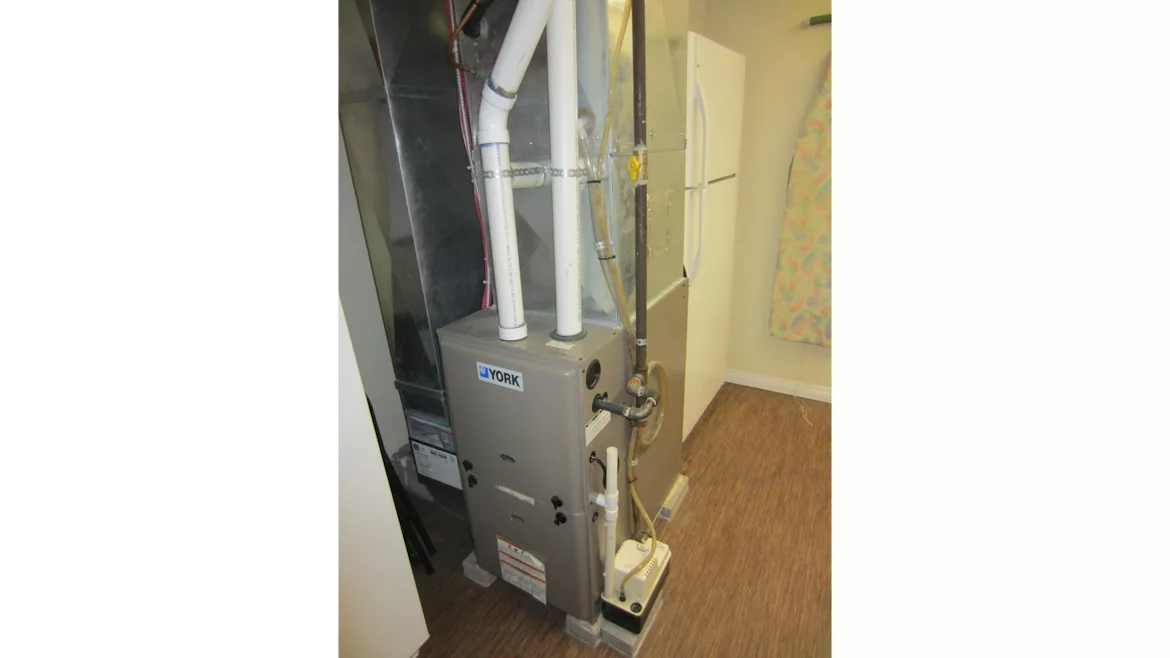
FUTURE: The new standard means non-condensing furnaces and commercial water heaters will likely cease production in the coming years.
A new federal standard for furnaces will require new furnaces to use about 15% less energy than today’s models — similar to the requirements Canada has had since 2010. The standard, taking effect in 2028, is also set to reduce average household utility costs by $350 over the equipment’s lifecycle — cutting average annual heating bills for consumers by about $50 per year. According to the U.S. Department of Energy (DOE) this efficiency standard will also cut 332 million metric tons on carbon dioxide emissions from the furnaces sold over 30 years and also reduce emissions of nitrogen oxides — an equivalent of shutting off 24 gas power plants by midcentury.
“This means non-condensing furnaces and commercial water heaters will likely cease production in the coming years,” said Alex Ayers, vice president of government affairs at the Heating, Air-Conditioning & Refrigeration Distributors International (HARDI) in a recent release on the subject. “The American Gas Association and its co-petitioners can appeal the decision, and the Trump Administration may try to bypass the anti-backsliding provision to repeal the rule.”
Other than a slight update made by the DOE in 2007, before this recent furnace efficiency standard, they hadn’t really been updated since its 1987 inception.
The court’s decision to uphold the 2028 ban on non-condensing furnaces could pose serious challenges for contractors and consumers alike. Sean Robertson, vice president of membership, advocacy and events at The Air Conditioning Contractors of America (ACCA), said retrofitting older homes and multifamily buildings to install condensing models can be costly, technically difficult, or even impossible under current building codes — and particularly burdens low-income households.
“ACCA members identified reversing this ban as a top policy priority as part of our broader commitment to protecting fuel and technology choice, so we urge Congress and the Trump Administration to explore all possible avenues to prevent this ban from taking effect,” Robertson said.
Robertson added that instead of limiting consumer options, policymakers should focus on incentivizing proper system design and verified installation practices.
“Instead of forcing homeowners to spend thousands on costly structural modifications or inefficient resistance coils, policymakers should incentivize proper system design and installation verified to comply with the ACCA 5 Quality Installation standard,” said Robertson. “Homeowners will get more bang for their buck considering a full range of performance improvements for their homes rather than one-size-fits-all equipment mandates.”
Looking for quick answers on air conditioning, heating and refrigeration topics? Try Ask ACHR NEWS, our new smart AI search tool. Ask ACHR NEWS
According to an Appliance Standards Awareness Project (ASAP) fact sheet, federal law requires the DOE to periodically review the standards of furnaces and other products. And in 2014, under a court-approved settlement, the DOE was required to finalize a new furnaces standard by 2016.
“This upholds long-awaited standards that will save households money on their heating bills while reducing pollution,” said Andrew deLaski, executive director of ASAP, in a National Consumer Law Center (NCLC) release. “Ensuring new furnaces are more efficient may disappoint some gas utilities, but it’s a triumph for consumers.”
In the same release, Berneta Haynes, senior attorney with NCLC was quoted, “The court has affirmed the Department of Energy’s effort to reduce gas heating bills for everyday Americans. Those who rent will especially benefit because the standards will end the sale of very inefficient heating systems that are often installed in rented homes.”
Many consumers have already made the switch — according to ASAP, about half of new purchases are already condensing models. The DOE projects this will continue, and the vast majority of consumers who might’ve purchased a non-condensing unit otherwise, will now instead purchase a condensing one.
“About one in twenty households will choose to switch to a heat pump rather than a condensing furnace,” the ASAP fact sheet said. “With electricity generation becoming cleaner in much of the United States, heat pumps can be a great option to further reduce climate emissions and, for some consumers, ease heating bills.”
As for what this means for distributors, Ayers said they can continue selling existing inventory because both rules are based on the date of manufacture, with no sell-through or installation deadline. Starting December 18, 2028, all residential furnaces made must meet a 95% AFUE (or higher) efficiency. Beginning October 6, 2026, all commercial gas storage water heaters must reach 95% thermal efficiency, and commercial instantaneous models must achieve 96% efficiency.
Looking for a reprint of this article?
From high-res PDFs to custom plaques, order your copy today!