Demand Controlled Ventilation (DCV) is a control strategy which aims to vary the amount of ventilation air a system provides a space based on the real-time ventilation requirements (i.e. the ventilation demand) of the space.
These six case studies, covering just the last three years, illustrate how bad second-order effects can get when there are problems with the bypass pipe’s balancing valve.
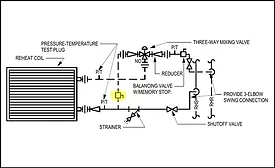
Bypass pipes, accompanied by a three-way control valve, are often seen in hydronic systems at both served loads (e.g., reheat coils) as well as at primary equipment (e.g., cooling towers).
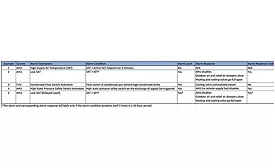
April’s column kicked off a series that dove deep into the concept of building automation system (BAS) alarms. That series was supposed to end last month, but in the process of writing those articles, I realized I have more to say on the topic. So here is my victory lap!
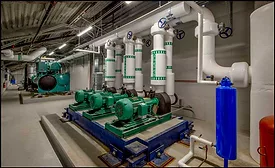
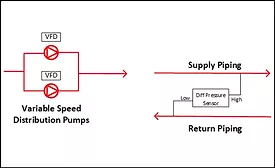
If a system was designed to operate in lead/lag, but lead/standby was implemented, it would not be able meet the flow requirements during the highest load periods.
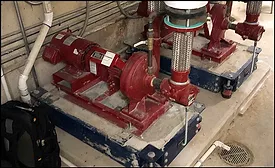
If a system was designed to operate in lead/lag, but lead/standby was implemented, it would not be able meet the flow requirements during the highest load periods.