Proper Alarm Suppression Reduces Nuisance Alarms
There are many instances in which alarm suppression is the best response.
[Ignatiev]/[iStock / Getty Images Plus] via Getty Images
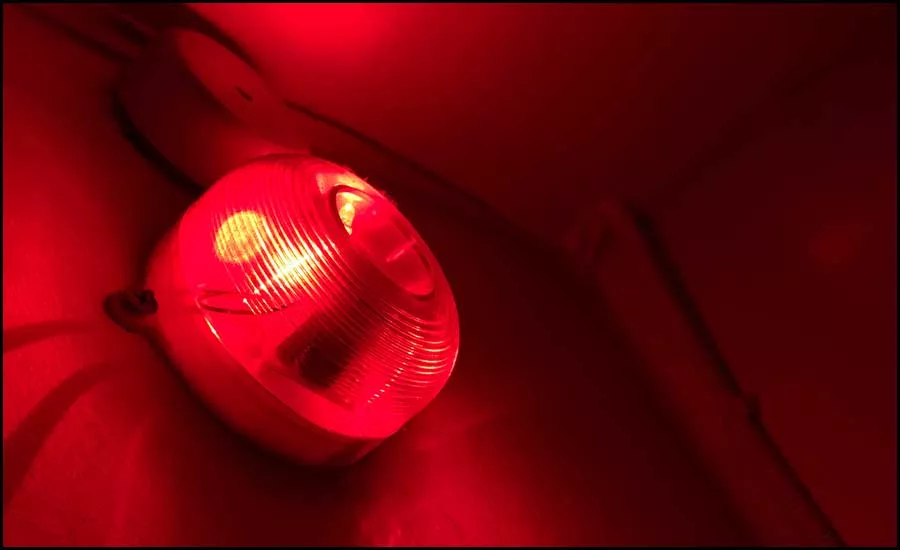
The past two columns have discussed building automation system (BAS) alarm saturation. Building operators are often inundated with too many alarms. This results in alarms being ignored, critical ones not identified and addressed in a timely manner, and even decision paralysis. Many of these alarms are unnecessary and are commonly referred to as “nuisance alarms.” One of the reasons for the quantity of nuisance alarms experienced is a lack of alarm suppression; that is the suppression of an alarm in instances when the alarm condition is expected to be experienced.
Appropriate Applications of Alarm Suppression
Below are some common examples of when alarm suppression should be considered. They are listed in order of increasing complexity and may not all be appropriate for every project.
1. When the System is Off
- If a chilled water system is disabled, it may be expected the chilled water supply temperature will rise above a high-limit alarm threshold. There is no benefit to generating an alarm in such an instance.
- This would be akin to someone yelling at you about your poor standing posture when you are sleeping.
2. When the System is Just Getting Going
- When a chilled water system is first enabled, it may take a bit before the chilled water supply temperature drops below the high-limit alarm threshold. Such alarms should be suppressed for a period after the system is initially enabled.
- A similar example of this would be when the building HVAC system is working to bring space temperatures back to their occupied set points during a warm-up or cool-down period prior to occupancy. Space temperature alarms should be suppressed during such times.
- This would be akin to someone yelling at you about poor standing posture while you are in the act of rising out of bed.
3. After an Adjustment to a Set Point
- Space temperature alarms are often configured to have the alarm threshold tied to the current space temperature set point (e.g., if space falls 5°F below the active heating set point, an alarm will be generated). The alarm should be suppressed for several minutes following an adjustment to the space temperature set point, especially if a wide range of set point adjustment is allowed.
- This is akin to someone being proud of your good sitting posture, but then they ask you to stand, and while you are in the act of standing up, they yell at you for poor standing posture.
4. Hierarchical Alarm Suppression1
- If a boiler plant (i.e., the source of heat) goes down, it would be nice to get alarms regarding that. Getting resultant low-temperature alarms for all the loads it serves (e.g., AHUs and spaces) will only bog down the building operator. It would be expected that the failed boiler plant is the reason the served loads are alarm. Suppressing such downstream alarms requires substantial amounts of programming. However, hierarchical alarm suppression is expected to be seen more often as ASHRAE Guideline 362 continues to be adopted.
- This is akin to someone yelling at you about poor posture, the day after you had an appendectomy.
Why Alarm Suppression is Lacking
So why is there a lack of suppression in so many of the configured alarms on building automation systems? Listed below are some of the root causes.
-
Lack of specification in the contract documents
- It is common, and understandable, that many specifying engineers think examples 1 and 2 listed above are inherently implied. Why should they have to spell it out in such detail? I don’t disagree. However, I have seen these items missed many times. So please, to the design engineers out there, include it in your sequences. It makes the job of the commissioning provider easier when they have a contractual requirement to hold the contractors accountable to, and it improves the chances of such suppression actually being implemented.
-
It is more programming, sometimes substantially so
- As described before, the examples listed above are ordered in increasing complexity. Many in the industry, to include specifying engineers, would consider examples 3 and 4 above as overkill. There are many projects in which I would agree. But for clients with large portfolios of building systems, where facility staff are responding to hundreds if not thousands of alarms a day, going the extra mile with alarm suppression can substantially improve facility operations.
-
Controls technicians are very proficient at identifying nuisance alarms.
- Here is a common situation that occurs during functional testing:
-
An unexpected alarm comes in
- An unexpected alarm comes in.
- The commissioning provider asks the temperature controls technician why the alarm was generated.
- The temperature control technician pulls up the code and quickly provides a very logical explanation as to why the alarm was a nuisance alarm.
- The alarm may have been generated due to some ongoing construction effort. As such, there is no sense investigating any further. But that is not the point. The point is control technicians have access to deeper levels of the BAS than your typical commissioning provider or building operator. Additionally, they should be able to decipher their code better than the rest of us! Thus, they can identify nuisance alarms much quicker than the rest of us. Because of this skill set, many controls technicians don’t understand the push by others for more alarm suppression logic (which takes more of their time and effort). This push is looking out for those who have spent far too much time tracking down these red herrings. Commissioning providers are well positioned to explain why better alarm suppression is necessary to improve the lives of the future building operators who take over these systems.
-
Confusing alarm suppression with alarm delay
- On a recent project, all the examples of alarm suppression listed above were specified to varying degrees. During functional performance testing, it became apparent examples two and three for space temperature alarms were not actually programmed. The technician had configured the space temperature alarms, but felt such suppression was not needed as they had made the alarm delay an adjustable value. To clarify, for the space temperature alarm to generate, an alarm threshold needs to be exceeded for a set duration known as the alarm delay. The assumption by the technician than an adjustable alarm delay alone should suffice, was incorrect. For example, if spaces in the building utilizes aggressive nighttime setback, it may take up to two hours to raise such space temperature from unoccupied value to the occupied set point. Whereas an appropriate delay for a low space temperature alarm may be more like 10 minutes2.
Conclusion
Inadequate alarm suppression is a leading cause of alarm saturation for building operators. Addressing this inadequately requires discussions early on in the design process to establish owner expectations (not all examples above may be necessary), inclusion of such requirements in the specified sequences of operation, and educating those involved in the process as to why it is needed.
1 Schein, J. and Bushby, S. 2006. “A Hierarchical Rule-Based Fault Detection and Diagnostic Method for HVAC Systems.” International Journal of Heating, Ventilating, Air-conditioning and Refrigerating Research (January)
2ASHRAE Guideline 36-2021, High-Performance Sequences of Operation for HVAC Systems.
Looking for a reprint of this article?
From high-res PDFs to custom plaques, order your copy today!