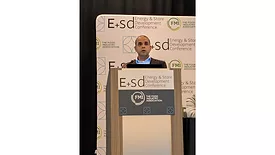


Climate Control Group’s Dan Ellis discusses the commercial and residential geothermal market and how tax incentives (or lack thereof) have affected its adoption, new opportunities for geothermal installation and application, and solutions contractors can employ to offset geothermal cost.
The rebrand marks a strategic expansion beyond energy monitoring into condition-based, asset lifecycle management for HVAC and refrigeration systems where performance is not only observed, but continuously improved through measured, repeatable execution.
"This is not designed to be a ‘new channel’; it’s designed to be an expansion of the F.W. Webb customer experience," said Brendan Lilly, vice president of e-commerce and digital operations at F.W. Webb.
Energy experts say in this world of uncertainties, electrification is here to stay. HVAC professionals offer insights into capitalizing on this growing trend.
These patented HFO refrigerant blends are two of the leading alternative refrigerants used in accordance with the AIM Act when replacing higher GWP HFC refrigerants with lower GWP HFO refrigerants in the supermarket segment.
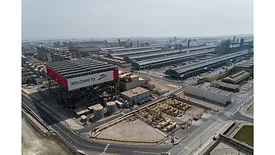
A surge in aluminum prices tied to the Middle East conflict is adding new pressure to HVAC equipment and project costs. Combined with rising fuel prices, tariffs, and slowing construction activity, contractors could face tighter margins and increased project uncertainty.
A class-action case filed in Michigan alleges that seven of the largest OEMs — Trane, Carrier, Daikin, Bosch, Lennox, Rheem, and AAON — coordinated price increases dating back to 2020.
“Use of the terms ‘heat pump’ and ‘reverse cycle’ to describe heating by refrigeration equipment is confusing to the public and lacks sales appeal,” said Claude W. Kniffin, air conditioning application engineer for Westinghouse Electric Elevator Co., during a talk before the 1945 Baltimore-Washington Section of the American Society of Refrigerating Engineers.
The February growth “was a welcome sight after low-single digit sales declines during December and January,” said Brian Loftus, HARDI’s macroeconomic and residential market analyst.
New refrigerants are changing refrigeration system design, requiring careful tradeoffs between efficiency, safety, and performance across different climates and applications.