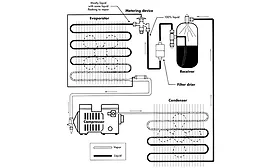
Filter driers are designed to remove foreign materials, such as moisture, dirt, sandpaper grit, soldering flux, small solder beads, and acid from a refrigeration or air conditioning system. However, filter driers are notorious for becoming restricted from moisture, sludge, dirt, or oil that has entered the system from a poor service practice or extreme operating conditions.
Make way for the new class of refrigerants that await its entry in the global commercial markets. These are not the generic class of compounds that have been haunting the dreams and discussions of active environmental activists and forums respectively. When the world is out on the hunt for fresh additions to the list of already known refrigerants in the market, their approach is fixated to a singular point of product development — aim at coolants with low-global warming potential (GWP).
While contractors are struggling to deal with the dwindling supply and phasedown of R-22, it’s their customers who will ultimately bear the brunt of the cost.
Report projects growth rate of nearly 10 percent annually
January 27, 2017
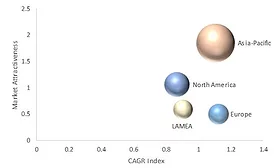
The global refrigerants market was valued at $9.5 billion in 2015, and is projected to reach $18.5 billion by 2022, registering a compound annual growth rate (CAGR) of 9.9 percent from 2016 to 2022, according to a new report published by Allied Market Research.
The 2016 editions of ASHRAE’s major refrigerants-related standards have been published as a package with 30 new refrigerants and refrigerant blends added.
Refrigeration contractors, technicians, installers among key targets
January 17, 2017
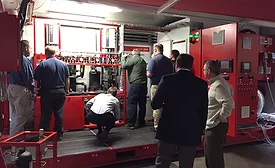
Danfoss has launched a mobile training unit equipped with carbon dioxide (CO₂) solutions and interactive learning modules to help boost CO₂ refrigeration system competency among system builders, refrigeration contractors, service technicians, installers, and technical departments of food retailers.
Stephen Yurek, president and CEO of the Air-Conditioning, Heating, & Refrigeration Institute (AHRI), recently discussed the Kigali Agreement and some of the effects it may have on the HVACR industry with The NEWS.
A system with a restricted metering device will display the same symptoms as a system with a liquid-line restriction. This is because the TXV is actually part of the liquid line.
 RSS
RSS