ACHR News
search
Ask ACHR NEWS AI
cart
facebook twitter instagram linkedin youtube
  • Sign In
  • Subscribe
  • Sign Out
  • My Account
ACHR News
  • NEWS
    • Breaking News
    • New HVAC Products
    • Featured Products
    • Manufacturer Reports
    • HVAC Data
    • Legislation
    • ACHR NEWS Centennial
  • RESIDENTIAL
    • Air Conditioners
    • Furnaces
    • Residential Heat Pumps
    • Ductless
    • Residential IAQ
    • Testing, Monitoring, Tools
    • Components & Accessories
  • COMMERCIAL
    • Air Handlers
    • Rooftop Units
    • Chillers and Cooling Towers
    • Commercial Heat Pumps
    • Boilers and Hydronics
    • VRF/Ductless
    • Commercial IAQ
  • REFRIGERATION
    • Refrigerants
    • Refrigerant Regulations
    • Leak Management
  • CONTRACTOR PRO
    • Geothermal
    • Homeowner Study
    • VRF and VRV Ductless
    • Unitary Trends
  • EDUCATION
    • Training and Education
    • Business Management
    • Service and Maintenance
    • Continuing Education
    • Market Research >
      • HVAC Brand Awareness Report
      • VRV, VRF, VRVZ Report
      • Unitary Trends Report
      • Water Heat Professionals Report
    • Webinars
    • Sponsor Insights
    • eProducts Info
    • White Papers
  • EVENTS
    • HVAC Contractor Forum
    • Industry Events and Webinars
  • MEDIA
    • Videos
    • AHR Expo 2025 Videos
    • Podcasts >
      • ACHR News Podcast
      • HARDI Podcasts
      • AHR Expo Podcasts
      • ACCA Podcasts
    • Interactive Spotlights
    • Quizzes
    • eBooks
    • HVAC Talkback
  • HVAC GROUP
    • ACHR NEWS >
      • Current Issue
      • Digital Edition
      • Subscribe
    • Distribution Trends
    • SNIPS NEWS >
      • Join SNIPS NEWS
    • Engineered Systems News >
      • Join ES News
    • HVACR Directory
    • Contests
    • Newsletters
    • Contact
    • Advertise
    • My Account
RefrigerationRefrigerants

Inside Filter Driers

These valuable components keep systems clean but can become restricted themselves
By John Tomczyk
filter drier position

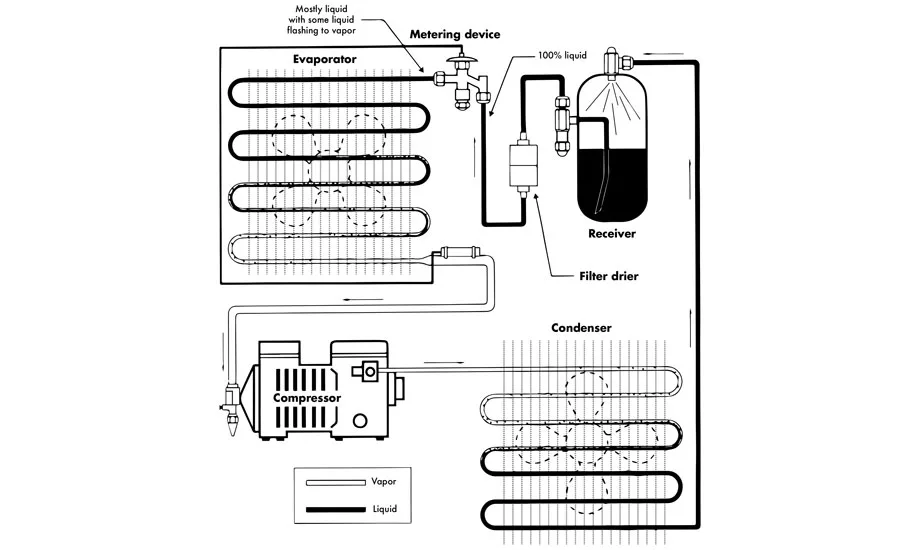
Figure 1: This illustration shows a filter drier’s position on the liquid line of a typical refrigeration system.

filter drier

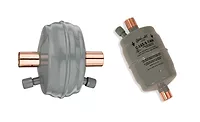
Figure 2: A cutaway view of a liquid line filter drier. Photo courtesy Sporlan Division, Parker Hannifin Corp.

filter drier position
filter drier
February 6, 2017

Last month’s article, titled “The Symptoms of a Restricted TXV” dealt with the system issues that can be caused by a restricted thermostatic expansion valve (TXV). This month, we’ll take a look at the refrigerant liquid line filter drier.

On standard refrigeration systems, the liquid line starts at the outlet of the receiver and ends at the metering device (see Figure 1). The liquid line includes the king valve — the three-way service valve at the liquid receiver’s outlet that controls liquid refrigerant leaving the receiver — the filter drier, sight glass, hand valves, solenoids, and other liquid line valves.

Filter driers are designed to remove foreign materials, such as moisture, dirt, sandpaper grit, soldering flux, small solder beads, and acid from a refrigeration or air conditioning system. However, filter driers are notorious for becoming restricted from moisture, sludge, dirt, or oil that has entered the system from a poor service practice or extreme operating conditions.

Excessive moisture is the most common culprit that causes filter driers to become restricted. Some sources of moisture in refrigeration and air conditioning systems include:

• Improper evacuation techniques;

• Improper handling of hygroscopic system lubricants;

• Improper handling of system piping at installation;

• Improper brazing or soldering techniques; and

Looking for quick answers on air conditioning, heating and refrigeration topics? Try Ask ACHR NEWS, our new smart AI search tool. Ask ACHR NEWS →

• Leaky systems.

COMMON FILTER DRIER MATERIALS

The most common materials used in filter drier construction are activated alumina and molecular sieve. Activated alumina is used for removing organic acid molecules from refrigeration systems. Inorganic acids, such as hydrofluoric and hydrochloric acids, are formed when refrigerant and water are broken down from very high refrigeration system operating temperatures. This is often referred to as system burnout. Activated alumina is often used in both liquid and suction line filter driers for acid cleanups after system burnouts.

Molecular sieve desiccants have honeycomb structures with cavities that are uniform in size. They can selectively absorb molecules based on their polarity (charge) or size. The proper filter drier selection allows water to be absorbed while at the same time allows larger molecules, such as refrigerant and their oils, to pass by freely. The surface of the desiccant is coated with a positive charge called a cat ion. These cat ions attract polarized molecules, such as water. Filter driers with molecular sieves help keep freeze-ups, system corrosion, and acid formations to a minimum.

FILTRATION

Another function of the liquid line filter drier is filtration. Filtration is usually done with a screen, wire mesh, and the desiccant core itself (see Figure 2). As small particles accumulate on the screen, wire mesh, or desiccant, they can act as very fine filters that remove even finer particles. However, as these fine particles accumulate over time, they can create enough pressure drop to cause the liquid refrigerant passing through to flash to a vapor. This can cause a local cold spot on the filter drier and even cause condensation (sweating) to occur on the outer surface of the filter drier’s body. The sight glass also will “bubble” from the refrigerant flashing to a vapor. In this case, a bubbling sight glass is indicating flashing refrigerant. Do not mistake this with a bubbling sight glass associated with an undercharge of refrigerant.

There are many times when a filter drier may be partially plugged and technicians cannot feel a temperature difference across it with their hands. Because of this, many filter drier restrictions go unchecked by technicians because they are difficult to sense by touch and feel.

The use of a sight glass after the filter drier to show bubbling and flashing will assist technicians. This same sight glass will assist in system charging. Moisture-indicating sight glasses will alert technicians if the system is contaminated with moisture by changing colors.

On start-up with some refrigeration systems, if there is a large load on the system, bubbling and flashing could occur in the sight glass downstream of the receiver. This bubbling is caused from a pressure drop at the entrance of the outlet tube of the receiver. Bubbling could also occur during rapid increases in loads. The TXV could be opened wide during an increase in load and some flashing could occur, even though the receiver has sufficient liquid. Also, sudden changes in head-pressure control systems, which may dump hot gas into the receiver to build up head pressure, often will bubble a sight glass even though there is sufficient liquid in the receiver to form a seal on the receiver’s dip tube outlet. A sight glass on the receiver would prevent technicians from overcharging in this case, but would cost the manufacturer a bit more money initially.

A sight glass on the liquid line before the TXV also would help alert technicians if any liquid flashing is occurring before the TXV. This flashing could be from loss of subcooling or too much static and/or friction pressure drop in the liquid line before it reaches the TXV.

Next month, we’ll take a look at troubleshooting, service, and replacement of a filter drier.

Publication date: 2/6/2017

Want more HVAC industry news and information? Join The NEWS on Facebook, Twitter, and LinkedIn today!

KEYWORDS: air filtration evacuation filters The Professor

Share This Story

Looking for a reprint of this article?
From high-res PDFs to custom plaques, order your copy today!


John Tomczyk is HVACR professor emeritus, Ferris State University, Big Rapids, Michigan, and coauthor of Refrigeration & Air Conditioning Technology, published by Cengage Learning. Contact him at tomczykjohn@gmail.com.

Recommended Content

JOIN TODAY
To unlock your recommendations.

Already have an account? Sign In

  • HVAC-enrollment

    The Trades Are Back: HVACR Programs See Nearly 30% Enrollment Spike

    A new wave of future technicians is entering the pipeline.  
    News
    By: Matt Jachman
  • 2025 Top 40 Under 40

    2025 Top 40 Under 40 HVACR Professionals List

    The 11th annual Top 40 Under 40 list highlights those...
    HVAC Light Commercial Market
    By: Hannah Belloli-Oster
  • LG Ductless Mini-Split Systems

    The 9 Types of Heat Pumps

    As the U.S. moves toward electrification, heat pumps are...
    HVAC Residential Market
    By: Joanna R. Turpin
Subscription Center
  • Create an Account
  • Start a Subscription
  • Manage My Account
  • Sign Up for Newsletters
  • Visit Customer Service
  • Update Preferences

More Videos

Sponsored Content

Sponsored Content is a special paid section where industry companies provide high quality, objective, non-commercial content around topics of interest to The News audience. All Sponsored Content is supplied by the advertising company and any opinions expressed in this article are those of the author and not necessarily reflect the views of The News or its parent company, BNP Media. Interested in participating in our Sponsored Content section? Contact your local rep!

close
  • Piggy Bank
    Sponsored byWatercress Financial

    Energy Prices, Inflation, and HVAC: What Today’s Homeowners Care About

  • Refrigerated Food
    Sponsored bySolstice Advanced Materials

    R-455A Refrigeration: A Cold Storage Solution for the Future

  • Airex Rooftop Units
    Sponsored byAirex Manufacturing Inc

    Consolidating Roof Penetrations: A Growing Trend in Multifamily HVAC Design

Popular Stories

Refrigerants-and-gauge.jpg

HVAC Industry Warns of Counterfeit Refrigerants Entering U.S. Supply Chain

U.S. Supreme Court building

95% Furnace Efficiency Rule to Get New Hearing

Midea-training.jpg

HVAC Workforce Crisis Expands Beyond Technicians to Instructor Shortages

Data_Center_facility.jpg

HVAC Manufacturers Respond to Growing Data Center Backlash

HVAC Minute retail refrigeration system

EPA Final Rule’s Impact on R-410A Deadlines

View The ACHR NEWS
Centennial Anniversary Timeline

The ACHR News Timeline Chart
Submit a Letter
Submit a letter to our editors.

Events

November 6, 2025

Next-Gen Data Center Cooling: HVAC Innovation and Real-World Solutions

On Demand As AI workloads and high-density computing push traditional cooling methods to their limits, the data center industry is accelerating the adoption of next-generation HVAC technologies.

June 23, 2026

HVAC Duct Sealing Mastics: Why Selection Matters

In this webinar we will detail what HVAC material buyers and technicians need to know when selecting duct mastics, including matching mastic to substrate, alternatives to liquid mastic, and where UL 181 Listings fit into real world installations.

View All Submit An Event

Poll

Summer Staff

Are you fully staffed for the summer season?
View Results Poll Archive

Products

BNI Mechanical/Electrical Square Foot Costbook, 2026 Edition

BNI Mechanical/Electrical Square Foot Costbook, 2026 Edition

See More Products
HVAC Duct Sealing Mastics: Why Selection Matters - Free Webinar - 6/23/2026

Related Articles

  • Filter Driers

    Troubleshooting Filter Driers — Part 2

    See More
  • The Professor: Partially Restricted Filter Driers

    See More
  • Liquid Line Filter Drier

    How to Diagnose Partially Restricted Filter Driers

    See More

Related Products

See More Products
  • The ACHR News - October 20, 2025

    ACHR NEWS October 20, 2025, Issue

  • The ACHR News - November 17, 2025

    ACHR NEWS November 17, 2025, Issue

  • srepm.png

    System Recovery & Evacuation

See More Products

Events

View AllSubmit An Event
  • April 14, 2026

    Inside HVAC Lending: What Contractors Need to Know to Close More Sales

    On Demand From this webinar, attendees will learn how to use financing as a strategic sales tool for growth in a repair market. 
View AllSubmit An Event
×

Sign Up. Stay Informed.

The #1 trusted source for the HVACR industry since 1926

SUBSCRIBE
  • RESOURCES
    • Advertise
    • Contact Us
    • Advisory Board
    • Classifieds
    • Submit a Letter
    • Directories
    • Store
  • ACCOUNT CENTER
    • Create an Account
    • Start a Subscription
    • Manage My Account
    • Sign Up for Newsletters
    • Visit Customer Service
    • Update Preferences
  • SERVICES
    • Marketing Services
    • Reprints
    • Market Research
    • List Rental
    • Survey/Respondent Access
  • STAY CONNECTED
    • LinkedIn
    • Facebook
    • Instagram
    • YouTube
    • X (Twitter)
  • PRIVACY
    • PRIVACY POLICY
    • TERMS & CONDITIONS
    • DO NOT SELL MY PERSONAL INFORMATION
    • PRIVACY REQUEST
    • ACCESSIBILITY

Copyright ©2026. All Rights Reserved BNP Media, Inc. and BNP Media II, LLC.

Design, CMS, Hosting & Web Development :: ePublishing