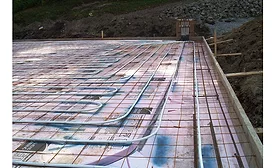
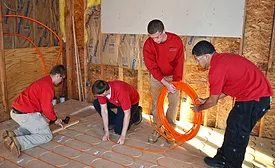
Sadly, it’s rare to hear about comfort and affordable housing together as one. Too often, there’s a compromise. At the losing end, it’s comfort that seems to always give way to price and ease of installation.
The use of voice-enabled speakers, such as Amazon Echo and Google Home, is continuing to gain popularity as more people become comfortable with the technology.
As the old saying goes, there is more than one way to skin a cat. The same can be said of residential hydronic systems, which can be designed around numerous types of terminal units, including baseboards, radiators, air handlers, and radiant panels, to name just a few.
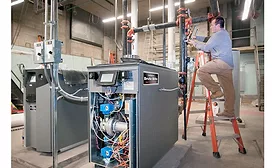
According to the U.S. Energy Information Administration, heating accounts for roughly one-third of the total energy consumption in U.S. commercial buildings, with boilers supplying heat to about 33 percent of total floor space. Keeping these boilers operating at peak performance is the goal of most commercial building owners and managers, who typically want to minimize energy costs and maximize comfort.
After making the “big leap” into a mortgage to secure a 60-acre parcel in Lancaster County, Pennsylvania, farmers Keith and Jenessa Frey considered all the options for a home.
Preventive Maintenance is Crucial for Commercial Hydronic Systems Unfortunately, many homeowners, business owners, and technicians are willing to let the boiler slide for months or even years without a proper checkup.
Schools, colleges, and universities are a familiar and valuable market for HVAC contractors. These institutions typically combine a large amount of square footage with a high percentage of building ownership, which often means a willingness to invest for the long term.
The residential boiler market in the U.S. is somewhat small when compared to the rest of the world. In fact, according to some estimates, only about 9 million U.S. homes are heated with boilers, 60 percent of which are in the Northeast.
Manufacturers of HVAC equipment are a charitable bunch, often lending a hand after weather-related and natural disasters, as well as offering their expertise to national and local charities. They are particularly generous when it comes to supporting trade schools and vocational training programs that count on their donations of HVAC equipment in order to provide a hands-on experience for their students. By donating equipment to trade schools and vocational training programs, manufacturers demonstrate their dedication to educating the next generation of HVAC professionals.