The new rule raises the salary threshold for overtime eligibility from $455 per week, or $23,660 per year, to $913 per week, or $47,476 per year. As a result, more than 4.2 million salaried workers across the country will now be eligible for overtime pay. Employers have until Dec. 1, when the rule becomes effective, to prepare for the changes.
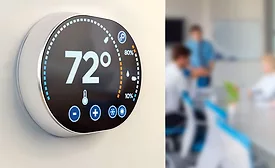
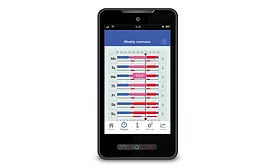
There is a lot of buzz these days about the Internet of Things (IoT) and how it will continue to influence — some say take over — our lives in the near future. But what does the IoT mean for HVAC contractors, and, more importantly, how can they profit from its proliferation?
The Internet of Things (IoT) market is expected to explode in the coming years, according to a recent report that predicts it will grow from an installed base of 15.4 billion devices in 2015 to 30.7 billion devices in 2020 and 75.4 billion in 2025. In response to this trend, many HVAC manufacturers are introducing IoT-enabled products designed to benefit consumers and contractors alike.
Although today’s portable evaporative coolers will reduce the temperature in almost any environment, for optimum performance, the temperature should be 85° or higher, and the relative humidity should be below 75 percent.
Keeping a system clean, dry, and tight really comes down to service technicians and how they handle installing or servicing a system. Here are some basic installation and service procedures that will ensure we always leave a system clean, dry, and tight.
When you hear that your facility will be the target of an OSHA inspection, step back and examine the strengths and weaknesses of your safety program, and think about how you can focus the attention on the strengths. Although OSHA will come in looking for anything you’re doing wrong, you want to make sure they’re aware of all the things you’re doing right.
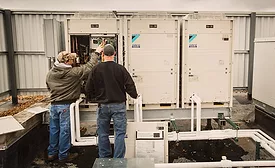
As the American market becomes more familiar with variable refrigerant flow (VRF) systems, it’s discovering firsthand the technology’s ability to deliver exceptional comfort with lower life cycle costs. Additionally, contractors are touting the ability to perform maintenance on systems individually, allowing them to fix a problem without disrupting the comfort delivered to the remainder of the facility.
The backdrop for the contests was the 52nd SkillsUSA National Leadership and Skills Conference, where more than 15,000 people, including students, teachers, and business partners participated in the weeklong event.
The global VRF market is projected to reach approximately $9.65 billion by 2021, registering a compound annual growth rate (CAGR) of 10.8 percent between 2016 and 2021.
VRF systems can achieve up to 30 percent HVAC energy cost savings relative to minimally code-conventional-compliant systems or older inefficient systems across a range of building types, according to the Pacific Northwest National Laboratory. In addition to energy savings, VRF systems offer flexibility, cost-effective installation, and greater comfort for end users.
 RSS
RSS