ACHR News
search
Ask ACHR NEWS AI
cart
facebook twitter instagram linkedin youtube
  • Sign In
  • Subscribe
  • Sign Out
  • My Account
ACHR News
  • NEWS
    • Breaking News
    • New HVAC Products
    • Featured Products
    • Manufacturer Reports
    • HVAC Data
    • Legislation
    • ACHR NEWS Centennial
  • RESIDENTIAL
    • Air Conditioners
    • Furnaces
    • Residential Heat Pumps
    • Ductless
    • Residential IAQ
    • Testing, Monitoring, Tools
    • Components & Accessories
  • COMMERCIAL
    • Air Handlers
    • Rooftop Units
    • Chillers and Cooling Towers
    • Commercial Heat Pumps
    • Boilers and Hydronics
    • VRF/Ductless
    • Commercial IAQ
  • REFRIGERATION
    • Refrigerants
    • Refrigerant Regulations
    • Leak Management
  • CONTRACTOR PRO
    • Geothermal
    • Homeowner Study
    • VRF and VRV Ductless
    • Unitary Trends
  • EDUCATION
    • Training and Education
    • Business Management
    • Service and Maintenance
    • Continuing Education
    • Market Research >
      • HVAC Brand Awareness Report
      • VRV, VRF, VRVZ Report
      • Unitary Trends Report
      • Water Heat Professionals Report
    • Webinars
    • Sponsor Insights
    • eProducts Info
    • White Papers
  • EVENTS
    • HVAC Contractor Forum
    • Industry Events and Webinars
  • MEDIA
    • Videos
    • AHR Expo 2025 Videos
    • Podcasts >
      • ACHR News Podcast
      • HARDI Podcasts
      • AHR Expo Podcasts
      • ACCA Podcasts
    • Interactive Spotlights
    • Quizzes
    • eBooks
    • HVAC Talkback
  • HVAC GROUP
    • ACHR NEWS >
      • Current Issue
      • Digital Edition
      • Subscribe
    • Distribution Trends
    • SNIPS NEWS >
      • Join SNIPS NEWS
    • Engineered Systems News >
      • Join ES News
    • HVACR Directory
    • Contests
    • Newsletters
    • Contact
    • Advertise
    • My Account
HVAC Light Commercial MarketHVAC Commercial MarketRefrigeration

The Professor: Don’t Forget About Water as a Refrigerant

From vapor compression to evaporative cooling, R-718 is still a viable option
By John Tomczyk
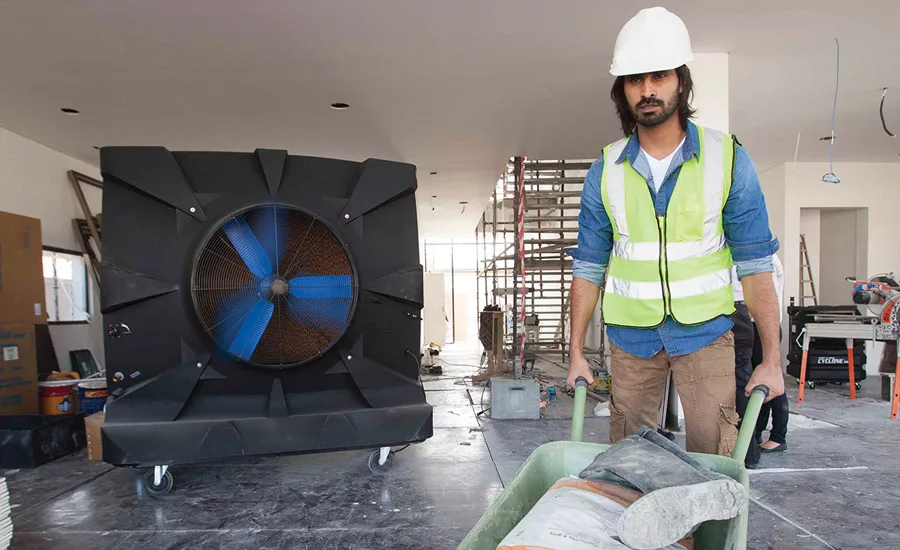
In a manufactured evaporative cooler, a water pump assists in creating the evaporative effect and a fan distributes the cool air.

PORTABLE AND VERSATILE: In a manufactured evaporative cooler, a water pump assists in creating the evaporative effect and a fan distributes the cool air. Photo courtesy of Portacool LLC

Table 1

TABLE 1. Comparison of the ozone-depletion potential (ODP) and global warming potential (GWP) of three natural refrigerants with two synthetic refrigerants. Photo courtesy of Portacool LLC

In a manufactured evaporative cooler, a water pump assists in creating the evaporative effect and a fan distributes the cool air.
Table 1
August 8, 2016

Given the environmental concerns of ozone depletion and global warming, an increasing amount of thought, effort, research, and financing is being given to natural refrigerants. Natural refrigerants, such as carbon dioxide, propane, butane, isobutane, ammonia, and water — to name a few of the more popular ones — occur in nature, as opposed to synthetic refrigerants, such as chloro-fluorocarbons (CFCs), hydrochlorofluorocarbons (HCFCs), hydrofluorocarbons (HFCs), and hydrofluoroolefins (HFOs), which are man-made. Natural refrigerants have zero ozone-depletion potential (ODP) and very small, if any, global warming potential (GWP). Table 1 (above) compares the ODPs and GWPs of three natural refrigerants with two synthetic refrigerants.

A COOLING AGENT FOR CENTURIES

Water (R-718), in its liquid, vapor, and solid (ice) states, has been used as a cooling agent for thousands of years. In fact, it is one of the oldest refrigerants known. Water is an excellent refrigerant because it is environmentally safe, nontoxic, nonflammable, nonexplosive, available almost anywhere, and very inexpensive. In addition, water has a very high latent heat of vaporization (970 Btu per pound) at standard atmospheric pressure. For every pound of water vaporized, it will absorb 970 Btu of heat energy. This is a much higher value than the most commonly used synthetic refrigerants, such as R-22, R-134a, and R-404A, which have latent heat values ranging 70-90 Btu per pound when vaporized in refrigeration and air conditioning temperature ranges.

One of the disadvantages of water is its high freezing point of 32°F at atmospheric pressure. Often, water will be mixed with another fluid, such as propylene or ethylene glycol, for applications below water’s normal freezing points. Water will also be mixed with these solutions and be used as a secondary refrigerant in many chilled water and cascade refrigeration systems.

Another disadvantage occurs when water is the refrigerant in a vapor compression system. Here, the water vapor has very high specific volumes at lower temperatures, which causes high pressure ratios across the compressor and high compressor outlet temperatures. This leads to system inefficiencies and larger compressors. Because of this, special compressors must be designed and manufactured for water vapor compression applications. However, water does have a very high coefficient of performance when used in a vapor com-
pression system.

EVAPORATIVE COOLING

A very energy-efficient and effective use of water as a refrigerant occurs in the evaporative cooling process. By evaporating water, the temperature of the air in contact with the evaporating liquid water is lowered. Liquid water needs heat to phase-change (evaporate) from a liquid state to a vapor state. Thus, as each pound of liquid water is evaporated, it will absorb 970 Btu. This is an endothermic reaction, meaning heat energy is absorbed in the evaporation or phase-change process. The heat energy absorbed comes from the air in contact with the water, which will, in turn, become cooler during the process. The end product is cooler air with some water vapor entrained.

A portable evaporative cooler essentially works off this principle by acting as a cooling fan that uses water, a water pump, and a wetted surface to create the naturally occurring process of evaporation to cool warm air and drop its temperature. By pulling air across water, the temperature of the air will be lowered. A control system within a manufactured evaporative cooler operates the water pump to assist in creating this effect as a fan distributes the cool air. Evaporative coolers require about the same amount of electricity used to run standard household appliances and operate very inexpensively.

The technology at the center of an evaporative cooling system is the evaporative media surfaces that collect water. Air passes through the media and are cooled as the water evaporates. The evaporative media are treated to prevent deterioration and ensure a long service life. A water distribution system spreads water over the surface of the media within the cooling unit to ensure a uniform water supply. This keeps the entire air-to-contact surface thoroughly wet.

Looking for quick answers on air conditioning, heating and refrigeration topics? Try Ask ACHR NEWS, our new smart AI search tool. Ask ACHR NEWS →

While evaporative coolers achieve significant temperature drops in more arid climates and dryer spaces, they will provide relief from heat in any climate. Even in regions where relative humidity reaches 70 percent at midday with temperatures above 90°, evaporative coolers have been shown to offer noteworthy relief. Given that relative humidity is lowest in the afternoon, when the temperature is at its highest, an effective evaporative cooling scenario is achievable. Evaporative coolers have been proven to deliver a temperature reduction from 8°-10° in the morning in the highest humidity regions (Miami, New Orleans, or Boston), and up to 12°-15° later in the day when the relative humidity goes down as the temperature goes up.

Although today’s portable evaporative coolers will reduce the temperature in almost any environment, for optimum performance, the temperature should be 85° or higher, and the relative humidity should be below 75 percent.

When using evaporative coolers, an increase in relative humidity of approximately 2-5 percent is often produced, depending on the temperature and humidity of the environment. However, this increase typically is not noticeable in a ventilated area where the air produced by the evaporative cooler is exhausted.

Publication date: 8/8/2016

Want more HVAC industry news and information? Join The NEWS on Facebook, Twitter, and LinkedIn today!

KEYWORDS: Evaporative Cooling FROSTlines

Share This Story

Looking for a reprint of this article?
From high-res PDFs to custom plaques, order your copy today!


John Tomczyk is HVACR professor emeritus, Ferris State University, Big Rapids, Michigan, and coauthor of Refrigeration & Air Conditioning Technology, published by Cengage Learning. Contact him at tomczykjohn@gmail.com.

Recommended Content

JOIN TODAY
To unlock your recommendations.

Already have an account? Sign In

  • HVAC-enrollment

    The Trades Are Back: HVACR Programs See Nearly 30% Enrollment Spike

    A new wave of future technicians is entering the pipeline.  
    News
    By: Matt Jachman
  • 2025 Top 40 Under 40

    2025 Top 40 Under 40 HVACR Professionals List

    The 11th annual Top 40 Under 40 list highlights those...
    HVAC Contracting
    By: Hannah Belloli-Oster
  • LG Ductless Mini-Split Systems

    The 9 Types of Heat Pumps

    As the U.S. moves toward electrification, heat pumps are...
    News
    By: Joanna R. Turpin
Subscription Center
  • Create an Account
  • Start a Subscription
  • Manage My Account
  • Sign Up for Newsletters
  • Visit Customer Service
  • Update Preferences

More Videos

Sponsored Content

Sponsored Content is a special paid section where industry companies provide high quality, objective, non-commercial content around topics of interest to The News audience. All Sponsored Content is supplied by the advertising company and any opinions expressed in this article are those of the author and not necessarily reflect the views of The News or its parent company, BNP Media. Interested in participating in our Sponsored Content section? Contact your local rep!

close
  • Piggy Bank
    Sponsored byWatercress Financial

    Energy Prices, Inflation, and HVAC: What Today’s Homeowners Care About

  • Refrigerated Food
    Sponsored bySolstice Advanced Materials

    R-455A Refrigeration: A Cold Storage Solution for the Future

  • Airex Rooftop Units
    Sponsored byAirex Manufacturing Inc

    Consolidating Roof Penetrations: A Growing Trend in Multifamily HVAC Design

Popular Stories

Refrigerants-and-gauge.jpg

HVAC Industry Warns of Counterfeit Refrigerants Entering U.S. Supply Chain

U.S. Supreme Court building

95% Furnace Efficiency Rule to Get New Hearing

Midea-training.jpg

HVAC Workforce Crisis Expands Beyond Technicians to Instructor Shortages

Data_Center_facility.jpg

HVAC Manufacturers Respond to Growing Data Center Backlash

HVAC Minute retail refrigeration system

EPA Final Rule’s Impact on R-410A Deadlines

View The ACHR NEWS
Centennial Anniversary Timeline

The ACHR News Timeline Chart
Submit a Letter
Submit a letter to our editors.

Events

November 6, 2025

Next-Gen Data Center Cooling: HVAC Innovation and Real-World Solutions

On Demand As AI workloads and high-density computing push traditional cooling methods to their limits, the data center industry is accelerating the adoption of next-generation HVAC technologies.

June 23, 2026

HVAC Duct Sealing Mastics: Why Selection Matters

In this webinar we will detail what HVAC material buyers and technicians need to know when selecting duct mastics, including matching mastic to substrate, alternatives to liquid mastic, and where UL 181 Listings fit into real world installations.

View All Submit An Event

Poll

Summer Staff

Are you fully staffed for the summer season?
View Results Poll Archive

Products

BNI Mechanical/Electrical Square Foot Costbook, 2026 Edition

BNI Mechanical/Electrical Square Foot Costbook, 2026 Edition

See More Products
HVAC Duct Sealing Mastics: Why Selection Matters - Free Webinar - 6/23/2026

Related Articles

  • The Professor: Don’t Forget About the Oil Check Valve

    See More
  • Don't Forget about the Ductwork - Energy-efficient box - ACHR

    Don’t Forget About the Ductwork

    See More
  • Don't Forget About The Critical Fan

    See More

Related Products

See More Products
  • air came to a stop.jpg

    The Air Came to a Stop

  • 9781482255676.jpg

    Testing and Balancing HVAC Air and Water Systems, Fifth Edition

See More Products

Events

View AllSubmit An Event
  • May 21, 2026

    The A2L Genie is Out of the Refrigerant Canister – What Now?

    On Demand Join this webinar to learn about key updates to refrigerant regulations. We will cover practical installation and servicing content gathered from thousands of our interactions with contractors across the US and Canada.
View AllSubmit An Event
×

Sign Up. Stay Informed.

The #1 trusted source for the HVACR industry since 1926

SUBSCRIBE
  • RESOURCES
    • Advertise
    • Contact Us
    • Advisory Board
    • Classifieds
    • Submit a Letter
    • Directories
    • Store
  • ACCOUNT CENTER
    • Create an Account
    • Start a Subscription
    • Manage My Account
    • Sign Up for Newsletters
    • Visit Customer Service
    • Update Preferences
  • SERVICES
    • Marketing Services
    • Reprints
    • Market Research
    • List Rental
    • Survey/Respondent Access
  • STAY CONNECTED
    • LinkedIn
    • Facebook
    • Instagram
    • YouTube
    • X (Twitter)
  • PRIVACY
    • PRIVACY POLICY
    • TERMS & CONDITIONS
    • DO NOT SELL MY PERSONAL INFORMATION
    • PRIVACY REQUEST
    • ACCESSIBILITY

Copyright ©2026. All Rights Reserved BNP Media, Inc. and BNP Media II, LLC.

Design, CMS, Hosting & Web Development :: ePublishing