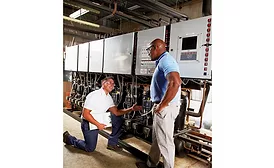
Grocery store owners and managers are increasingly utilizing the IoT in order to monitor the performance of their refrigeration equipment, so they can take immediate action should a problem arise.
Manufacturers are rolling out a wide array of new equipment that utilizes all types of refrigerants, providing end users with a number of new options to consider.
In supermarkets, where HVAC and refrigeration equipment use 50 to 60 percent of all electricity consumed, new technologies and advanced control strategies have been developed to help boost energy efficiency as well as reduce emissions.
Refrigerant regulations are another reason why change is coming, as HCFCs will be phased out by 2020, and given their high GWP, HFCs will likely be phased down in the near future as well. At some point, supermarkets will need to start considering low-GWP alternatives, such as HFO blends, as well as so-called “future-proof” refrigerants, such as ammonia, CO2, or propane.
Refrigerant regulations are another reason why change is coming, as HCFCs will be phased out by 2020, and given their high global warming potential (GWP), HFCs will likely be phased down in the near future as well. At some point, supermarkets will need to start considering low GWP alternatives such as HFO blends, as well as so-called “future-proof” refrigerants such as ammonia, CO2, or propane.
A number of disruptors in the retail market and an active regulatory environment present obstacles for HVAC and refrigeration systems’ designers in foodservice operations, supermarkets, and cold storage facilities.
Focus will be on food quality and end-to-end optimization
October 30, 2017
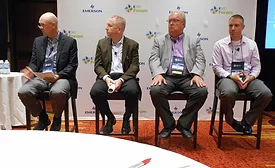
Emerson has created a cold chain organization focused on supporting temperature-sensitive and asset optimization solutions wherever commercial goods are moved, stored, or sold. According to Emerson, the organization will offer customers a total-channel approach to protect foods and other critical cargo at every step along the cold chain — from grower and processor to distributor and retailer.
HillPhoenix honored for store certification excellence
October 30, 2017
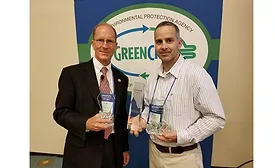
Giant Eagle was recognized as the supermarket retail chain with the lowest corporate-wide refrigerant rate in the Environmental Protection Agency’s (EPA’s) 2017 GreenChill Partnership Annual Achievements. The Port Townsend Food Co-op was recognized for having the lowest emissions rate among small/independent grocers.
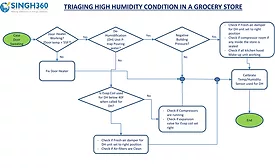
In supermarkets, humidity not only impacts energy savings and customer comfort, but it also can have a major effect on the performance of a store’s refrigeration equipment.