ACHR News
search
Ask ACHR NEWS AI
cart
facebook twitter instagram linkedin youtube
  • Sign In
  • Subscribe
  • Sign Out
  • My Account
ACHR News
  • NEWS
    • Breaking News
    • New HVAC Products
    • Featured Products
    • Manufacturer Reports
    • HVAC Data
    • Legislation
    • ACHR NEWS Centennial
  • RESIDENTIAL
    • Air Conditioners
    • Furnaces
    • Residential Heat Pumps
    • Ductless
    • Residential IAQ
    • Testing, Monitoring, Tools
    • Components & Accessories
  • COMMERCIAL
    • Air Handlers
    • Rooftop Units
    • Chillers and Cooling Towers
    • Commercial Heat Pumps
    • Boilers and Hydronics
    • VRF/Ductless
    • Commercial IAQ
  • REFRIGERATION
    • Refrigerants
    • Refrigerant Regulations
    • Leak Management
  • CONTRACTOR PRO
    • Geothermal
    • Homeowner Study
    • VRF and VRV Ductless
    • Unitary Trends
  • EDUCATION
    • Training and Education
    • Business Management
    • Service and Maintenance
    • Continuing Education
    • Market Research >
      • HVAC Brand Awareness Report
      • VRV, VRF, VRVZ Report
      • Unitary Trends Report
      • Water Heat Professionals Report
    • Webinars
    • Sponsor Insights
    • eProducts Info
    • White Papers
  • EVENTS
    • HVAC Contractor Forum
    • Industry Events and Webinars
  • MEDIA
    • Videos
    • AHR Expo 2025 Videos
    • Podcasts >
      • ACHR News Podcast
      • HARDI Podcasts
      • AHR Expo Podcasts
      • ACCA Podcasts
    • Interactive Spotlights
    • Quizzes
    • eBooks
    • HVAC Talkback
  • HVAC GROUP
    • ACHR NEWS >
      • Current Issue
      • Digital Edition
      • Subscribe
    • Distribution Trends
    • SNIPS NEWS >
      • Join SNIPS NEWS
    • Engineered Systems News >
      • Join ES News
    • HVACR Directory
    • Contests
    • Newsletters
    • Contact
    • Advertise
    • My Account

Regular Homeowners Opt for Better Systems

By Joanna R. Turpin
August 15, 2001
It used to be that the regular homeowner in a traditional 1,500- to 2,000-sq-ft house would probably not be that interested in top-of-the-line hvac equipment. The cost of higher-SEER or -AFUE equipment coupled with low energy prices was usually just too much to justify.

Things are changing.

Thanks in part to a great economy these last few years, as well as increasing utility prices around the nation, average homeowners are looking for higher-efficiency equipment.

More and more states are talking about deregulation, and people are starting to think the California situation could come to their hometowns. If it does, homeowners want to be ready with equipment that will not cause their bills to skyrocket.

For contractors, this means not judging a book by its cover. Do you really know how much your customers can afford to spend? Do you really know what kind of system and accessories they would like to have?

Finally, do you know how to properly install the higher-priced equipment so that customers can achieve a return on their investment in a relatively short period of time?
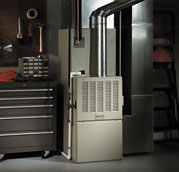


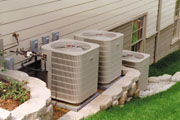
Upgrading both the indoor and the outdoor unit can help homeowners achieve optimal savings on their fuel bills. Pictured are a Frigidaire furnace and three Tappan 13-SEER outdoor units. (Photos courtesy of Nordyne.)

Not Getting The Word Out

Chances are, many contractors would answer “yes” to those questions, when in reality the answer is “no.” Manufacturers and contractors both could do a better job in promoting more-expensive, higher-efficiency equipment, says Dennis Kloster, vice president, marketing and sales for residential and light commercial, Nordyne, St. Louis, MO.

“A lot of the survey results show that if offered higher-efficiency equipment or zoning or better equipment for indoor air quality, the majority of consumers would opt to pay for it,” says Kloster. “But a lot of times the contractors are so leery, because they’re focused in on the price side only, that they don’t even offer it.”

What contractors might want to consider is going into a meeting with a customer with alternate proposals. One proposal could show a base system that would give the customer the least-expensive system possible to heat and/or cool the house from a first-cost perspective. The second proposal would list more energy-efficient equipment, as well as zoning, indoor air quality products, hum-idification, better filtration, etc.

Chances are that the two proposals will spur a discussion, giving the contractor an opportunity to explain why Proposal B costs more (sometimes twice as much) as Proposal A. The contractor can then explain that energy bills will be lower while occupant comfort will increase, particularly if IAQ options are added.

Looking for quick answers on air conditioning, heating and refrigeration topics? Try Ask ACHR NEWS, our new smart AI search tool. Ask ACHR NEWS →

Kloster notes that his company is selling more product in higher-efficiency ranges. “There’s a gradual trend showing that more customers are opting for air conditioners in the 12- to 14-SEER range and furnaces in the 90%-AFUE range,” he said.


Matching Coils, Fixing Ductwork

But once a customer decides to purchase a high-end-efficiency hvac system, the buck doesn’t stop there. It is incumbent upon the contractor to make sure the new and expensive system is installed correctly, or the customer will not achieve the energy savings s/he expects to see.

One of the biggest mistakes contractors make is not changing out the entire system if it’s a replacement job. “As an industry we’re getting better at that, but there are still a lot of replacement jobs where contractors change the outdoor unit but not the indoor unit, and that’s cheating the homeowner,” says Kloster.

That’s because if customers buy a 12-SEER condensing unit, but they keep the 10-year-old coil on the indoor side of the system, the savings will be nowhere near what’s expected. Then it doesn’t make sense for customers to pay all that extra money to go from a 10- to a 12-SEER unit, because the system will not achieve a 12-SEER rating. And how would you like to field the phone calls from that angry customer?

The other big issue that plagues the industry is leakage from the ductwork. Contractors can replace the outdoor unit and the indoor unit with an expensive system and put in extensive filtration, but if the customer has leaks throughout the ductwork, the system will simply pump cold air into the attic all summer long.

“Contractors need to do a thorough inspection of the ductwork. There are different ways to check the airflow, but it should be done,” says Kloster.

Noise is another issue contractors need to be aware of. When customers pay a lot of money for their higher-efficiency systems, they aren’t going to want to hear them turn on and off.

Again, it often comes down to the ductwork. If it’s not designed or laid out properly, it’s going to create more noise. Kloster recommends that contractors use any one of a number of software programs out there to help ensure that ductwork is laid out correctly.

In the end, don’t be afraid to sell your customers more-expensive, higher-efficiency equipment. “If contractors offered their customers a choice, they’d be shocked to see how many times the consumer would take the higher-end offer — which is a great way for them to differentiate themselves from everybody else in the pack,” says Kloster.

Publication date: 08/20/2001

Share This Story

Looking for a reprint of this article?
From high-res PDFs to custom plaques, order your copy today!


Tn joanna 2017
Joanna Turpin is a Senior Editor at The ACHR NEWS. She can be contacted at 248-786-1707 or joannaturpin@achrnews.com. Joanna has been with BNP Media since 1991, first heading up the company’s technical book division before moving over to The ACHR NEWS, where she frequently writes about refrigerants and commercial refrigeration. She obtained her bachelor’s degree in English from the University of Washington and worked on her master’s degree in technical communication at Eastern Michigan University.

Recommended Content

JOIN TODAY
To unlock your recommendations.

Already have an account? Sign In

  • HVAC-enrollment

    The Trades Are Back: HVACR Programs See Nearly 30% Enrollment Spike

    A new wave of future technicians is entering the pipeline.  
    News
    By: Matt Jachman
  • 2025 Top 40 Under 40

    2025 Top 40 Under 40 HVACR Professionals List

    The 11th annual Top 40 Under 40 list highlights those...
    HVAC Commercial Market
    By: Hannah Belloli-Oster
  • LG Ductless Mini-Split Systems

    The 9 Types of Heat Pumps

    As the U.S. moves toward electrification, heat pumps are...
    Air Source Heat Pumps
    By: Joanna R. Turpin
Subscription Center
  • Create an Account
  • Start a Subscription
  • Manage My Account
  • Sign Up for Newsletters
  • Visit Customer Service
  • Update Preferences

More Videos

Sponsored Content

Sponsored Content is a special paid section where industry companies provide high quality, objective, non-commercial content around topics of interest to The News audience. All Sponsored Content is supplied by the advertising company and any opinions expressed in this article are those of the author and not necessarily reflect the views of The News or its parent company, BNP Media. Interested in participating in our Sponsored Content section? Contact your local rep!

close
  • Piggy Bank
    Sponsored byWatercress Financial

    Energy Prices, Inflation, and HVAC: What Today’s Homeowners Care About

  • Refrigerated Food
    Sponsored bySolstice Advanced Materials

    R-455A Refrigeration: A Cold Storage Solution for the Future

  • Airex Rooftop Units
    Sponsored byAirex Manufacturing Inc

    Consolidating Roof Penetrations: A Growing Trend in Multifamily HVAC Design

Popular Stories

HVAC-Price-Increase-graphic

HVAC Price Increase List: June 2026

Trump-Section-232.jpg

Trump Reduces Section 232 Tariffs on HVAC Equipment to 15%

R410A-Refrigerant-Cylinder.jpg

Refrigerant Recovery is a Revenue Opportunity

Heat-pump-cutaway.jpg

PFAS Rules and A2L Building Codes Continue to Evolve

Kroger.jpg

Kroger to Spend $100 Million to Reduce Refrigerant Leaks

View The ACHR NEWS
Centennial Anniversary Timeline

The ACHR News Timeline Chart
Submit a Letter
Submit a letter to our editors.

Events

November 6, 2025

Next-Gen Data Center Cooling: HVAC Innovation and Real-World Solutions

On Demand As AI workloads and high-density computing push traditional cooling methods to their limits, the data center industry is accelerating the adoption of next-generation HVAC technologies.

June 9, 2026

Before You Go All In on AI: Set Up Your Business to Actually Win

In this webinar, we'll walk you through exactly what to get in place before you add AI to your business. You'll leave with a clear picture of where you stand today and a practical action plan to set yourself up for real results.

View All Submit An Event

Poll

Summer Staff

Are you fully staffed for the summer season?
View Results Poll Archive

Products

BNI Mechanical/Electrical Square Foot Costbook, 2026 Edition

BNI Mechanical/Electrical Square Foot Costbook, 2026 Edition

See More Products
A2L Refrigerants - Free Webinar - May 21, 2026

Related Articles

  • Chemours OPTEON XP44

    Chemours Urges Contractors to ‘Opt for Better’ Refrigerants

    See More
  • Industry terms such as SEER and AFUE are often not as important to millennials as Wi-Fi and automation. Photo Courtesy of Fujitsu General America

    Millennials Not Ready to Pay for Better Efficiency

    See More
  • Some Builders Opting For Better Furnaces

    See More

Related Products

See More Products
  • Electrical Troubleshooting & Schematics For Electromechanical and Electronic Systems DVD

  • ShowISBNImage.jpg

    Electricity, Electronics, and Control Systems for HVAC, 4/e

  • HVACR-Troubleshooting-Fundamentals-Cover-Image-One-Sheet.jpg

    HVACR Troubleshooting Fundamentals - Refrigeration & Air Flow Systems Training Package for Instructors & Service Managers

See More Products

Related Directories

  • Fabric Duct Systems Inc.

    Engineers and manufacturers Q-SOX brand fabric duct for HVAC/R air distribution. Q-SOX is a proven solution for better Indoor Air Quality (IAQ) and warm or cool air circulation.
×

Sign Up. Stay Informed.

The #1 trusted source for the HVACR industry since 1926

SUBSCRIBE
  • RESOURCES
    • Advertise
    • Contact Us
    • Advisory Board
    • Classifieds
    • Submit a Letter
    • Directories
    • Store
  • ACCOUNT CENTER
    • Create an Account
    • Start a Subscription
    • Manage My Account
    • Sign Up for Newsletters
    • Visit Customer Service
    • Update Preferences
  • SERVICES
    • Marketing Services
    • Reprints
    • Market Research
    • List Rental
    • Survey/Respondent Access
  • STAY CONNECTED
    • LinkedIn
    • Facebook
    • Instagram
    • YouTube
    • X (Twitter)
  • PRIVACY
    • PRIVACY POLICY
    • TERMS & CONDITIONS
    • DO NOT SELL MY PERSONAL INFORMATION
    • PRIVACY REQUEST
    • ACCESSIBILITY

Copyright ©2026. All Rights Reserved BNP Media, Inc. and BNP Media II, LLC.

Design, CMS, Hosting & Web Development :: ePublishing