ACHR News
search
Ask ACHR NEWS AI
cart
facebook twitter instagram linkedin youtube
  • Sign In
  • Subscribe
  • Sign Out
  • My Account
ACHR News
  • NEWS
    • Breaking News
    • New HVAC Products
    • Featured Products
    • Manufacturer Reports
    • HVAC Data
    • Legislation
    • ACHR NEWS Centennial
  • RESIDENTIAL
    • Air Conditioners
    • Furnaces
    • Residential Heat Pumps
    • Ductless
    • Residential IAQ
    • Testing, Monitoring, Tools
    • Components & Accessories
  • COMMERCIAL
    • Air Handlers
    • Rooftop Units
    • Chillers and Cooling Towers
    • Commercial Heat Pumps
    • Boilers and Hydronics
    • VRF/Ductless
    • Commercial IAQ
  • REFRIGERATION
    • Refrigerants
    • Refrigerant Regulations
    • Leak Management
  • CONTRACTOR PRO
    • Geothermal
    • Homeowner Study
    • VRF and VRV Ductless
    • Unitary Trends
  • EDUCATION
    • Training and Education
    • Business Management
    • Service and Maintenance
    • Continuing Education
    • Market Research >
      • HVAC Brand Awareness Report
      • VRV, VRF, VRVZ Report
      • Unitary Trends Report
      • Water Heat Professionals Report
    • Webinars
    • Sponsor Insights
    • eProducts Info
    • White Papers
  • EVENTS
    • HVAC Contractor Forum
    • Industry Events and Webinars
  • MEDIA
    • Videos
    • AHR Expo 2025 Videos
    • Podcasts >
      • ACHR News Podcast
      • HARDI Podcasts
      • AHR Expo Podcasts
      • ACCA Podcasts
    • Interactive Spotlights
    • Quizzes
    • eBooks
    • HVAC Talkback
  • HVAC GROUP
    • ACHR NEWS >
      • Current Issue
      • Digital Edition
      • Subscribe
    • Distribution Trends
    • SNIPS NEWS >
      • Join SNIPS NEWS
    • Engineered Systems News >
      • Join ES News
    • HVACR Directory
    • Contests
    • Newsletters
    • Contact
    • Advertise
    • My Account

Heat, Blackouts Underscore Necessity of Efficiency

By Peter Powell
May 31, 2001
LONG BEACH, CA — Out-door temperatures pushed 80°F in what was still technically winter, and California’s infamous rolling blackouts were popping up from time to time. Cost-effective and durable refrigeration for industrial applications was of practical concern for the 1,150 attendees here at the annual Ammonia Refrigeration Conference and Exhibition sponsored by International Institute of Ammonia Refrigeration (IIAR).

“We have made this weather as hot as possible so people will know of the need for refrigeration,” was the comment of Long Beach Superintendent of Buildings & Safety Fady Mattar, one of the panelists at the conference. Ironically, his comments came at just about the time those rolling blackouts were taking place in California.

Activities at the Long Beach Convention Center, located along the shoreline of the Pacific Ocean, included the presentation of a dozen technical papers, a half dozen panel sessions, some Q&A sessions, exhibits by more than 100 companies, and the usual corridor networking.


Praise for Ammonia

A panel of four end users of ammonia in industrial refrigeration facilities offered praise for the refrigerant, some even considering it preferable to the latest wave of HFCs.

Don Stroud, design team manager, Kraft Foods, said, “Ammonia continues to be the refrigerant of the future.” He encouraged more emphasis on operator training and advocated upgrading equipment to the most current codes, even in buildings that have grandfather clauses.

Bent Wiencke, manager of Refrigeration Engineering, Nestlé USA, remarked, “Ammonia will always be the preferred choice.” He questioned HFCs because global warming issues are raised more often in Europe, location of Nestlé’s corporate headquarters. “The environmental impact [of HFCs] could be damaging to Nestlé’s image.” He called HFCs “transient refrigerants that could be outdated [in Europe] in 10 to 15 years.”

Paul Henningsen, manager of engineering service, Henningsen Cold Storage, said, “We are focusing on energy efficiency and ammonia is our most-efficient refrigerant.”

Bill Duffy, president, P&O Cold Logistics, said simply, “Everything is going to be ammonia in the future.” Plans are underway to convert its remaining CFC and HCFC systems to ammonia, he said.

He touched on the timely topic of rolling blackouts, which were taking place in other parts of Long Beach while the panel discussion was going on at the convention center. He said a 6-hr blackout at a cold storage plant can be endured, but there have been times when some systems have been off for 18 hrs.

Looking for quick answers on air conditioning, heating and refrigeration topics? Try Ask ACHR NEWS, our new smart AI search tool. Ask ACHR NEWS →

“Blackouts are going to be a real problem in California this summer,” Duffy said. He noted that his company has hired consultants “to see how to conserve energy” and deal with the blackout issue.


Contractor Selection

Regarding the selection of contractors, Wiencke said, “The lowest bid is not critical, but service, trust, and know-how is.

“Some of your contractors know it is difficult to get in with Nestlé, but that’s because of trust [with certain contractors] that has developed over the long term.”

Stroud said his company “looks at the contractor’s safety record, IIAR affiliation, who is the job superintendent, and proximity for follow-up.”


Henningsen added, “We look at relationships. We look for a contractor who pays attention to our needs. But we don’t want a vendor who is a ‘yes’ man. I want to know when I’m going off base. Helping to educate me is more important that doing just what the customer asks.”


DECODING THE CODE

She noted that IIAR is providing training classes to Yakima-area code officials. “We have a need for this. We are seeing the need to know more.”

Carl Wren, Supervising Fire Protection Engineer, Austin (TX) Fire Department, added to MacLean’s comments. He said, “Talk to us. Come to us. I don’t know everything. If you show me what you are doing, I can deal with that. We are not going to agree on everything, but we can come to a level of compromise.”

Echoing the same thoughts was Patrick Johnson, retired PHHAZMAT captain from Shreveport (LA) Fire Department. “We need to make some culture shifts. The [ammonia] industry has a culture. Fire departments have a culture. We need to ‘cross-culture.’ You don’t want to have the fire department show up at your building (in an emergency) and it’s the first time you’ve seen them.”


Two panel sessions were dominated by code talk. On one hand, IIAR was working to have input in various code modifications; on the other, it was advocating those that work with ammonia systems to develop a better rapport with inspectors and fire department officials.

Jeff Shapiro, of International Code Consultants, reported on a wide variety of code-related activities in which IIAR has been involved. “We’ve had some level of success,” he said, in making amendments to codes in order to provide more options for fire chiefs and contractors.

IIAR is also involved, he said, in getting the industry’s position out involving specific technologies.

One area involves coping with ammonia leaks. “Fire officials are being convinced that manual dump valves are of questionable value, but fire officials have still expressed a way to be able to intervene,” Shapiro said. “So we are trying to find something that will work.”

The industry has been looking at a variety of options, including high-low crossover dump valves, dry diffusion tanks, small water tanks, and remote control block valves to isolate portions of the system.

He also noted, “Building relationships is a good way to get the fire service to understand and support the ammonia refrigeration industry.”

Building relationships with fire officials was the recurring theme of a related panel discussion that brought in fire officials from the states of Washington, Texas, and Louisiana.

Jakki MacLean, the Yakima County (WA) Fire Marshall, admitted that codes within a certain area could get confusing; in part because of politics, and in part because of varying jurisdictions.

“In our area, we have 13 fire protection districts which are independent of the counties. They don’t answer to anyone but their own areas.”

Further, she said, some code officials may not be up to speed on ammonia-related issues. “We haven’t been educated to see that [ammonia] is safe. We encourage the local [industrial refrigeration] industry to come to us and tell us how [ammonia] works and how it is safe, so we aren’t just going by the book.”

TECHNICAL TALK

A number of the technical papers presented at the conference will comprise articles in upcoming issues of The News. For now, here is a brief summary of some of the papers presented.

  • A group of engineers from American Industrial Refrigeration of Excelsior, MN, said that compressor and system start-up procedures are “a continuous process of learning, documenting, and changing.” They noted that even the multi-page form they developed was “not perfect and the service technicians who do the legwork have more to learn.”
  • At the same time, they said a checklist system such as they developed “will give end users better performing, more-efficient, trouble-free systems.”

  • David Parkman and Todd Bradley of Concepts & Designs, Rochester, NY, looked at ways to improve the performance of ammonia coils in freezer applications. They advocated the use of desiccant dehumidification to “reduce the latent load on ammonia evaporator coils by 99%, allowing efficient sensible cooling.”
  • The use of desiccants “should begin in the design phase of the project. This allows for compatible sizing and convenient equipment placement.” At the same time, “Retrofitting existing facilities can be accomplished with equipment mounted on the roof.”

  • Another cost-effective technology consists of reducing charges in ammonia chillers by using air-cooled condensers with aluminum microchannel tubes. Predrag Hrnjak, Andrew Litch, and others at the University of Illinois, Champaign-Urbana, designed an ammonia chiller and calorimetric wind tunnel.
  • They reported, “Existing air-cooled ammonia chillers could greatly benefit from microchannel technology. The charge would be significantly reduced while maintaining the same heat transfer capability. In addition, the external volume of the chiller could be reduced because the external volume of the microchannel design is small, about 30% of the volume of the standard round-tube, plate-fin condenser.”

  • Helmut Mattes of Mattes AG Absorptionskaelte, Berlin, Ger-many, noted the use of waste heat for the generation of refrigeration capacity by using absorption-type technology. “This becomes an alternative to the ‘usual’ cold production processes due to the attractive operating costs. The advantages [offset] the higher initial investment.”
  • The ammonia industry’s continued advocacy of the use of its refrigerant in supermarkets was noted, at this conference, by engineers of SPM Engineering S/C Ltd. of Brazil. The set-up customarily involves use of secondary-loop technology. The presenters said ammonia was being used for at least the past 10 years at several locations in their country.
  • “The system remains in a permanent stable condition, varying only according to the thermal load needs of the store. For low-temperature systems, it was verified that the use of intermediate fluid results in better performance of the cooling coils.”

    They added, “This represents an economically feasible alternative to CFCs and HCFCs.”


    ASSOCIATION MATTERS

    In a report to attendees, then IIAR chairman Fred Walker of Americold Logistics, Atlanta, GA, said he was optimistic about the future of the organization. “We cannot fail because the refrigerant of choice in industrial refrigeration is ammonia,” he said. “It is still the most efficient and environmentally friendly refrigerant available.”

    He reported a membership of close to 1,400 with 890 regular members and 500 associate members. He noted 47% of members were end-users of ammonia, 21% were contractors, 11% were manufacturers, and 5% were engineers.

    Yet, he noted, end-user members comprise only about 10% of plants that use ammonia refrigeration, opening the way for potentially large growth.

    Association Matters

    In a report to attendees, then IIAR chairman Fred Walker of Americold Logistics, Atlanta, GA, said he was optimistic about the future of the organization. “We cannot fail because the refrigerant of choice in industrial refrigeration is ammonia,” he said. “It is still the most efficient and environmentally friendly refrigerant available.”

    He reported a membership of close to 1,400 with 890 regular members and 500 associate members. He noted 47% of members were end-users of ammonia, 21% were contractors, 11% were manufacturers, and 5% were engineers.

    Yet, he noted, end-user members comprise only about 10% of plants that use ammonia refrigeration, opening the way for potentially large growth.

    Among IIAR projects, Walker cited a well-received piping handbook, work on ammonia valve standards, an emergency response video that is the third in a series, increased advocacy in government relations, and a remodeled website with an on-line store and a members-only section.

    Emphasis on the international scope of IIAR was demonstrated by a first-ever board of directors meeting in Switzerland “to promote ammonia on a global scale.” Thirty-three countries are represented within IIAR membership with 45% of those international members coming from Canada and 27% from Europe.

    IIAR president M. Kent Anderson reported on a survey among its members that listed advocacy, development of technical materials, and education and training programs as top priorities.

    Selected to the board of directors were Rowe Bansch, Evapco; Holm Gebbhardt, Nestlé, second term; David Grong, Carlson & Stewart, Marshall, MN, second term; Rudy Stegmann, Enthalpy Exchange; and Don Stroud, Kraft.

    The board also selected Steve McLeod as its newest chairman. He is president of Cimco Refrigeration, Toronto, ON, Canada.

    Publication date: 06/04/2001

    Share This Story

    Looking for a reprint of this article?
    From high-res PDFs to custom plaques, order your copy today!


    Peter Powell is Refrigeration Editor. He can be contacted at 815-654-7270 or peterpowell@achrnews.com. Peter was formerly Editor/Publisher of Service & Contracting, where he gained his refrigeration experience. Among his duties, Powell is responsible for the monthly Refrigeration Zone sections in The NEWS

    Recommended Content

    JOIN TODAY
    To unlock your recommendations.

    Already have an account? Sign In

    • HVAC-enrollment

      The Trades Are Back: HVACR Programs See Nearly 30% Enrollment Spike

      A new wave of future technicians is entering the pipeline.  
      Training and Education
      By: Matt Jachman
    • 2025 Top 40 Under 40

      2025 Top 40 Under 40 HVACR Professionals List

      The 11th annual Top 40 Under 40 list highlights those...
      HVAC Contracting
      By: Hannah Belloli-Oster
    • LG Ductless Mini-Split Systems

      The 9 Types of Heat Pumps

      As the U.S. moves toward electrification, heat pumps are...
      Air Source Heat Pumps
      By: Joanna R. Turpin
    Subscription Center
    • Create an Account
    • Start a Subscription
    • Manage My Account
    • Sign Up for Newsletters
    • Visit Customer Service
    • Update Preferences

    More Videos

    Sponsored Content

    Sponsored Content is a special paid section where industry companies provide high quality, objective, non-commercial content around topics of interest to The News audience. All Sponsored Content is supplied by the advertising company and any opinions expressed in this article are those of the author and not necessarily reflect the views of The News or its parent company, BNP Media. Interested in participating in our Sponsored Content section? Contact your local rep!

    close
    • Piggy Bank
      Sponsored byWatercress Financial

      Energy Prices, Inflation, and HVAC: What Today’s Homeowners Care About

    • Refrigerated Food
      Sponsored bySolstice Advanced Materials

      R-455A Refrigeration: A Cold Storage Solution for the Future

    • Airex Rooftop Units
      Sponsored byAirex Manufacturing Inc

      Consolidating Roof Penetrations: A Growing Trend in Multifamily HVAC Design

    Popular Stories

    Refrigerants-and-gauge.jpg

    HVAC Industry Warns of Counterfeit Refrigerants Entering U.S. Supply Chain

    U.S. Supreme Court building

    95% Furnace Efficiency Rule to Get New Hearing

    Midea-training.jpg

    HVAC Workforce Crisis Expands Beyond Technicians to Instructor Shortages

    Data_Center_facility.jpg

    HVAC Manufacturers Respond to Growing Data Center Backlash

    HVAC Minute retail refrigeration system

    EPA Final Rule’s Impact on R-410A Deadlines

    View The ACHR NEWS
    Centennial Anniversary Timeline

    The ACHR News Timeline Chart
    Submit a Letter
    Submit a letter to our editors.

    Events

    November 6, 2025

    Next-Gen Data Center Cooling: HVAC Innovation and Real-World Solutions

    On Demand As AI workloads and high-density computing push traditional cooling methods to their limits, the data center industry is accelerating the adoption of next-generation HVAC technologies.

    June 23, 2026

    HVAC Duct Sealing Mastics: Why Selection Matters

    In this webinar we will detail what HVAC material buyers and technicians need to know when selecting duct mastics, including matching mastic to substrate, alternatives to liquid mastic, and where UL 181 Listings fit into real world installations.

    View All Submit An Event

    Poll

    Summer Staff

    Are you fully staffed for the summer season?
    View Results Poll Archive

    Products

    BNI Mechanical/Electrical Square Foot Costbook, 2026 Edition

    BNI Mechanical/Electrical Square Foot Costbook, 2026 Edition

    See More Products
    HVAC Duct Sealing Mastics: Why Selection Matters - Free Webinar - 6/23/2026

    Related Articles

    • Ice Breaker: The Necessity of Cleaning Ice Machines

      See More
    • No Debating the Necessity of Changes

      See More
    • Joanna's Point of View

      The Necessity of a Succession Plan for the Contractor

      See More

    Related Products

    See More Products
    • 9781439842126.jpg

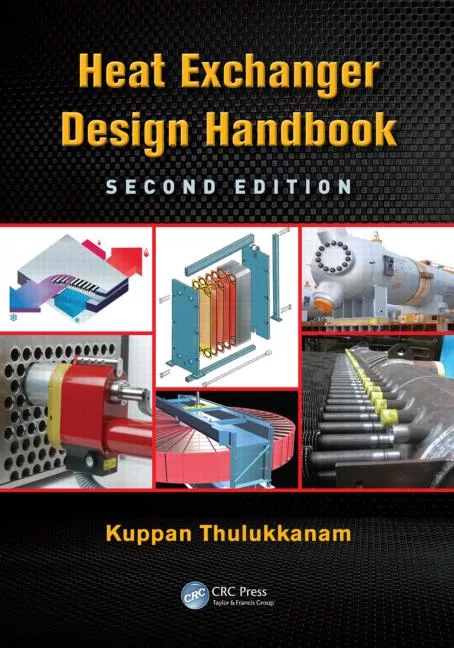
      Heat Exchanger Design Handbook, Second Edition

    • Uncomplicating The Heat Pump: Electrical System Troubleshooting DVD

    • Uncomplicating The Heat Pump: Refrigeration & Air Flow Systems DVD

    See More Products

    Related Directories

    • Efficient Building Automation Corp.

      Efficient Building Automation Corporation provides products, systems, services and support that enable our partners to deliver open and integrated LonWorks building automation solutions of unequalled quality, reliability and performance.
    • Applied Technologies of NY Inc. (ATI of NY)

      Applied Technologies of NY provides reliable, efficient, and cost-effective mechanical solutions, with expert after-market support, serving the New York Metropolitan area since 1996.
    • Fulton Heating Solutions Inc.

      Fulton is a global manufacturer and innovator of high efficiency condensing boiler technologies.
    ×

    Sign Up. Stay Informed.

    The #1 trusted source for the HVACR industry since 1926

    SUBSCRIBE
    • RESOURCES
      • Advertise
      • Contact Us
      • Advisory Board
      • Classifieds
      • Submit a Letter
      • Directories
      • Store
    • ACCOUNT CENTER
      • Create an Account
      • Start a Subscription
      • Manage My Account
      • Sign Up for Newsletters
      • Visit Customer Service
      • Update Preferences
    • SERVICES
      • Marketing Services
      • Reprints
      • Market Research
      • List Rental
      • Survey/Respondent Access
    • STAY CONNECTED
      • LinkedIn
      • Facebook
      • Instagram
      • YouTube
      • X (Twitter)
    • PRIVACY
      • PRIVACY POLICY
      • TERMS & CONDITIONS
      • DO NOT SELL MY PERSONAL INFORMATION
      • PRIVACY REQUEST
      • ACCESSIBILITY

    Copyright ©2026. All Rights Reserved BNP Media, Inc. and BNP Media II, LLC.

    Design, CMS, Hosting & Web Development :: ePublishing