7 Things to Know About Data-Driven Commercial Refrigeration Management
Matelex shows how visibility of operational data transforms into value for customers
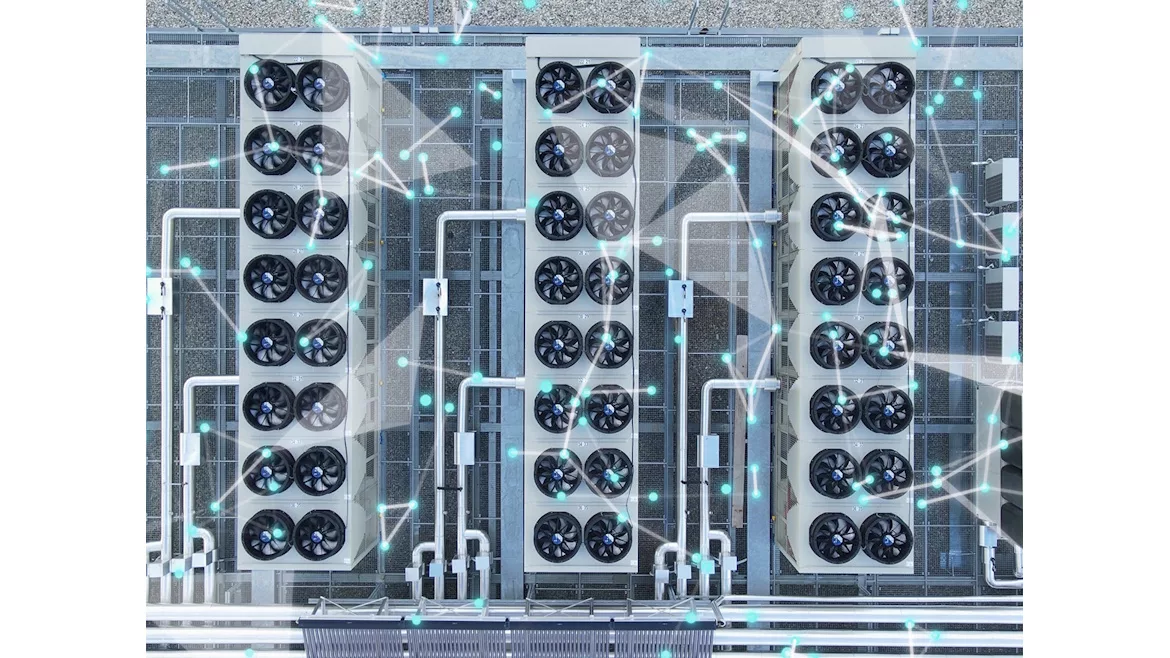
DATA-DRIVEN REFRIGERATION: Commercial refrigeration maintenance has evolved over the years, with modern forms utilizing data-driven strategies and automatic leak detection systems.
Traditional refrigeration maintenance, like periodic inspections, reactive service, and technician experience, is increasingly being supplemented with continuous data-driven maintenance.
Ming Yong, U.S. business development at Matelex, said commercial refrigeration teams find themselves adapting to an ever-evolving industry affected by changing regulations, rising energy costs, workforce shortages, and operational demands.
"Teams are managing much more complexity than before ... operators are being asked to think about uptime, energy efficiency, emissions, documentation, staffing challenges, as well as financial performance, all the time at the same time, so the stakes are simply higher,” Yong said.
To rise to the challenge, contractors, manufacturers, and facility operators are using daily operational data in collaborative ways to optimize the maintenance and performance of commercial refrigeration systems.
Here are seven ways Matelex believes the commercial refrigeration industry has changed due to maintenance techniques based on operational data.
1. Different Leak Detection Methods Have Their Uses
Leak detection technology has evolved from single temperature gauges to technology using Internet of Things systems for real-time connectivity.
The primary methods Yong noted include:
Looking for quick answers on air conditioning, heating and refrigeration topics? Try Ask ACHR NEWS, our new smart AI search tool. Ask ACHR NEWS
- Temperature sensors. This can be thermostat technology in the storage area. It is good as a last line of defense and a visual check.
- Manual. This is usually a technician using handheld devices to check for leaks. It’s effective for inspecting complex systems when an issue arises, but it is costly for daily operations.
- Direct automatic leak detection. These systems detect gas particulates in the air in specific areas. It’s best used for simple cold storage facilities without long refrigerant lines.
- Indirect automatic leak detection. These systems use the Internet of Things and analytics to predict and detect leaks and can monitor entire refrigeration systems.
Since direct and indirect automatic leak detection systems often include reporting, they are becoming the primary approach. Yong pointed out that the two methods can work well together, as opposed to preferring one over the other.
“There’s no real right or wrong technology; it’s what works best for your facility, so picking the appropriate automatic leak detection system for their portfolio of stores is one of the biggest challenges,” she said.
2. Event-Based vs. Pattern-Based Awareness
The industry is moving away from periodic snapshots of data, such as quarterly leak checks, toward continuous monitoring.
“This distinction between event-based awareness and pattern-based awareness is bigger than leak detection. It's really a shift in how refrigeration systems are managed,” she said.
Continuous monitoring helps technicians identify trends before they become failures, allowing maintenance to be scheduled instead of responding to crises. A company case study in Europe shows its system detected leaks up to two months earlier than the standard methodology.
“Instead of waiting for a threshold event, operators begin seeing changes in behavior and trend over time,” she said. “This definitely allows them to have the opportunity to intervene earlier rather than to have a rush with a 3 a.m. emergency call.”
3. A Shift from Reactive to Proactive Maintenance
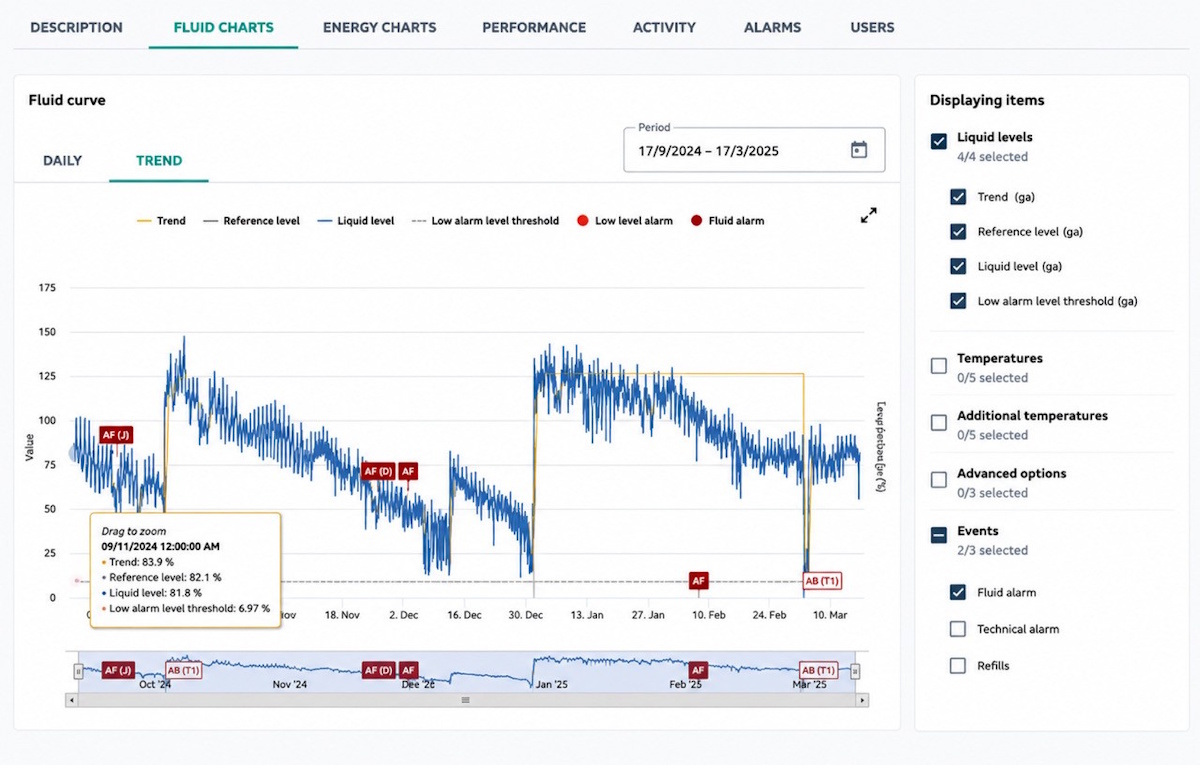
FLUID CHART: Using daily data, operators can review trends over time to identify changes in a commercial refrigeration system before becoming problems. (Courtesy of Matelex)
Thanks to technological advancements, facility managers and their teams are seeking a better understanding of how their systems are performing day-to-day.
She said that operators can continuously see metrics on pressure, temperature, performance trends, and system behavior over time. These provide context that allows them to make changes to the decision-making process.
"Once you can see trends developing over time, you're no longer waiting for a problem; you're managing the performance of your system,” Yong said.
4. Continuous Visibility Equates to Savings
As operational data becomes more visible, more departments begin to care about it, such as finance, sustainability, legal, and operations teams.
“When operators gain visibility into the system behavior earlier, they often gain more control over energy use, refrigerant loss, emergency service calls, and equipment lifespans,” she said. “These are all large costs that a facility has to think about, and addressing these issues proactively instead of reactively can, and often does, bump up the bottom line.”
This reflects the overall mindset shift from only facility managers in a silo worrying about maintenance. Instead, teams come together to manage outcomes.
“By the time the product temperature is affected, operational and financial impacts are likely already developing, not to mention customer relations,” she said. “No one really wants to explain to the customers why all the ice creams are not on the shelf because the shelf is not working.”
5. Regulations Demand Sustainability
With all the ongoing changes to regulations, such as leak reporting and refrigerant management, there are increased demands on organizations to not only reduce emissions but also document performance and demonstrate responsible refrigerant management.
That being the case, continuous monitoring gives both facility managers and contractors a leg up on documenting their operational records.
6. Easing Worker Burnout
The ongoing labor shortage is putting pressure on commercial refrigeration contractors and facility managers. Yong said that through operational visibility, contractors can reduce the constant emergency calls that result in worker burnout by prioritizing optimized maintenance.
“Earlier visibility allows maintenance to become more planned and targeted, instead of reactive and disruptive, and that's not just about calendars or convenience. It really does affect budgeting, staffing, compressor strain, and the basic continuity of operations,” she said.
7. Addressing Legacy Systems
Whether through acquisition, consolidation, or simply inherited, Yong noted that the buildings owned by retailers vary in age and refrigeration systems. Bringing them to a standard is prohibitively expensive and time-consuming, so facility owners are often looking for the lowest-cost path.
Data reports, such as Matelex’s impact simulator, can help quantify the financial impact of leaks for each facility in a portfolio. Managers can then compare potential savings by installing indirect automatic leak detection systems.
“Our case study showed an achievable leak rate of 4.2%, which is a highly desirable outcome for any facility,” she said. “With an automatic leak detection system, the cost of quarterly leak checks is eliminated.”
Looking for a reprint of this article?
From high-res PDFs to custom plaques, order your copy today!