FROSTlines
Predictive Maintenance's Value Isn't the Software — It's the Outcome
Customers care about uptime, lower costs, and confidence that problems will be identified early
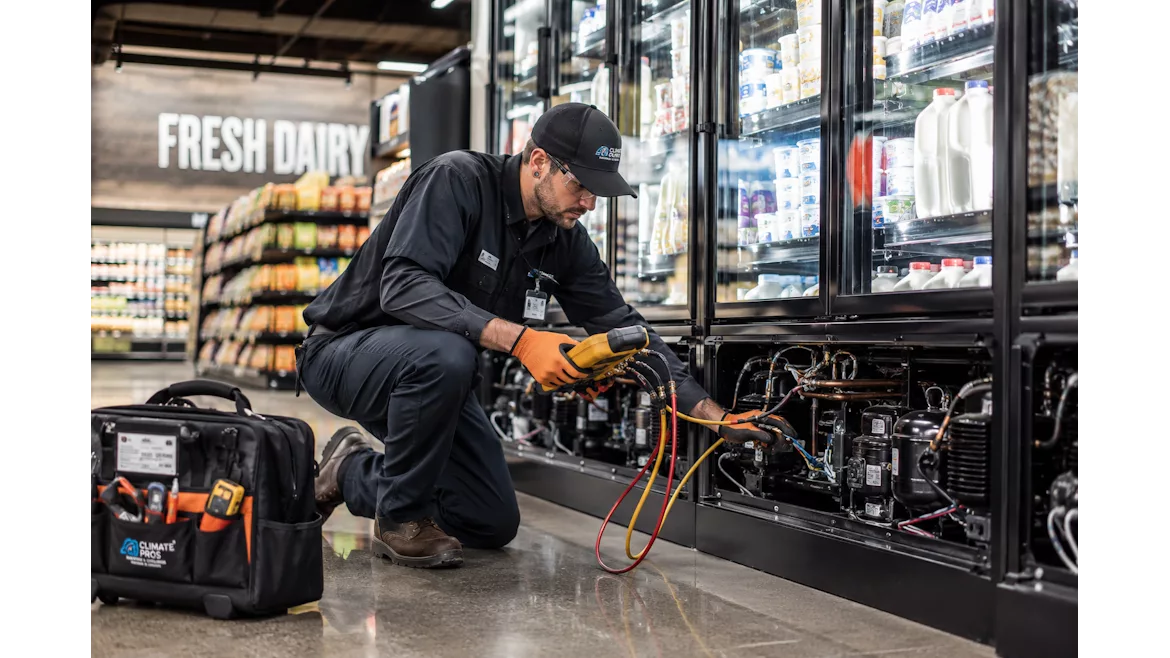
CUSTOMER CONFIDENCE: Customers want confidence that their refrigeration equipment is functioning properly and that the maintenance strategy is keeping them within budget.
The debate in predictive maintenance is often framed the wrong way. People talk about “independent software” versus “contractor-led platforms,” as if the most important question is who wrote the code. It is not. The real question is much simpler: is the model optimized for customer and end-user economics or for vendor and supplier economics? That is the issue that matters.
Customers are not looking for another dashboard to manage. They are already dealing with shrinking margins, labor pressure, energy costs, aging equipment, food safety risk, and constant operational distraction. Most do not wake up wanting more alerts, more analytics, or another software contract.
What they actually want is confidence. They want confidence that their refrigeration systems are operating well. They want confidence that problems will be identified early. They want confidence that failures will be addressed correctly and quickly. And they want confidence that all of that will happen within an acceptable budget. That is the product they want to buy.
Real Value Is The Outcome
Software can absolutely help. It can detect patterns. It can surface early warnings. It can prioritize issues. It can produce reports, analytics, and recommendations. But software alone does not create savings.
If an alert is generated and nobody responds correctly, there is no value. If an insight is shared but the wrong action is taken, there is no value. If a report identifies an issue but the repair is delayed, incomplete, or misdiagnosed, there are no savings realized.
In predictive refrigeration maintenance, value is only created when intelligence is converted into timely, experienced field execution. That is why the winning model is not just the one that can see the problem. It is the one that can help ensure the problem gets solved the right way, at the right time, by people who understand the equipment, the operating environment, and the cost consequences.
This is where the economic model matters. A software-only company is naturally incentivized to grow software revenue. That means more subscriptions, more modules, more analytics layers, more platform dependency, and more recurring spend.
Looking for quick answers on air conditioning, heating and refrigeration topics? Try Ask ACHR NEWS, our new smart AI search tool. Ask ACHR NEWS
Again, that does not automatically make the software bad; but it does mean the buyer should be honest about what that business is fundamentally built to optimize. Customer economics are different. Customers want fewer emergency calls, less product loss, less refrigerant leakage, fewer repeat failures, fewer wasted truck rolls, better technician effectiveness, more uptime, and lower total spend. They do not care about adding another cost layer unless that layer clearly reduces the much higher costs beneath it.
That is why the strongest predictive maintenance platforms will be the ones built around reducing total customer cost, not maximizing standalone software revenue.
AI Driving Down Costs
There is another trend coming fast: AI is driving the cost of building software down. Over time, that means dashboards, reports, analytics, workflows, and even fairly sophisticated software features will become cheaper and easier to replicate. The marginal cost of software will keep falling. That creates a serious problem for software-only players with no real moat.
If your value is mostly the interface, the reporting layer, or the fact that you are a software company, that advantage will compress. The durable advantage will come from somewhere else: deep domain knowledge, proprietary operational data, trusted workflow integration, field credibility, and the ability to convert insight into action and action into measurable customer results.
In other words, the moat will not be “we built software.” The moat will be “we know what matters, we know what to do about it, and we can help make sure the savings are actually realized.”
If your family were on a plane, you would not want the engine health monitored by a generic software company that only knows how to build dashboards. You would want the people who best understand engines, failure patterns, maintenance realities, and operational risk involved in that process.
Refrigeration is no different. Customers do not want more software to stare at. They want confidence that the equipment is functioning properly and that the maintenance strategy is keeping them within budget. That means the best predictive maintenance model is one that closes the loop: detect the issue, interpret it correctly, act quickly, fix it correctly, and continuously learn from the result. Anything less is just commentary.
The future of predictive maintenance will not be won by whoever sells the most software. It will be won by the model that best aligns with customer economics. Software matters. AI matters. Analytics matter. But on their own, they are not the product. The real product is confidence, uptime, and lower total cost. And unless software is paired with experienced execution that produces measurable savings in the field, it is just another expense.
Looking for a reprint of this article?
From high-res PDFs to custom plaques, order your copy today!