From Perk to Expectation: How Financing Is Reshaping HVACR Sales
How the ways to offer financing affect close rates and more
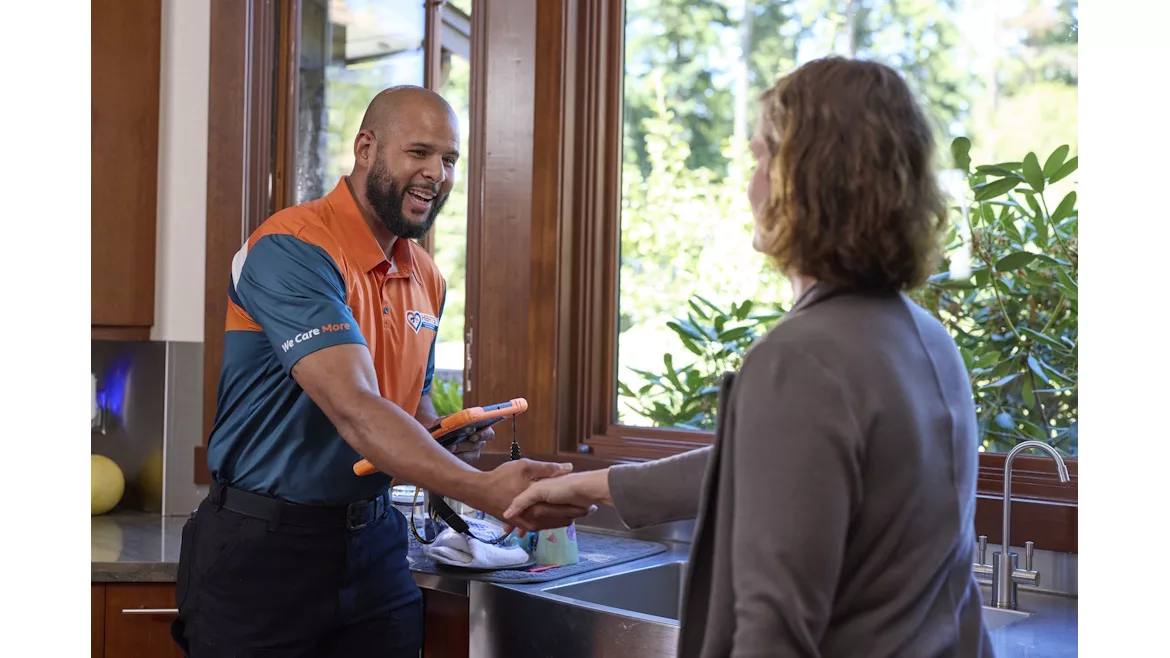
CUSTOMER NEEDS: Not every good customer fits traditional credit models, so having a fallback option allows helping more homeowners.
Ask any HVACR contractor if they offer some sort of financing option to their customers, and nowadays, it’s mostly a resounding, “yes.” That’s because overtime financing has moved from a sales add-on or “perk” to a core business strategy that influences things like close rates, equipment selection, customer satisfaction, and even brand perception. Recent data from the Air Conditioning Contractors of America (ACCA) Contractor of the Future survey, conducted in partnership with Farmington Consulting Group, shows just how certain financing strategies can result in different outcomes. The survey of more than 1,000 contractors found that 37% of contractors offer financing options for every job, 31% offer it circumstantially, and 32% don’t offer financing at all. The study also showed how these different approaches can vary in outcome.
Why Offer Financing
Whether used to remove pressure during emergencies, improve close rates, or help customers invest in better long-term solutions, HVACR contractors’ approach to financing reflects the change in homeowner expectations and buying behavior.
Harts Plumbers, Electricians, and HVAC Technicians, located in western Washington state, offers financing on nearly every eligible job. Their reasoning is simple: Financing is no longer a perk, but a major part of delivering professional service.
“Most customers are not planning for a major system failure, and financing gives them the ability to solve the problem correctly instead of deferring or choosing a short-term patch,” said Dan Hartsough, co-owner of Harts. “Offering it consistently also removes awkwardness from the conversation. It becomes a standard option, not a sales tactic.”
Because of this, homeowners have come to expect flexible payment options from Beltz Home Service Co., located in Findlay, Ohio.
“Offering multiple ways to pay increases customer acquisition and retention, improves satisfaction, and removes unnecessary barriers to solving real home comfort and safety problems,” said Lara Beltz, president and co-owner of Beltz Home Service. “Financing allows customers to move forward with needed work without delay, which benefits both the homeowner and our company.”
Empire Heating & Air Conditioning, servicing the Atlanta metro area, has found the most success in offering financing on every job/repair over $350.
Looking for quick answers on air conditioning, heating and refrigeration topics? Try Ask ACHR NEWS, our new smart AI search tool. Ask ACHR NEWS
“Many customers (in our market) would rather pay under $350 on-site to keep it off their mind,” said Mason Hoover, general manager of Empire. “However, our technicians can extend this offer to lower amounts if the situation calls for it. We always try our best to 'do right' by the customer, regardless of their financial status.”
Both Beltz Home Service and Harts also offer second-look financing or other alternative programs for those customers who may not qualify for financing the first time around, while fully disclosing all rates, fees, terms, and conditions.
According to ACCA’s survey, 33% of HVAC contractors who offer financing utilize second-look financing and also finance a 12% higher share of new and replacement sales.
“These programs have allowed us to help homeowners who would otherwise be unable to move forward, enabling critical repairs or replacements that directly impact safety, comfort, and health,” Beltz said. “Without second-look options, many of those projects simply would not happen.”
After all, not every customer fits traditional credit models. An unexpected emergency could be the last straw in an already difficult situation.
“Second look and alternative approval programs matter. … Having a fallback option allows us to help more homeowners without compromising ethics or pressure,” Hartsough said. “It has meaningfully reduced lost opportunities and improved customer outcomes, particularly in essential repair situations.”
How Financing Affects Sales
The ACCA study found close rates increased from 38-49% when contractors offer financing, and those who did on every job (opposed to those who offer it circumstantially) saw 18% more new and replacement sales that were being financed.
“We have seen a measurable increase in close rates and average ticket size when financing is presented clearly and early,” said Hartsough. “Customers are more likely to choose full system replacements, higher efficiency equipment, or longer-term solutions when monthly payments are part of the discussion. Financing also reduces the number of jobs that stall or get shopped after the estimate. Customers decide faster when the solution feels manageable.”
Beltz said when financing is presented properly, they’ve seen measurable growth across all three of their service offerings — plumbing, HVAC, and electrical.
“Close rates improve, average ticket size increases, and customers are more likely to choose solutions that fully address their needs rather than the bare minimum,” said Beltz. “Financing shifts the conversation from ‘What can I afford today?’ to ‘What’s the right solution for my home?’”
Hoover added that while financing can reach financially stressed customers, many of their more affluent customers have also taken advantage of Empire’s 0%, same-as-cash offering, which accelerated after COVID.
Financing Strategy
Only 28% of contractors surveyed lead with a monthly payment in their proposals, instead of with overall price, but those who did saw a higher percentage (21%) of financed sales.
Harts trains its teams to present the full solution first, then frame the affordability through monthly payment options.
“Leading only with total price can shut customers down emotionally before they understand the value,” said Hartsough. “When customers see that a complete solution can be handled responsibly within their budget, the conversation shifts from fear to problem-solving. Transparency still matters, but payment framing improves engagement and trust.”
Beltz operates in the same way.
“This allows customers to understand both the scope of the investment and how it fits into their household budget,” said Beltz. “Ultimately, the decision is theirs. Presenting both side by side empowers homeowners and reduces sticker shock, making it easier for them to move forward with confidence.”
Empire typically offers good, better, and best options — “showing the bare minimum repairs and cheapest cost, a more involved repair with some preventive measures, and the 'premium' complete repair covering every aspect that the technician can find wrong with the system to ensure the maximum life expectancy and efficiency of the unit,” Hoover explained.
Choosing A Financing Partner
As financing becomes a critical part of the business, choosing the right partner becomes just as important. Outcomes, approval rates, and brand alignment are just a few things that hinge on what program a contractor adopts.
The ACCA study found 78% of contractors use a private financing company, while 22% utilize a local bank or funding source. How contractors found their financing partner is a bit more divided. Some worked through a manufacturer-dealer program, others through a local distributor’s referral, an advertisement, or by way of a field service management software integration.
Beltz first prioritizes what’s best for the customers, followed closely by what’s best for the business.
“We look for partners that provide a smooth, respectful customer experience, clear communication, and reliable support,” Beltz said. “Financing is an extension of our brand in the homeowner’s eyes, so the partner must align with our service values and deliver a process we are proud to stand behind.”
Harts does the same thing by looking for partners that align with their brand and customer base. To them, that means competitive rates, fast approvals, clean customer experience, strong support, and flexibility across credit profiles.
“We also care about how financing integrates into our operations,” said Hartsough. “If it slows down technicians, complicates dispatch, or creates customer confusion, it is not a fit, no matter how attractive the rates look on paper.”
Empire decides on its financial partner by looking for the most reputable brands that offer the best rates and terms for its customers.
“From comparing five-plus financing companies each year, to having someone go line-by-line to ensure there is no 'fine print’ — we would never offer something that our own staff wouldn't be comfortable with,” Hoover said.
Challenges And Risks
While offering financing to customers can increase close rates, overall sales, and customer satisfaction, it also introduces a new set of risks/potential challenges for contractors.
Hoover said one of the largest risks for contractors is a lack of understanding of the financing terms.
“We always calculate the financing fees, and extrapolate our data as such,” Hoover said. “However, if you think of it as truly 'same as cash', the fees associated can very easily creep up and turn profitable jobs into less-than-profitable jobs.”
Misuse is another concern. Hartsough said it shouldn’t be used to oversell or push customers into decisions they don’t understand.
“Internally, it requires strong training and clear guardrails so technicians present financing responsibly and consistently,” Hartsough said. “There is also operational discipline required: documentation, compliance, and follow-through. When done correctly, financing strengthens trust and performance. When done poorly, it can damage a brand quickly.”
Beltz said the biggest risk is brand association. To the customer, whatever financing partner their contractor chooses is an extension of them.
“Their customer service, reputation, and public perception reflect back on you either positively or negatively,” Beltz said. “That makes partner selection critical. Contractors must balance accessibility with integrity, ensuring the programs offered align with their values and protect long-term trust with the homeowner.”
Looking for a reprint of this article?
From high-res PDFs to custom plaques, order your copy today!