Airtight: How New Building Design is Reshaping the HVAC Playbook
High-performance envelopes are changing demand curve and installation guidelines
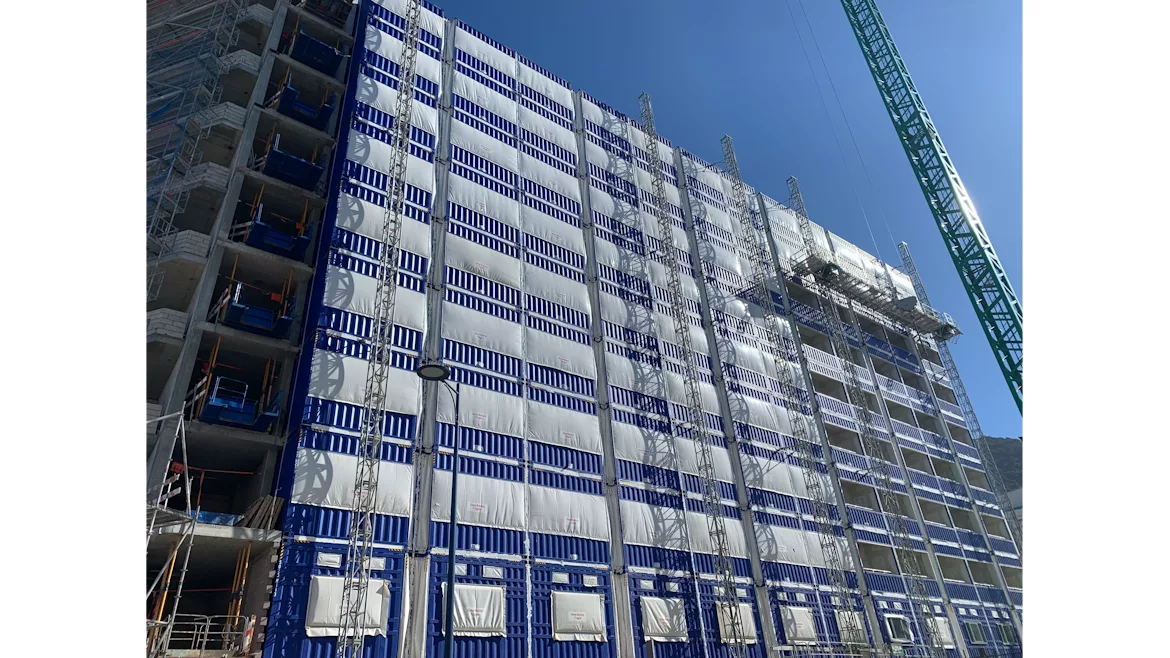
OUT WITH THE OLD: New buildings, new rules — you can’t fix envelope issues with a bigger box.
High-performance building envelopes are rewriting the playbook for HVAC contractors — as buildings are getting more airtight and insulation more robust, loads drop and demand curves flatten, meaning the old rules of thumb and swap-out installs are no longer acceptable.
“Unfortunately, many contractors are still reactive to building problems. The ones adopting envelope-HVAC integration are proactive and looking for ways to differentiate themselves to better serve their customers,” David Richardson, director of technical curriculum and instructor at the National Comfort Institute (NCI), said. “They are true problem-solvers and aren’t as focused on box-swapping.”
As codes tighten, it should be expected that more efficient envelopes are going to change the behavior of HVAC equipment compared to older buildings. Manufacturers are also adapting to this new environment, but it’s ultimately up to the contractors and technicians to ensure this next generation of equipment is working in the buildings of the future.
Think Outside the Duct
For Richardson, the problem is that most contractors don’t view the building envelope as an extension of the traditional HVAC system.
“It’s a closed loop and the part that connects supply register airflow back to return grille airflow,” Richardson said. “Performance on both sides can be viewed as what makes a duct system work like it should. They both should be airtight, well insulated, and have controlled airflow.”
Even with the advances in building science, Richardson has been preaching this for over a decade, including in an article called “The Building Side of the Duct System,” which he wrote for The ACHR NEWS.
But there are still a lot of folks in the HVAC industry who are stuck in their ways, and still rely on the “rule of thumb.” Richardson is hoping that attitude can be changed through simple field measurements and some history lessons.
Looking for quick answers on air conditioning, heating and refrigeration topics? Try Ask ACHR NEWS, our new smart AI search tool. Ask ACHR NEWS
“These are where the rubber meets the road with any design or calculations. If you can test it, you can see it,” Richardson said. “Another trick is to reverse-engineer the installed equipment’s capacity. If it equals a rule of thumb established off 1970s building principles or another rule of thumb, it should raise a red flag to dig deeper.”
When teaching performance-based contracting, Richardson said, there are other ways of convincing contractors that adding envelope verification shouldn’t be viewed as extra work, but rather as a way to set themselves apart.
“This is another instance where the building side of the duct system is so beneficial. Once contractors understand that many of the problems they are blamed for aren’t HVAC issues but building problems, it gives them another option to provide solutions based on testing and not guessing,” Richardson said. “Throwing in a bigger box isn’t always the best choice. One simple HVAC-related test any HVAC contractor can apply to the building is to static pressure-test the building so they see the interactions between the HVAC system and building interactions, like closing interior doors, to diagnose advanced comfort and IAQ issues.”
Manufacturers Meeting the Moment
Tighter buildings are spurring design changes in equipment. High-performance-envelope homes have smaller loads and a flatter energy curve, making variable-capacity inverter systems a must. Unlike single-stage systems that are always fully on or off and more prone to short-cycling, variable-capacity systems can adjust between maximum and minimum output levels.
“This allows the compressor to operate at lower capacities, saving the homeowner on energy costs,” Ken Johnson, regional sales manager, Mitsubishi Electric Trane US (METUS), noted. “In addition, the homeowner will experience a more comfortable environment, as variable-capacity systems do a superior job of maintaining the set point.”
To illustrate his point, Johnson used a story from an energy analyst friend as an example: His friend was running a two-stage furnace, which over the course of six days cycled on 128 times. After switching to a variable-capacity system, he then tracked the cycling during a similar weather profile and found it only turned on 37 times.
Not only is that equating to a lower energy bill, but also to increased comfort.
For those living in high-humidity regions, the good news is that with a high-performance envelope, you have a lower air-changes-per-hour (ACH) rate, and, therefore, more control over the air inside your home.
“Dehumidification, either by the HVAC system or by a stand-alone dehumidifier, will still be required depending on the situation,” Johnson said. “However, it will be easier to manage given that the level of infiltration of humid outside air will be significantly lower.”
As the saying goes in high-performance homebuilding, “Build it tight, ventilate it right.” Because these homes are so airtight, a high-quality energy-recovery ventilator (ERV) or heat-recovery ventilator (HRV) will control ventilation and filter the incoming air, delivering comfort, quiet, energy efficiency, and a healthier living environment.
Adapting to New Standards
Tighter buildings mean sizing needs to be more exact, and contractors also need to figure out how to commission systems in these new environments.
Johnson said, first and foremost, they strongly encourage contractors to always perform a load calculation for both new construction and add-on and replacement projects. Contractors have a variety of options when selecting a ACCA-certified Manual J program.
Manufacturers like METUS also have resources to help.
“As part of our contractor program (for Diamond Contractors & Ductless Pros), Mitsubishi Electric Trane has actively engaged with multiple software vendors (e.g., Amply Energy & Conduit Tech) to simplify the Manual J process,” Johnson said. “Once contractors have the room-by-room load calculations, they can use Mitsubishi Electric’s free Diamond System Builder program to design a system that best matches the load. This significantly reduces the chances of over- and undersizing and their associated comfort issues.”
The push for energy efficiency doesn’t look like it’s going away. In states that are advancing codes to the most stringent standards, new code-built homes are comparable to what were considered high-performance homes not long ago. Due to this shift, Johnson said manufacturers are playing a more crucial role.
“We must educate and train industry professionals — including builders, architects, engineers, Home Energy Rating System (HERS) Index raters, and energy analysts — to identify the most appropriate equipment for high-performance homes,” Johnson said. “We must also educate and train our installers on proper system design, installation techniques, and procedures to ensure customer satisfaction and minimize callbacks.”
To drive his point home, Johnson shared his comparative analysis of building codes by state for 2023 and 2024: It appears 17 states have advanced their codes, with most transitioning from International Energy Conservation Code (IECC) 2018 to IECC 2021. The key changes in IECC 2021 include a 9.4% improvement in efficiency and an 8.7% reduction in greenhouse gas emissions. HVAC equipment performance standards were also raised: Annual Fuel Utilization Efficiency (AFUE) from 80% to 95%, Heating Seasonal Performance Factor (HSPF) from 8.2 to 10, and Seasonal Energy Efficiency Ratio (SEER) from 13 to 16. Additionally, the new code requires a tighter envelope.
What's Happening in the Field
When working on jobs with high-performance envelopes, Prentice Lattinville, project manager at Clean Air Quality Service, is seeing technicians treating systems the same way Richardson is — being installed “the old way,” or companies running “rough numbers” or “this is how I always done it” or “I have been doing it this way for 40 years.”
“When companies skip the basics or don’t understand what is happening in the building, then major problems will always occur,” Lattinville said.
Lattinville said they use Manual J, Manual S, Manual D, and Manual T, static pressure-testing, blower door, and duct leakage testing for a reason.
“The benefits of high-performance envelopes with high-performance equipment are that if the above steps are followed, then the system and the building become super-efficient and lower cost to the customer,” Lattinville said. “However, most of the time they are poorly engineered, from equipment being oversized or undersized, bad ductwork, etc., and most importantly, improper installation.”
Static testing and duct-leakage verification are a big part of the HVAC field, but Lattinville said he is still seeing a lot of companies and techs skipping these steps, either because they feel it takes too much time or isn’t actually necessary, or because they simply lack the training to perform them.
“This is widespread not just in the U.S. but in other countries as well,” Lattinville said. “This leads to comfort issues like uneven temperatures, humidity problems, and poor indoor air quality.”
Challenges with New Construction
Tight envelopes on new buildings can cause friction between HVAC technicians who want to ensure their equipment is running as advertised and general contractors who want the job done.
“Coordination often fails because HVAC companies and contractors fail to have clear and open communication,” Lattinville said. “Most people just want the job done as cheaply and as fast as possible, and do not care what it takes. While others lack in-depth knowledge to see the problem in the HVAC field.”
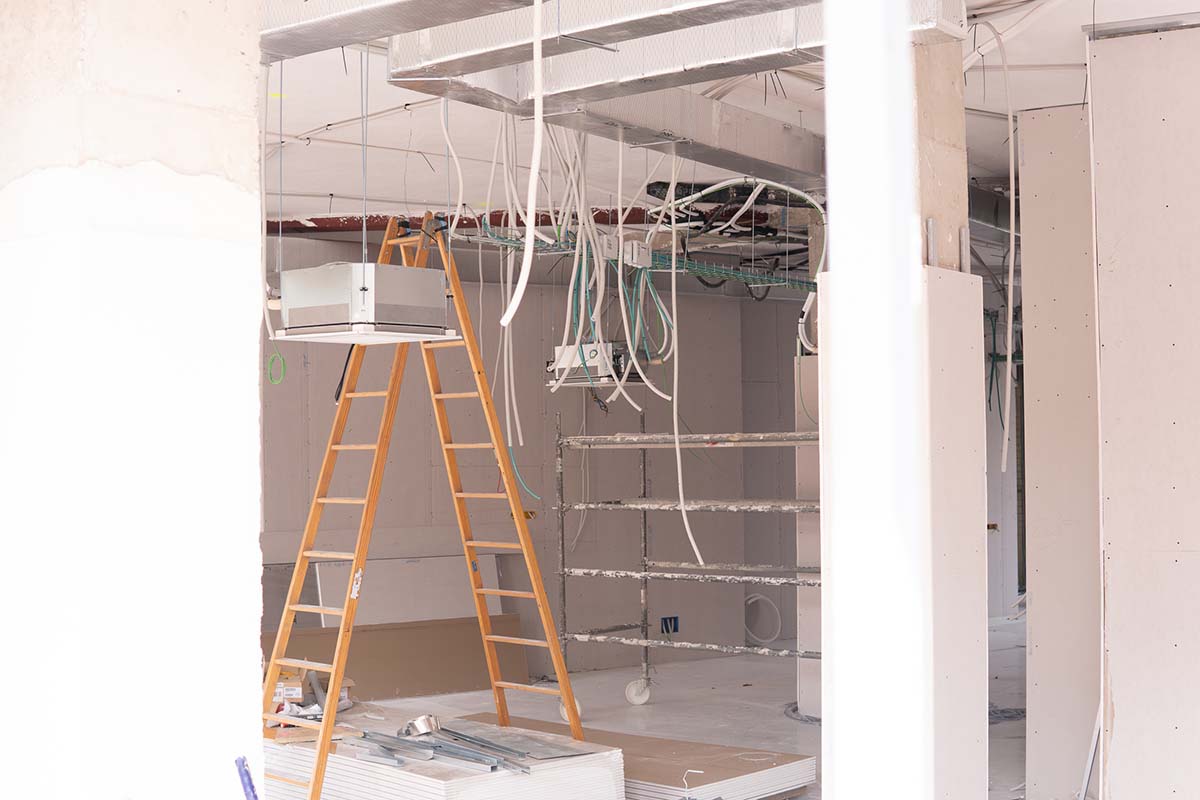
BEYOND EQUIPMENT: To ensure the HVAC performs, communication with general contractors on new builds needs to be clear and concise. (Courtesy of mikel soria arbilla / iStock / Getty Images Plus)
When the install isn’t properly done, it’s nearly guaranteed techs are going to get callbacks tied to humidity, mold, poor ventilation, and comfort complaints.
“These problems often trace back to any homes with oversized or undersized equipment, bad air flow, or poor ventilation,” Lattinville said. All of this leads back to not following the proper procedures.
So, what’s the fix? Lattinville argues one solution should be more proper training in HVAC design, testing, insulation, and ventilation for both the HVAC contractors and their technicians.
On top of that: enforcement of HVAC codes by a qualified person.
“That ensures nothing is missed or skipped,” Lattinville said, adding that homeowners need additional education as well. “Homeowners need to understand that experienced technicians will always beat out what Google, the internet, or AI will tell them. Cheap and fast is never good.”
Looking for a reprint of this article?
From high-res PDFs to custom plaques, order your copy today!