Guest Column
The Mission Continues: Why America’s Veterans Belong in the Trades

NEXT JOURNEY: From combat outposts to crawl spaces, veterans are already wired to solve problems, follow procedure, and take care of people.
As I was leaving the parking lot of my Army Battalion office building for the last time, driving an oversized U-Haul box truck, I scraped the entire left side of the duty van. My Battalion Command Sergeant Major immediately came out yelling and wondering why I was driving during PT. “Great, my last day in the Army and I’m going to get a bill,” I thought.
Imagine being part of the largest, most disciplined, and powerful force the world has ever known, an organization that took you in as barely an adult, shaped you through hardship, and transformed you into a professional capable of protecting the nation’s interests. A place where your teammates felt more like family than colleagues.
Then, one day, it’s over. You turn in your gear, sign a stack of forms, and walk away with a single piece of paper that confirms what you were and starts the clock on figuring out what comes next. The organization that defined your identity, your friendships, and your sense of community vanishes in an instant. So does your paycheck.
The Trades Are Starved for Skilled Labor
Across the country, the skilled trades are facing a serious labor shortage. One industry professional told me, “For every one electrician that enters the industry, five are retiring.” Reports estimate more than 100,000 open positions in HVAC, plumbing, and electrical work nationwide, a number expected to grow over the next decade.
This shortage doesn’t just affect contractors; it threatens housing affordability, energy-efficiency goals, and even the reliability of the systems families depend on every day. The good news? It’s a gap we can close. With the right training and support, U.S. veterans represent a proven, ready-made workforce capable of stepping into these essential roles and restoring balance to America’s skilled-trade pipeline.
Veterans Are Perfect Fits for Trade Jobs
Veterans are natural fits in the trades. Many Iraq and Afghanistan veterans who served in combat outposts or firebases had to perform trade roles just to keep the lights on, quite literally. Veterans, at their core, are practical problem solvers. Tradespeople are too. Both are wired to help others and fix what’s broken.
The discipline, accountability, and attention to detail learned in the service translate directly to work governed by codes, safety standards, and precision. These qualities make veterans some of the most reliable and mission-driven professionals you can hire.
Looking for quick answers on air conditioning, heating and refrigeration topics? Try Ask ACHR NEWS, our new smart AI search tool. Ask ACHR NEWS
The Challenge: Most Veterans Don’t Know What They Want to Be When They Grow Up
When I left the Navy, I had no idea what I wanted to be when I grew up. I had what felt like an immense amount of leadership and experience, managing people, resources, and missions in high-pressure environments, yet none of that seemed to matter to the big organizations I was applying to.
No matter how carefully I reworked my résumé, it felt like no one could see what I had lived through and learned. I sent out countless applications into a void. It was frustrating, even disorienting.
I had endured some of the hardest training imaginable, physically, mentally, and emotionally, yet out here, it seemed invisible. Civilian employers often don’t understand that every veteran carries a baseline of leadership, perseverance, and adaptability. These traits aren’t optional in the military; they’re required for survival.
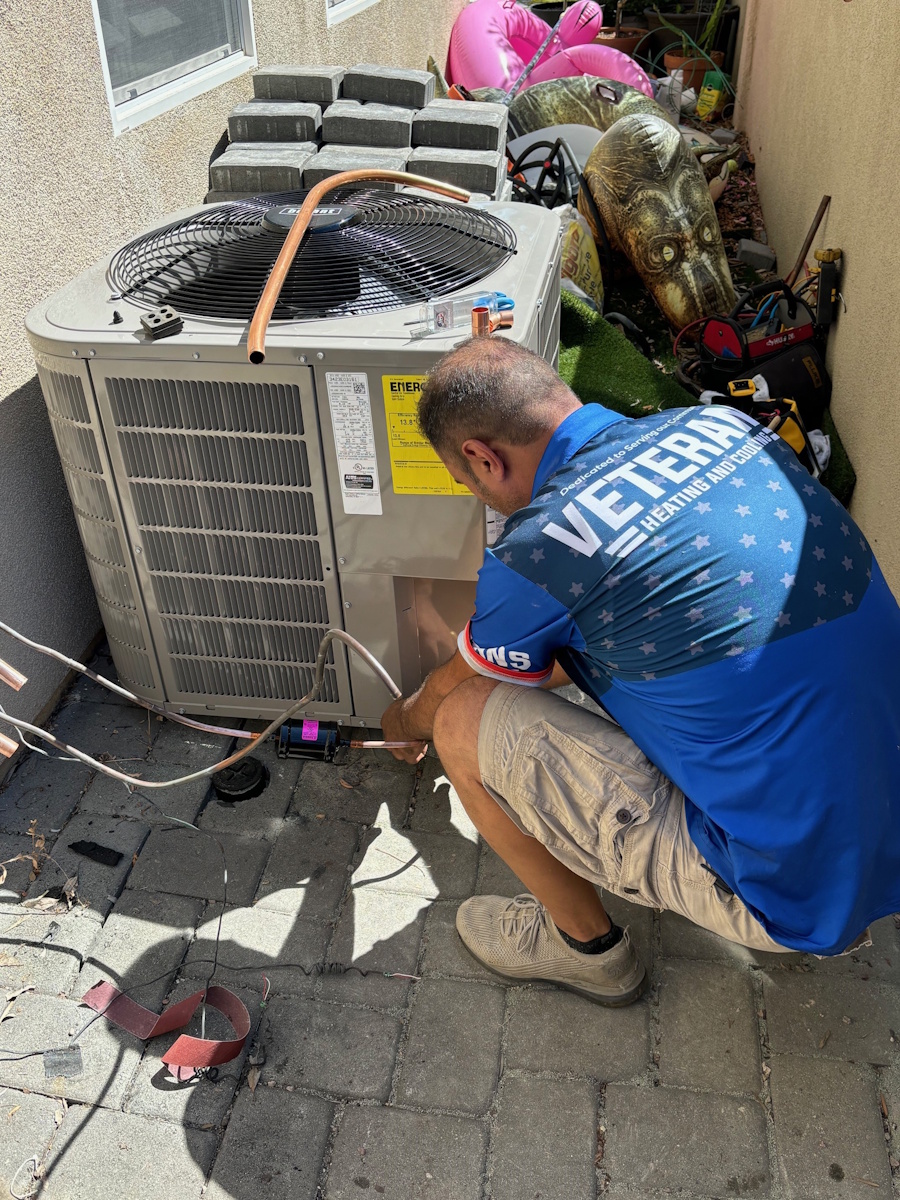
THE RIGHT SKILLS: Proven leadership, discipline, and mechanical aptitude — just a few skillsets veterans are already equipped with. (Courtesy of Veterans Heating, Air Conditioning, Plumbing & Electrical)
Ultimately, I was hired by a fellow veteran who recognized that immediately. He didn’t need me to explain my experience in corporate language; he understood its value. That opportunity led me into a leadership role on a major engineering project building two Washington State Ferries. It was my first real taste of what it meant to take that mission mindset and apply it in a new direction.
Like so many veterans, I didn’t know exactly what my next step would be. I just knew I wanted to contribute, to keep the mission going, to feel valued, and to move forward.
That’s why employers play such a vital role in helping veterans see what’s possible, because when they recognize that depth of experience, they’re not just filling a job. They’re unlocking a level of leadership and resilience that can transform their culture.
Employers Can Help Veterans Find Work and Themselves
Employers can address their skills gap by targeting and hiring veterans, whether straight out of the military, after trade school, or once they’ve gained private-sector experience.
Our company has built strong relationships with several trade schools in the San Diego area. When new veteran graduates are ready, we’re notified, and they go straight to the top of our hiring list. Once you hire one or two, you realize they’re often your best recruiters, connecting you with other high-quality candidates from their own networks.
What Employers Can Do Differently
Employers have the power to change this story. By intentionally hiring veterans, they can fill critical roles while giving purpose-driven individuals a clear path forward.
Start by recognizing transferable skills: leadership, logistics, and hands-on mechanical experience are already baked into a veteran’s background. Build structured training programs or apprenticeships with clear milestones so new hires can measure progress. Pair each veteran with a senior technician or mentor who understands both the trade and the transition.
Partnerships also make a lasting difference. Organizations like Helmets to Hardhats and Hire Heroes USA are more than job boards — they’re bridges that help veterans translate years of service into meaningful civilian careers. By connecting disciplined, skilled individuals with contractors hungry for dependable talent, they close the gap between military experience and private-sector opportunity.
Programs such as ForgeNow, founded by veterans themselves, take this further by training former service members directly into HVAC and plumbing careers. They don’t just teach technical skills; they restore confidence and purpose, helping veterans rebuild their sense of mission while meeting one of America’s most urgent workforce needs.
Even local chambers of commerce play a role by linking veteran organizations, trade schools, and small businesses, making it easier for employers to find candidates who are already proven leaders.
Together, these partnerships represent more than hiring pipelines — they’re systems of purpose. They help veterans continue their service in a new way, keeping families safe, comfortable, and connected, one home and one community at a time.
The Bigger Picture: Strengthening Communities and the Next Generation
Hiring veterans isn’t charity: it’s strategy. When businesses bring veterans into the trades, they strengthen both the workforce and the community. Veterans tend to stay long-term, build relationships with customers, and reinvest locally.
This approach tackles two national challenges at once: veteran underemployment and the skilled labor shortage. Every veteran who learns a trade contributes to economic stability and sets an example for the next generation. Trade associations, utility partners, and policymakers can amplify this momentum by building veteran-focused education pipelines.
The result? A stronger, more sustainable industry built on service, skill, and integrity.
Closing Thoughts – A Win-Win Worth Building On
Veterans bring integrity, precision, and teamwork, exactly what the trades need most. Whether you’re a business owner, educator, or policymaker, think of veteran hiring not as a gesture of gratitude but as an investment in people and infrastructure.
As a veteran myself, I know how powerful it is to find purpose again after the military. Every time I see one of our veteran technicians mentoring the next generation, I’m reminded that service doesn’t stop when the uniform comes off, it just changes form.
At Veterans Heating, Air Conditioning, Plumbing & Electrical, our mission extends beyond comfort systems; it’s about opportunity. Hiring veterans doesn’t just fill positions — it helps rebuild lives, businesses, and communities. And that’s a mission worth continuing.
At Reputation Igniter, we also hire veterans, not only for their discipline and leadership, but because we understand that supporting the trades means strengthening the very fabric of American enterprise. Every contractor we help grow supports their employees, their families, and their communities. In that way, our mission continues here at home, helping defend freedom through hard work, innovation, and the entrepreneurial spirit that keeps America strong.
And it doesn’t matter where you sit in the trades ecosystem, whether you’re a contractor serving your community, a supplier keeping materials moving, a trainer teaching the next generation, or a software company supporting business growth, we all have a role to play. By hiring veterans, we strengthen the HVAC and plumbing industries, fuel a thriving economy, and honor the very people who have already given so much to protect our way of life.
Because when we bring veterans into the trades, we’re not just filling jobs, we’re building a stronger nation, one mission, one team, and one technician at a time.
If you want to strengthen your team, your community, and your country, start by asking yourself one simple question: Are you hiring veterans?
Looking for a reprint of this article?
From high-res PDFs to custom plaques, order your copy today!