EPA's Refrigerant Rule Under Pressure
Lawmakers push to revise the HFC phasedown mandate, but industry groups warn this could create chaos
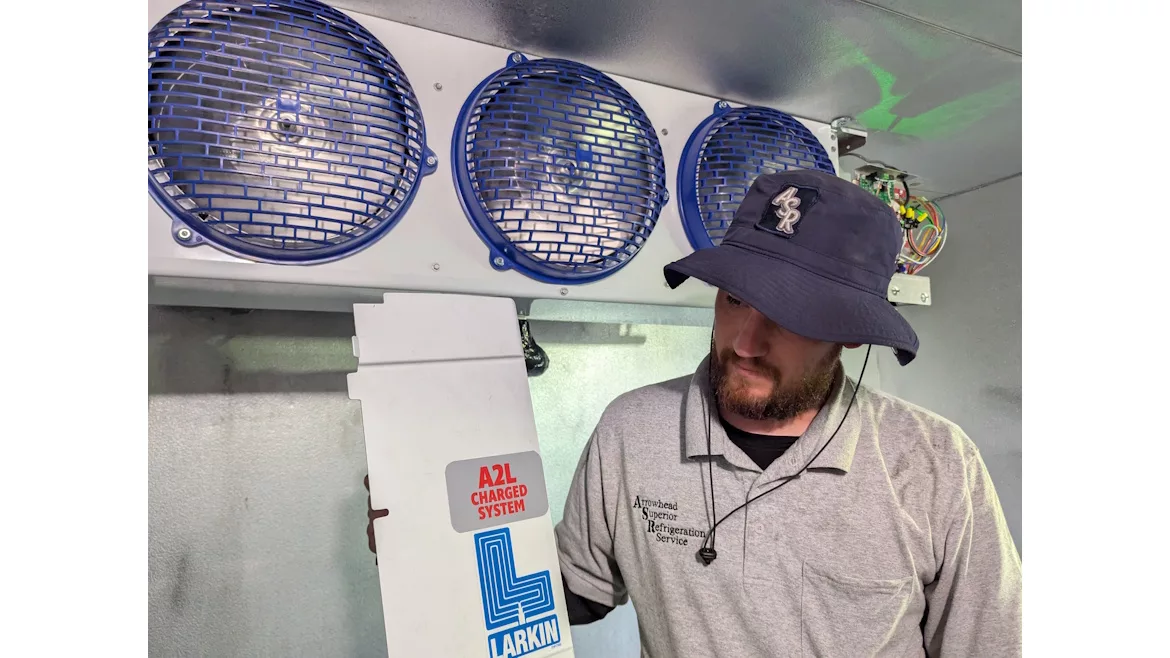
RECONSIDERING RULE: Rolling back the TT rule would be difficult, as A2L refrigerants are already widely used throughout HVAC and refrigeration applications.
As part of a sweeping deregulatory push, the U.S. Environmental Protection Agency (EPA) is reconsidering its Technology Transitions (TT) rule — a key piece of the AIM Act that mandates a phasedown of high-GWP HFC refrigerants. While some stakeholders welcome the move, industry groups are warning that any rollback now would create chaos.
Originally finalized in October 2023 and amended that December, the TT rule sets strict GWP limits on new refrigeration, air conditioning, and heat pump (RACHP) systems. It effectively ended the production of most residential and light commercial comfort cooling equipment that used R-410A on January 1, 2025, in favor of lower-GWP A2L refrigerants like R-32 and R-454B. It also imposes increasingly tight GWP restrictions on commercial refrigeration equipment through 2027.
But some lawmakers have urged the EPA to reconsider parts of the rule, raising concerns about its aggressive timeline and broad scope. In a fact sheet released this year, the agency noted the average compliance cost for affected industries is about $30.87 million annually over five years and acknowledged a need for “additional time and increased flexibility.”
Industry Pushback
The move to reconsider the rule has drawn mixed reactions. Trade groups representing cold storage, supermarkets, and food retailers argue the deadlines are unrealistic. For example, the Coalition for the Use of Safe and Efficient Refrigerants (CUSER) petitioned EPA to raise the GWP limit for cold storage applications from 150 to 700, which would allow for continued use of R-513A. The International Institute of All-Natural Refrigeration (IIAR) fired back, saying natural refrigerants are viable today and that CUSER’s request “serves the narrow interests of a few stakeholders, disregards the facts, and ignores current technological realities.”
The Air-Conditioning, Heating, and Refrigeration Institute (AHRI) also strongly supports the TT rule as finalized, said Samantha Slater, the trade association’s senior vice president of government affairs. She described the rule as a practical, enforceable framework that aligns with federal law, supports domestic manufacturing, and provides the regulatory certainty needed for long-term investment and innovation.
Revising the rule now would also be deeply disruptive, warned Slater.
“We respectfully disagree with recent calls to revise the TT rule. The rule reflects extensive stakeholder input and market readiness, and changes now would inject uncertainty, penalize compliant firms, and create unfair advantages for foreign manufacturers.”
Looking for quick answers on air conditioning, heating and refrigeration topics? Try Ask ACHR NEWS, our new smart AI search tool. Ask ACHR NEWS
Slater also rejected the notion that the rule is flawed, noting that the “bulk of concerns mischaracterize the rule and risk undermining years of coordinated investment, training, and code modernization across the HVACR sector. We believe the rule is appropriately structured and does not require substantive changes.”
That said, Slater acknowledged that clearer communication about existing exemptions for maintenance and the narrow definition of retrofits could help reduce lingering confusion in the market.
Stay The Course
The Plumbing-Heating-Cooling Contractors - National Association (PHCC) has also maintained its support for the TT rule. “Significant planning went into preparing for the industry’s move into the next generation of products in as orderly a fashion as possible and to keep the U.S. as the global leader of the HVACR industry,” said their vice president of regulatory affairs, Chuck White.
He added that reversing course “is not a practical solution,” acknowledging that while the current refrigerant shortage has been painful for installing contractors, the industry has already made changes to smooth out issues.
“We do understand that the refrigerant shortage has been an issue, but trying to retool the U.S. manufacturing supply chain will take time and money,” he said. “In the time it takes to change, the current refrigerant supply chain issues should be resolved.”
In addition, White noted, the cost of changing back would ultimately be passed down the sales chain to the consumer. “Offshore manufacturers that did not transition would also be well positioned to move into the U.S. market without these competitive disadvantages.”
While PHCC supports the rule, White said he would have liked to see more emphasis on education, training, and skill validation.
“Many folks have EPA 608 cards that never expire and are based on extinct technology. Up-to-date requirements for training, as well as stronger enforcement methods, were things PHCC was supportive of but that EPA ultimately declined to pursue.” He added that qualified contractors are not afraid of quality installations and skill validation.
Destabilizing Delays
Heating, Air-conditioning and Refrigeration Distributors International (HARDI) has raised a few concerns about the TT rule as well, including the use of installation dates rather than manufacturing dates for compliance. The group also joined a petition urging the EPA to phase out the production and import of R-410A outdoor condensing units, warning that allowing their continued replacement could create a loophole that delays the transition to A2L refrigerants. In addition, continued demand for R-410A to service these systems would further strain an already limited supply, said Alex Ayers, HARDI’s director of government affairs.
Overall, however, HARDI supports the phasedown timeline. In fact, Ayers was blunt in his criticism of rollback efforts, saying that “the calls to repeal or delay the Technology Transition rule are very short-sighted and either driven by a misunderstanding of how the AIM Act works or by the potential for certain importers to make billions in profit from the delay.”
He also stressed that delaying the rule would have broader consequences, given that it works in tandem with the EPA’s HFC allocation system.
“There is no way to delay the rule without needing to do a worse transition in the future,” he explained.
Ayers specifically criticized a proposal from a supermarket group to push back compliance to 2032, which he says would “likely force all supermarkets to move to industrial refrigerants instead of A2Ls. The increased demand for refrigerant from continuing the use of high-GWP refrigerants would use up the allocation that would be used to produce A2Ls, leaving supermarkets (and HVAC and other commercial refrigeration) with no choice but to move to refrigerants with major safety and efficiency concerns.”
Rollback Isn’t Easy
Even if the EPA wanted to make major changes to the rule, it’s unlikely to happen quickly. According to Ayers, “The AIM Act requires any Technology Transition rules, including rules that modify the existing Technology Transition rule, to include a one-year delay between the rule being finalized and the rule going into effect.”
With HVAC and refrigeration deadlines already taking effect in 2025 and 2026, delaying enforcement could also run afoul of the law.
“If the EPA were to try to use enforcement discretion to get around the one-year delay, it would invite litigation, which creates even more uncertainty and is worse for the industry,” said Ayers.
Slater agreed, noting, “Rolling back or revising the rule would require a new rulemaking, trigger regulatory uncertainty, and disrupt supply chains. It would undermine domestic investment, delay climate goals, and risk shifting market share to less-regulated foreign imports.”
White added that rolling back the rule is not simply a matter of feasibility -- it’s also about the amount of time and additional costs that would be involved; for example, HVACR equipment would need to be tested and certified.
“It isn’t as easy as turning the lights back on in an unused room, as that room is being used for something else today,” he said. “Staying the course is the fastest way to smooth out the bumps in the road.”
Looking for a reprint of this article?
From high-res PDFs to custom plaques, order your copy today!



.webp?height=200&t=1742258434&width=200 "epa-hq-wj-clinton-building-main-entrance-2018a-cropped-189dcb (1).jpg")


