EPA’s Proposed Refrigerant Rule Triggers Wave of Industry Feedback
Nearly 2,300 comments highlight the HVACR industry’s divided concerns and priorities
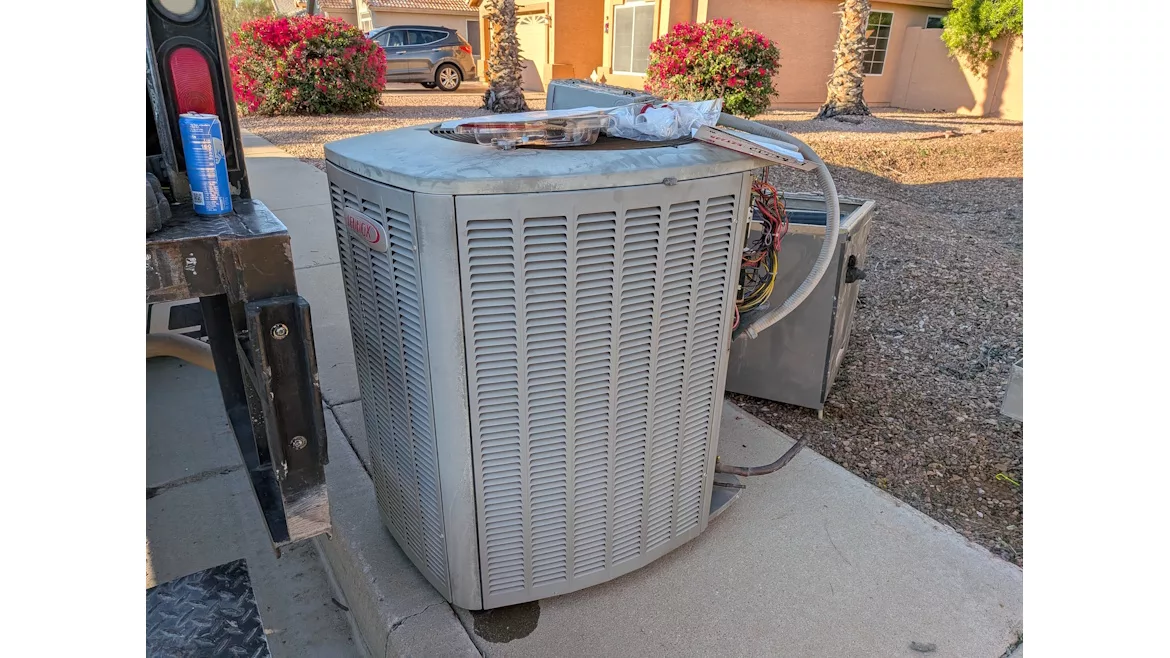
UNLIMITED REPLACEMENT: Many HVAC companies are urging EPA not to allow condensing units to be replaced indefinitely.
The U.S. Environmental Protection Agency (EPA) recently closed the public comment window on its proposed revisions to the Technology Transitions (TT) rule — an essential component of the AIM Act that governs how and when the HVACR industry moves away from higher-GWP HFC refrigerants. Released on September 30, the proposal extends compliance deadlines for several equipment categories and raises GWP limits for certain refrigeration applications.
One of the most closely watched revisions would remove the installation cutoff date for residential and light commercial air conditioning and heat pump (AC/HP) systems manufactured or imported prior to 2025. If finalized, this change would give contractors additional time to install remaining R-410A equipment already in the supply chain. EPA is also seeking to temporarily permit higher GWP limits for cold storage warehouses and retail food refrigeration beginning in 2026, with more stringent thresholds scheduled to take effect in 2032.
Nearly 2,300 comments were submitted before the deadline, and EPA is in the process of reviewing them and then posting them to the public docket. A final decision isn’t expected until sometime in 2026, leaving many HVACR contractors uncertain about what equipment can be legally installed after January 1. Below are some of the concerns raised by HVACR stakeholders.
ACCA asked EPA to remove installation deadlines for residential, light commercial AC/HP and VRF/VRV systems manufactured or imported before January 1, 2025, arguing that the cutoff could strand lawful R-410A equipment, disrupt projects, and impose needless financial risk on contractors and consumers. The association added that eliminating the deadline would not increase the amount of high-GWP equipment produced but would simply allow lawful inventory to be installed until sold. ACCA also warned that differing state refrigerant rules could further complicate the transition and urged EPA to use its authority to discourage a patchwork of state refrigerant regulations.
As Barton James, president and CEO of ACCA, wrote, “In the absence of federal preemption under the AIM Act, several states are pursuing accelerated regulatory timelines that effectively mandate a transition to A3 refrigerants…A3 refrigerants pose materially different installation, ventilation, and ignition-risk challenges than A2Ls, and the rapid transition schedules under consideration in some states would force contractors to navigate incompatible codes, unavailable equipment, and unclear liability exposure.”
For their part, AHRI and the Alliance for Atmospheric Policy also supported, in their comments, indefinite installation of residential and light commercial air-conditioning and heat-pump systems using pre-2025 components. Both AHRI and the Alliance extended that support to VRF systems, as well.
Aside from that issue, AHRI and the Alliance urged EPA to maintain the existing TT rule schedule, arguing that delaying transition dates or raising GWP limits would undermine years of industry investment, misalign HFC demand with the AIM Act’s tightening supply caps, and lead to higher refrigerant prices for consumers. They emphasized that “multiple substitute refrigerants are listed as approved under EPA’s Significant New Alternatives Policy (SNAP) [program], and building codes nationwide now allow for their installation,” adding that as of July 2025, nearly 90% of new residential and light commercial AC/HP systems used substitute refrigerants.
Looking for quick answers on air conditioning, heating and refrigeration topics? Try Ask ACHR NEWS, our new smart AI search tool. Ask ACHR NEWS
The groups warned that broad delays would reward laggards, disadvantage U.S. manufacturers, and trigger a patchwork of rules among the states. The letter stated, “The practical course is clear: keep one national schedule, preserve the 2029 supply-demand alignment, and use narrow, evidence-based relief only where necessary.”
Carrier supported the overall framework of the TT rule but requested several key modifications to ensure a smoother transition. Specifically, the company urged EPA to remove the installation deadline for VRF systems, aligning them with residential and light-commercial AC/HP systems to avoid stranded inventory and simplify compliance. Carrier also asked EPA to stop treating replacement residential and light commercial condensing units as service components under the rule.
“Treating the condenser…as a service component is not needed, nor is it in the best interest of consumers,” wrote Rob Six, head of government relations at Carrier. He noted that Carrier residential HVAC components carry a 10-year warranty, so most R-410A outdoor unit failures are covered. When failures occur after the warranty period, replacing only the outdoor unit can create system mismatches, “leading to inefficient performance and a higher likelihood of additional repairs over the system’s lifespan. Such increased costs for consumers run counter to the intent of the proposed rule.”
Copeland asked EPA to keep the current TT rule timelines, emphasizing that changes would create uncertainty, raise refrigerant costs, and “exacerbate an already complex patchwork of mandates and regulations” at the state level. The company noted that the industry is already moving to lower-GWP refrigerants, pointing to updated building codes, strong A2L adoption in the HVAC market, and a number of viable options for the food retail industry.
“Technologies such as CO₂, ammonia, A2Ls, R-290, and hybrid configurations each fit different applications, giving [food retailers] flexibility to match solutions with their technology preferences, regional conditions, and budget considerations,” wrote Jennifer Butsch, director of regulatory affairs at Copeland.
Extending HFC use could also strain future refrigerant supply under the AIM Act, she cautioned, which would be detrimental to the industry. “Maintaining the published transition timelines supports the OEMs that have made significant investments in these solutions and helps preserve a stable HFC supply–demand balance, which is important for affordability now and in the future.”
Daikin expressed support for EPA’s plan to eliminate the installation deadline for residential and light commercial AC/HP systems built from components produced or imported before January 1, 2025. The company further noted that VRF systems should be granted the same indefinite installation allowance for pre-2026 components to ensure consistency across product categories.
“A uniform installation approach across air conditioners, heat pumps, and VRF would (i) prevent stranded lawful inventory; (ii) reduce the likelihood of potential economic losses borne by U.S. manufacturers, distributors, contractors, and end-users; (iii) align with the structure and rationale of the Technology Transitions program; (iv) eliminate the need for administratively complex permit-based carve-outs; and (v) avoid distorting multi-year commercial project pipelines that depend on predictable installation timelines,” wrote David Calabrese, executive vice president of government affairs at Daikin.
Daikin also asked EPA to offer a time-limited No Action Assurance (NAA) — or similar enforcement flexibility — for equipment categories with January 1, 2026, compliance dates that could change during this reconsideration. Because it will take time to review comments, complete interagency review, and finalize the rule, Calabrese wrote that an NAA would give manufacturers and distributors some much-needed clarity on how existing inventory and pending orders will be handled.
HARDI wrote that it also strongly supports the EPA’s proposal to repeal the installation date compliance requirement for residential and light commercial AC/HP systems. “We urge the EPA to extend this repeal to all HVAC and refrigeration subsectors (e.g., commercial VRF and retail food refrigeration systems) in the final rule. This change would eliminate the current rule’s prohibition on installing pre-existing refrigeration/AC/HP equipment after a certain date, meaning compliance for these products would be determined solely by the date of manufacture (or import) of the equipment,” wrote Alex Ayers, vice president of government affairs at HARDI.
That said, HARDI strongly opposes EPA’s proposed “graduated schedule” for retail food refrigeration, supermarkets, and cold storage warehouses, which would add a higher interim GWP limit in 2026/2027 and delay the original low-GWP requirement until 2032. Ayers wrote that this approach would violate AIM Act timing rules, create enforcement “donut holes,” destabilize the market, disadvantage distributors who invested in low-GWP options, and is unnecessary given the availability of compliant technologies.
HARDI also strongly disagrees with the EPA’s position on outdoor condensing units used as replacement components. “Allowing unlimited production of outdoor units for legacy systems could prolong the market for R-410A equipment for decades, undermining the transition to low-GWP refrigerants,” wrote Ayers. “It creates a loophole that allows a homeowner to effectively obtain a new R-410A system even after pre-2025 inventory has been eliminated by replacing the outdoor condensing unit multiple times beyond the system's intended lifespan.”
Lennox asked EPA to maintain the existing timelines and GWP limits in the TT rule for commercial refrigeration equipment in order to avoid a patchwork of state regulations, prevent duplicative costs and stranded assets, minimize consumer impacts, protect U.S. jobs and technological leadership, and avert refrigerant shortages and price spikes. The company also stressed that EPA should finalize the rule as quickly as possible to prevent further weakening of market demand.
In addition, Lennox supports EPA’s proposal to remove the installation deadline for residential and light commercial AC/HP components manufactured before January 1, 2025. “Lennox also recommends that EPA extend these provisions to VRF systems, providing an indefinite installation for VRF systems assembled entirely from components manufactured or imported before January 1, 2026, consistent with the proposed indefinite allowance for AC/HP systems assembled from pre-2025 components,” wrote Dave Winningham, senior engineering manager of regulatory affairs at Lennox.”
Rheem wrote that it, too, strongly supports EPA’s proposal to remove the deadline for installation of HVAC systems assembled from components manufactured and imported prior to 2025. According to Karen Meyers, vice president of government affairs, “Rheem recommends that the same compliance relief be fairly applied to other field-installed systems, including those for VRF and commercial refrigeration subsectors. There is little need to prematurely cease use of existing equipment when the present and ongoing supply chain dynamics, coupled with a reduction in the supply of refrigerant as brought about by the Allocation Rule, limit the ability for entities in the HVACR market channel to build significant inventory.”
Rheem also urged EPA to swiftly provide No Action Assurance, or other enforcement guidance, to cover the period of time between January 1, 2026, and the effective date of the amended final rule. “Given that it is unlikely for a final rule to clear necessary review and publish prior to the end of the year, the Jan. 1st installation deadline for both air conditioning and refrigeration systems in certain subsectors presents compliance ambiguity…Rheem implores EPA to provide written enforcement guidance prior to Jan 1, 2026, so that affected manufacturers, installers, and end users can have compliance certainty during the remainder of the rulemaking period,” wrote Allison Skidd, director of global regulatory affairs — air at Rheem.
Trane Technologies supports EPA’s plan to eliminate the January 1, 2026, installation compliance date for residential and light commercial AC/HP systems. The company noted that giving distributors the ability to sell existing inventory promotes an orderly transition and avoids wasting usable equipment, while keeping the manufacturing deadlines that advance the shift to lower-GWP refrigerants.
Helen Walter-Terrinoni, director of policy and advocacy at Trane Technologies, added that the company does not support allowing indefinite replacement of condensing units using legacy chemistries, which “incentivizes bad actors to continue importing such refrigerants labeled for service and repair and creates an enforcement issue for the Agency.”
She also urged EPA to issue a time-limited No Action Assurance, or other enforcement relief mechanisms, confirming that the Agency will not pursue enforcement for noncompliance with the January 1, 2026, deadlines until the Reconsideration rule is finalized. “This approach would maintain the EPA’s regulatory integrity while ensuring that the regulated community can operate in good faith without fear of inadvertent noncompliance resulting from administrative timing constraints,” she said.
Looking for a reprint of this article?
From high-res PDFs to custom plaques, order your copy today!