ACHR News
search
Ask ACHR NEWS AI
cart
facebook twitter instagram linkedin youtube
  • Sign In
  • Subscribe
  • Sign Out
  • My Account
ACHR News
  • NEWS
    • Breaking News
    • New HVAC Products
    • Featured Products
    • Manufacturer Reports
    • HVAC Data
    • Legislation
    • ACHR NEWS Centennial
  • RESIDENTIAL
    • Air Conditioners
    • Furnaces
    • Residential Heat Pumps
    • Ductless
    • Residential IAQ
    • Testing, Monitoring, Tools
    • Components & Accessories
  • COMMERCIAL
    • Air Handlers
    • Rooftop Units
    • Chillers and Cooling Towers
    • Commercial Heat Pumps
    • Boilers and Hydronics
    • VRF/Ductless
    • Commercial IAQ
  • REFRIGERATION
    • Refrigerants
    • Refrigerant Regulations
    • Leak Management
  • CONTRACTOR PRO
    • Geothermal
    • Homeowner Study
    • VRF and VRV Ductless
    • Unitary Trends
  • EDUCATION
    • Training and Education
    • Business Management
    • Service and Maintenance
    • Continuing Education
    • Market Research >
      • HVAC Brand Awareness Report
      • VRV, VRF, VRVZ Report
      • Unitary Trends Report
      • Water Heat Professionals Report
    • Webinars
    • Sponsor Insights
    • eProducts Info
    • White Papers
  • EVENTS
    • HVAC Contractor Forum
    • Industry Events and Webinars
  • MEDIA
    • Videos
    • AHR Expo 2025 Videos
    • Podcasts >
      • ACHR News Podcast
      • HARDI Podcasts
      • AHR Expo Podcasts
      • ACCA Podcasts
    • Interactive Spotlights
    • Quizzes
    • eBooks
    • HVAC Talkback
  • HVAC GROUP
    • ACHR NEWS >
      • Current Issue
      • Digital Edition
      • Subscribe
    • Distribution Trends
    • SNIPS NEWS >
      • Join SNIPS NEWS
    • Engineered Systems News >
      • Join ES News
    • HVACR Directory
    • Contests
    • Newsletters
    • Contact
    • Advertise
    • My Account
NewsHVAC Residential MarketIndoor Air QualityGuest ColumnResidential Indoor Air Quality

An ‘Air’ Balanced Approach to Comfort Problems
By David Richardson
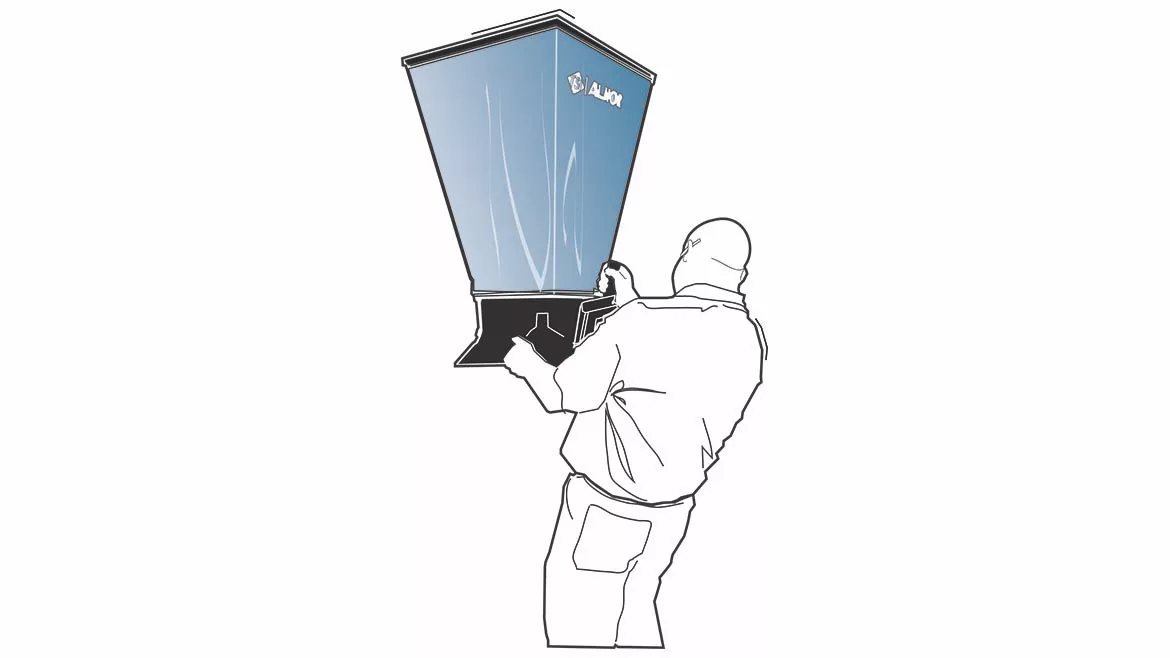
Air Balancing Diagram
Air balancing opportunities are endless. You can use it for quality control, sales, and differentiating your company. Your imagination determines the limitations. (Illustration Courtesy of National Comfort Institute)
July 6, 2024

Uncomfortable rooms are among the top comfort problems your customers face. While some rooms are too hot, others are freezing. In some homes, the lack of comfort extends to entire floors. It’s sad that many homeowners have given up and tried to live with this pain. Need proof? Just look for homes with randomly scattered window units.

READ MORE ABOUT

• Airflow Management

• Duct Systems

Thankfully, many homeowners aren’t willing to give up. They want answers to their comfort problems and refuse to settle for a window unit. These homeowners want something more, but don’t know where to look or who to trust. Many contractors will try to convince them that new equipment alone can cure their pain. It won’t.

Resolving these comfort problems requires looking beyond the equipment to what it’s attached to — the duct system. That’s because the most common duct system problem contributing to uncomfortable rooms is improper airflow. To discover it, you can apply air balance testing principles that have been around the HVAC industry for more than 50 years. Let’s look at how using these principles differentiates you from competitors and helps you fix customers’ uncomfortable rooms.


Essential Air Balancing Gear

If you want to use air balancing principles, you need the necessary gear. A cheap anemometer or the palm of your hand won’t cut it. This single factor often stops many companies from starting this type of work. They don’t see the value of the test instrument investment, or don’t have the funds. I was in the second group.

When our family company was first introduced to using air balancing to solve comfort problems, we didn’t have the money for the test instruments. I was ready to take out a loan because I knew deep down that air balancing would help our company. Thankfully, a family member helped us out. We bought our first set of test instruments, which quickly paid for themselves. The three test instruments we began with were:

  • A manometer for static pressure testing
  • An air capture hood to measure supply register and return grille airflow
  • An anemometer (rotating and hot-wire) for when you can’t use an air capture hood.

We applied air balancing principles to residential HVAC systems as soon as these specialized test instruments arrived. It surprised us how quickly they paid for themselves and continued to benefit us for years to come. But be sure to do your research before buying. There are a lot of other tools you can buy, but they may not all be necessary. If you have a limited budget like we did, you’ll need to invest wisely.


Air Balancing an HVAC System From 30,000 Feet

Once you have the test instruments, don’t just walk through a system randomly testing and adjusting dampers. There is a process to air balancing and using it to troubleshoot bad ducts. A high-level view of essential air balancing steps includes:

  • Gather design information, such as equipment specifications and design values
  • Inspect the equipment and duct system
  • Turn the HVAC system on
  • Take initial static pressure and airflow readings
  • Compare measured airflow to design airflow to identify dampers that need adjusting
  • Adjust balancing dampers to meet design airflow tolerances
  • Perform final testing to ensure measurements and specifications are in acceptable ranges.

Various authors have written entire courses and books on the steps above. I’ve included them to give you an idea of what’s involved in the balancing process. Once you know what it takes to complete a proper air balance, you can see how the steps apply to diagnosing a duct system and comfort problems.

Give yourself time to learn and don’t be in a rush. Start on your own systems so there’s no pressure and you can focus on learning. What I learned while practicing was both priceless and painful. My biggest revelation was that I didn’t do much air balancing on our systems and it wasn’t because they were great. I expected other contractors’ systems to be a mess and need work, but not ours. I was wrong. We had work to do first.

Looking for quick answers on air conditioning, heating and refrigeration topics? Try Ask ACHR NEWS, our new smart AI search tool. Ask ACHR NEWS →


Get the Ducts Right

Most duct systems need repair before you can balance them. We learned some hard lessons about duct design not always equaling reality. Our airflow measurements revealed improvements that were needed before we could balance our installations. There’s a possibility yours could, too.

We created a scope of work from our measurements to repair any issues. Some systems needed minor changes, like fan speed adjustments, but others required more work. The three biggest issues we found were duct leakage, undersized return ducts, and poor fitting choices, like transitions and elbows.

An air-balanced system requires you to install ducts differently. We changed things we never thought we would, like installing balancing dampers in return ducts and abandoning wall cavity returns. A duct system must be as close to leak-free as possible so air flows to the registers and grilles. Ducts can’t lose air through leaks in the connections, even if those ducts are in a conditioned space, like a basement.

You must size a duct system for properly sized equipment. So, there’s a good chance your duct sizes will change, especially if you use the duct calculator setting of .10 as your design friction rate. We started using low total equivalent length (TEL) duct fittings and avoided sharp turns like the plague. You’ll also need to install balancing dampers in each branch duct. It’s impossible to air-balance a duct system with no dampers.


WARNING! Airflow DOES NOT Equal Comfort

While air balancing focuses on airflow, it’s only one ingredient needed to achieve comfort. If you only focus on the air, you’ll overlook other causes of comfort problems. An HVAC system also needs the proper supply register temperature to maintain comfortable conditions. Without it, you still have a problem. The two most common causes affecting supply register temperature are duct losses and layout issues.

Duct losses occur because of duct leakage and inadequate insulation. Our industry has a bad habit of putting ducts in spaces they shouldn’t be in. When you’re trying to move 55°F air through ducts surrounded by 135°F attic air, supply register temperatures suffer. If those ducts leak and pull air in from the same space, it adds excessive load to the HVAC system and leads to additional comfort problems.

Duct layout challenges include how the original contractor installed the duct system or building obstructions. In many homes, rooms just have supply registers and pull return air from a central location, like a hallway filter grille. One unintended consequence of this installation is interior doors now acting like dampers. When closed, they cut off airflow back to the central return and create intermittent comfort issues.

Sometimes the problems extend beyond the HVAC system and require a look at the home itself. There may be air leakage and insulation issues affecting the HVAC system’s ability to maintain comfortable conditions. Other times, a house simply beats you, and the only choice you have is to do the best you can.


Finding Balance

Adding air balance testing principles to an HVAC company isn’t easy. You must believe in the potential of air balancing and what it can do for your company or it’s likely you’ll quit once the first obstacle appears. There were times we considered quitting. I’m glad we didn’t.

Measuring airflow teaches you a lot about your installations and yourself. There are no limitations to these applications except those you create. We used to use air balancing for quality control, sales, and differentiating our company. You can too. It takes time, work, and commitment to develop air-balancing skills, but I promise, it’s worth the effort.

KEYWORDS: airflow management duct systems National Comfort Institute (NCI)

Share This Story

Looking for a reprint of this article?
From high-res PDFs to custom plaques, order your copy today!


David richardson
David Richardson serves the HVAC industry as Vice President of Training for National Comfort Institute, Inc. (NCI). NCI specializes in training focused on improving, measuring, and verifying HVAC and Building Performance. If you’re an HVAC contractor or technician interested in learning more about building science applied to HVAC, contact David at ncilink.com/ContactMe.

Recommended Content

JOIN TODAY
To unlock your recommendations.

Already have an account? Sign In

  • HVAC-enrollment

    The Trades Are Back: HVACR Programs See Nearly 30% Enrollment Spike

    A new wave of future technicians is entering the pipeline.  
    News
    By: Matt Jachman
  • 2025 Top 40 Under 40

    2025 Top 40 Under 40 HVACR Professionals List

    The 11th annual Top 40 Under 40 list highlights those...
    HVAC Residential Market
    By: Hannah Belloli-Oster
  • LG Ductless Mini-Split Systems

    The 9 Types of Heat Pumps

    As the U.S. moves toward electrification, heat pumps are...
    Heat Pumps
    By: Joanna R. Turpin
Subscription Center
  • Create an Account
  • Start a Subscription
  • Manage My Account
  • Sign Up for Newsletters
  • Visit Customer Service
  • Update Preferences

More Videos

Sponsored Content

Sponsored Content is a special paid section where industry companies provide high quality, objective, non-commercial content around topics of interest to The News audience. All Sponsored Content is supplied by the advertising company and any opinions expressed in this article are those of the author and not necessarily reflect the views of The News or its parent company, BNP Media. Interested in participating in our Sponsored Content section? Contact your local rep!

close
  • Piggy Bank
    Sponsored byWatercress Financial

    Energy Prices, Inflation, and HVAC: What Today’s Homeowners Care About

  • Refrigerated Food
    Sponsored bySolstice Advanced Materials

    R-455A Refrigeration: A Cold Storage Solution for the Future

  • Airex Rooftop Units
    Sponsored byAirex Manufacturing Inc

    Consolidating Roof Penetrations: A Growing Trend in Multifamily HVAC Design

Popular Stories

Refrigerants-and-gauge.jpg

HVAC Industry Warns of Counterfeit Refrigerants Entering U.S. Supply Chain

U.S. Supreme Court building

95% Furnace Efficiency Rule to Get New Hearing

Midea-training.jpg

HVAC Workforce Crisis Expands Beyond Technicians to Instructor Shortages

Data_Center_facility.jpg

HVAC Manufacturers Respond to Growing Data Center Backlash

HVAC Minute retail refrigeration system

EPA Final Rule’s Impact on R-410A Deadlines

View The ACHR NEWS
Centennial Anniversary Timeline

The ACHR News Timeline Chart
Submit a Letter
Submit a letter to our editors.

Events

November 6, 2025

Next-Gen Data Center Cooling: HVAC Innovation and Real-World Solutions

On Demand As AI workloads and high-density computing push traditional cooling methods to their limits, the data center industry is accelerating the adoption of next-generation HVAC technologies.

June 23, 2026

HVAC Duct Sealing Mastics: Why Selection Matters

In this webinar we will detail what HVAC material buyers and technicians need to know when selecting duct mastics, including matching mastic to substrate, alternatives to liquid mastic, and where UL 181 Listings fit into real world installations.

View All Submit An Event

Poll

Summer Staff

Are you fully staffed for the summer season?
View Results Poll Archive

Products

BNI Mechanical/Electrical Square Foot Costbook, 2026 Edition

BNI Mechanical/Electrical Square Foot Costbook, 2026 Edition

See More Products
HVAC Duct Sealing Mastics: Why Selection Matters - Free Webinar - 6/23/2026

Related Articles

  • 2-25 Four Air Diagnostic Tests - Photo 1.png

    4 Air Diagnostic Tests to Diagnose Tough Comfort Problems

    See More
  • Discolored carpet.

    How Central Return Grilles Create Unintentional Comfort Problems, and How to Solve Them

    See More
  • Duct Dynasty: When Diagnosing Comfort Problems, Look at the Big Picture

    See More

Related Products

See More Products
  • Lessons Learned in a Boiler Room: A common sense approach to servicing and installing commercial boilers

  • new cover.jpg

    Profit is An Attitude: The Strategies You Need to Optimize Profits

  • HVAC/R Electrical Troubleshooting: Deciding where to begin DVD

See More Products

Events

View AllSubmit An Event
  • November 4, 2025

    Connected Comfort: Exploring the Future of Smart HVAC Systems

    On Demand In this webinar, we’ll discuss how the HVAC industry is designing systems that offer a balanced mix of performance, safety and environmental responsibility with enhanced capabilities for more efficient maintenance.
View AllSubmit An Event

Related Directories

  • National Comfort Institute-NCI

    National Comfort Institute (NCI) is a High-Performance HVAC professional training, certification, and membership organization. NCI offers a full range of advanced technical and sales training options.
  • A to Z Sales & Marketing

    We strive to revolutionize indoor living through innovative solutions that improve air quality, enhance comfort, and promote sustainable living for people around the world.
×

Sign Up. Stay Informed.

The #1 trusted source for the HVACR industry since 1926

SUBSCRIBE
  • RESOURCES
    • Advertise
    • Contact Us
    • Advisory Board
    • Classifieds
    • Submit a Letter
    • Directories
    • Store
  • ACCOUNT CENTER
    • Create an Account
    • Start a Subscription
    • Manage My Account
    • Sign Up for Newsletters
    • Visit Customer Service
    • Update Preferences
  • SERVICES
    • Marketing Services
    • Reprints
    • Market Research
    • List Rental
    • Survey/Respondent Access
  • STAY CONNECTED
    • LinkedIn
    • Facebook
    • Instagram
    • YouTube
    • X (Twitter)
  • PRIVACY
    • PRIVACY POLICY
    • TERMS & CONDITIONS
    • DO NOT SELL MY PERSONAL INFORMATION
    • PRIVACY REQUEST
    • ACCESSIBILITY

Copyright ©2026. All Rights Reserved BNP Media, Inc. and BNP Media II, LLC.

Design, CMS, Hosting & Web Development :: ePublishing