ACHR News
search
Ask ACHR NEWS AI
cart
facebook twitter instagram linkedin youtube
  • Sign In
  • Subscribe
  • Sign Out
  • My Account
ACHR News
  • NEWS
    • Breaking News
    • New HVAC Products
    • Featured Products
    • Manufacturer Reports
    • HVAC Data
    • Legislation
    • ACHR NEWS Centennial
  • RESIDENTIAL
    • Air Conditioners
    • Furnaces
    • Residential Heat Pumps
    • Ductless
    • Residential IAQ
    • Testing, Monitoring, Tools
    • Components & Accessories
  • COMMERCIAL
    • Air Handlers
    • Rooftop Units
    • Chillers and Cooling Towers
    • Commercial Heat Pumps
    • Boilers and Hydronics
    • VRF/Ductless
    • Commercial IAQ
  • REFRIGERATION
    • Refrigerants
    • Refrigerant Regulations
    • Leak Management
  • CONTRACTOR PRO
    • Geothermal
    • Homeowner Study
    • VRF and VRV Ductless
    • Unitary Trends
  • EDUCATION
    • Training and Education
    • Business Management
    • Service and Maintenance
    • Continuing Education
    • Market Research >
      • HVAC Brand Awareness Report
      • VRV, VRF, VRVZ Report
      • Unitary Trends Report
      • Water Heat Professionals Report
    • Webinars
    • Sponsor Insights
    • eProducts Info
    • White Papers
  • EVENTS
    • HVAC Contractor Forum
    • Industry Events and Webinars
  • MEDIA
    • Videos
    • AHR Expo 2025 Videos
    • Podcasts >
      • ACHR News Podcast
      • HARDI Podcasts
      • AHR Expo Podcasts
      • ACCA Podcasts
    • Interactive Spotlights
    • Quizzes
    • eBooks
    • HVAC Talkback
  • HVAC GROUP
    • ACHR NEWS >
      • Current Issue
      • Digital Edition
      • Subscribe
    • Distribution Trends
    • SNIPS NEWS >
      • Join SNIPS NEWS
    • Engineered Systems News >
      • Join ES News
    • HVACR Directory
    • Contests
    • Newsletters
    • Contact
    • Advertise
    • My Account
HVAC ContractingNewsService and MaintenanceGuest ColumnTraining and EducationTraining and Education for Contractors

Basic Steps For HVAC Coil Cleaning

The fine details in a professional spring maintenance

By Lianna Schwalenberg
HVAC Coil Cleaning
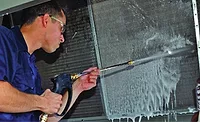
THE CASE FOR CLEANLINESS: Given the fins need to have a clean surface for heat transfer and the system relies heavily on the fan’s ability to draw airflow across the coils, it’s a good idea to keep things free of debris. (Courtesy of Lianna Schwalenberg)
June 7, 2024
✕
Image in modal.

Why clean coils?

There are two types of coils in an AC/refrigeration system–the evaporator and the condenser. They consist of copper or aluminum tubes with aluminum fins or microchannel tubes with fin strips. If these coils are “airside,” meaning air is the heat sink or source, then air is being pulled or pushed across these coils such as in a way to induce heat transfer. There are two main reasons these coils need to be cleaned: the fins need to have a clean surface for heat transfer, and most importantly, the system relies heavily on the fan’s abilities to draw airflow across those coils.

READ MORE ABOUT

• Coil Cleaning

• Service & Maintenance


Terrible Outcomes of Dirty Coils

Dust, cottonwood seeds, mulch, and leaves — just to name a few — can all cause air restrictions across the coils leading to terrible outcomes for the system.

Low airflow across the evaporator causes the refrigerant to not evaporate all the way. When the refrigerant does not evaporate all the way, the low-side pressure is reduced, a condition known as “low suction (pressure).” This, in turn, causes ice to form on the evaporator because the refrigerant is not “boiling.” Instead, it sits inside the coil in liquid form. As refrigerant continues to move through the system by the compressor, a formidable event can happen which is liquid refrigerant making its way into the suction side of the compressor, a death sentence for the compressor, known as a low-superheat situation, or in tech jargon, “slugging” or “flooding.”

Low airflow across the condenser creates an opposite but equally terrible effect as low airflow across its sister coil.

Low airflow across the condenser causes the refrigerant to not condense all the way. When the refrigerant does not condense all the way, the high-side pressure is increased, a condition known as “high head (pressure).” This, in turn, causes gas refrigerant to be sent to the metering device. Though a problem in and of itself, a gaseous flow of refrigerant into the metering device, can lead to sending hotter-than-normal gas back to the suction side of the compressor, causing the compressor to overheat.

All young service technicians are taught this mantra: “Compressors don’t die — they are killed.”


Some Recommended Materials for Coil Cleaning

Besides the basic hand tools, maintenance technicians should arm themselves with a variety of flexible and heavy-duty hoses, a couple sizes of nozzles, fin combs and brushes, a pump sprayer, and chemicals of their choosing. As a precautionary measure, technicians should also carry spare hose gaskets, a magnetic tray to collect all the screws, rags, and a pressure washer for locations where the water pressure is low.

Looking for quick answers on air conditioning, heating and refrigeration topics? Try Ask ACHR NEWS, our new smart AI search tool. Ask ACHR NEWS →


Basic Steps for Cleaning the Evaporator

The evaporator coil and drain pan, in rooftop units, can be accessed by removing the filters. If there is a significant amount of dust, beyond what a brush can take care of, the maintenance technician can use a product called “No-rinse” evaporator coil cleaner. It is usually scented so the indoor occupants are not bothered by a chemical smell. The product relies on the condensation to rinse the residue. If the coil is located in a restaurant where there is a significant amount of grease to remove, use coil cleaners designed for degreasing.

Another important step with evaporator coil cleaning is to not ignore the drain pan. It needs to be inspected for cracks or large chunks of debris that could clog the drain hole. It is recommended to push water through the pan to verify the trap is not clogged. If the maintenance technician finds themselves removing the trap to clean it, it is important to push water through to refill the trap. Dry traps can cause the system to pull air in, preventing the condensate from properly draining, which can lead to the drain pan overflowing.


Basic Steps for Cleaning the Condenser

While the evaporator does not always need attention, the condenser is a component in desperate need of a wet cleaning at least once a year, in both residential split and commercial rooftop unit settings, as it is subject to outdoor conditions.

When it comes to choosing the chemical for the condenser cleaning, there are several options. Some technicians prefer using only water and chemicals as needed, while others prefer a Dawn dish soap and water mixture. Some important things to consider when choosing a chemical cleaner are whether it’s safe to use on aluminum fins, and where applicable, if it’s safe to use on microchannel. When following directions, it is important to follow recommended dwell times and give the unit a thorough rinsing before and after applying chemicals.

In commercial settings, before turning the unit off, it is important to be familiar with the site. The maintenance technician should consider the following scenarios:

  • Is the unit tied in with the building’s fire alarm system? If so, the alarms must be disabled or put into test mode before turning the unit off.
  • Does the unit need to be pumped down before shutting off the compressors?
  • Does the unit have speed drives that could be damaged if power is shut off at the disconnect?
  • Some places might prefer the indoor blower motor to stay running so the ductwork does not make banging noises.

On cleaning the condenser, the most important step is that the coil is cleaned thoroughly on both sides with very little debris or residue left behind. To ensure this, a thorough maintenance technician will take apart the system in a way that allows access to a majority of the coil, on both sides, without necessarily wasting too much time. This might involve detaching panels, “splitting” coils that are separable, and removing the condenser fans.

Click photos to enlarge

Coil Cleaning Figure 1.

FIGURE 1: A residential split condenser taken apart with coil cleaner applied. (Courtesy of Lianna Schwalenberg)

Coil Cleaning Figure 2.

FIGURE 2: A residential split condenser taken apart. (Courtesy of Lianna Schwalenberg)

Coil Cleaning Figure 3.

FIGURE 3: A residential split condenser with a splittable coil. (Courtesy of Lianna Schwalenberg)


Coil Cleaning Figure 4.

FIGURE 4: Before and after using fin combs. (Courtesy of Lianna Schwalenberg)

A final note on the condenser cleaning process–while making everything look good is not necessary for the unit to operate properly, it adds that element of professionalism and good customer service. The condenser is already an eye sore, so sometimes even the smallest touch-ups can make a huge difference in appearance. If the coils are not extremely flattened, fin combs can be used to make the coil not look so beat up.


Some Avoidable Mistakes

This section is a personal message from the author as words of advice from an experienced, but imperfect maintenance technician. These are very common mistakes that can happen during the spring preventative maintenance but are easily avoidable when one is not in a rush.

  • Forgetting to turn the unit back on
  • Turning the unit on with the capacitor unplugged, causing a short and tripping the breaker
  • Attempting to troubleshoot a high-pressure trip with the panels off
  • Flooding a customer’s basement, not paying attention to the leaking hose bib
  • Getting the flame sensor wet on rooftop units, causing the ignition sequence to lock out until the flame sensor is dry
  • Waiting too long to rinse the condenser or not rinsing enough, causing severe white residue or black coating to strip off
  • Not paying attention to the pre-shutdown list aforementioned
KEYWORDS: Coil Cleaning coils and HVACR cooling coils

Share This Story

Looking for a reprint of this article?
From high-res PDFs to custom plaques, order your copy today!


Lianna schwalenberg
Lianna Schwalenberg is an HVAC service technician at The K Company, located in Akron, Ohio. She specializes in residential service, but helps out with maintenance and repairs in commercial settings as needed.

Recommended Content

JOIN TODAY
To unlock your recommendations.

Already have an account? Sign In

  • HVAC-enrollment

    The Trades Are Back: HVACR Programs See Nearly 30% Enrollment Spike

    A new wave of future technicians is entering the pipeline.  
    Training and Education
    By: Matt Jachman
  • 2025 Top 40 Under 40

    2025 Top 40 Under 40 HVACR Professionals List

    The 11th annual Top 40 Under 40 list highlights those...
    HVAC Light Commercial Market
    By: Hannah Belloli-Oster
  • LG Ductless Mini-Split Systems

    The 9 Types of Heat Pumps

    As the U.S. moves toward electrification, heat pumps are...
    Air Source Heat Pumps
    By: Joanna R. Turpin
Subscription Center
  • Create an Account
  • Start a Subscription
  • Manage My Account
  • Sign Up for Newsletters
  • Visit Customer Service
  • Update Preferences

More Videos

Sponsored Content

Sponsored Content is a special paid section where industry companies provide high quality, objective, non-commercial content around topics of interest to The News audience. All Sponsored Content is supplied by the advertising company and any opinions expressed in this article are those of the author and not necessarily reflect the views of The News or its parent company, BNP Media. Interested in participating in our Sponsored Content section? Contact your local rep!

close
  • Piggy Bank
    Sponsored byWatercress Financial

    Energy Prices, Inflation, and HVAC: What Today’s Homeowners Care About

  • Refrigerated Food
    Sponsored bySolstice Advanced Materials

    R-455A Refrigeration: A Cold Storage Solution for the Future

  • Airex Rooftop Units
    Sponsored byAirex Manufacturing Inc

    Consolidating Roof Penetrations: A Growing Trend in Multifamily HVAC Design

Popular Stories

Refrigerants-and-gauge.jpg

HVAC Industry Warns of Counterfeit Refrigerants Entering U.S. Supply Chain

U.S. Supreme Court building

95% Furnace Efficiency Rule to Get New Hearing

Data_Center_facility.jpg

HVAC Manufacturers Respond to Growing Data Center Backlash

Midea-training.jpg

HVAC Workforce Crisis Expands Beyond Technicians to Instructor Shortages

HVAC Minute retail refrigeration system

EPA Final Rule’s Impact on R-410A Deadlines

View The ACHR NEWS
Centennial Anniversary Timeline

The ACHR News Timeline Chart
Submit a Letter
Submit a letter to our editors.

Events

November 6, 2025

Next-Gen Data Center Cooling: HVAC Innovation and Real-World Solutions

On Demand As AI workloads and high-density computing push traditional cooling methods to their limits, the data center industry is accelerating the adoption of next-generation HVAC technologies.

June 23, 2026

HVAC Duct Sealing Mastics: Why Selection Matters

In this webinar we will detail what HVAC material buyers and technicians need to know when selecting duct mastics, including matching mastic to substrate, alternatives to liquid mastic, and where UL 181 Listings fit into real world installations.

View All Submit An Event

Poll

Summer Staff

Are you fully staffed for the summer season?
View Results Poll Archive

Products

BNI Mechanical/Electrical Square Foot Costbook, 2026 Edition

BNI Mechanical/Electrical Square Foot Costbook, 2026 Edition

See More Products
HVAC Duct Sealing Mastics: Why Selection Matters - Free Webinar - 6/23/2026

Related Articles

  • Mushroom Farm Cuts HVAC Coil Cleaning and Energy Costs with UV

    See More
  • Coil-cleaning

    SpeedClean and HVAC School Release Free “Coil Cleaning Guide” E-book

    See More
  • HVAC Coil Cleaning

    HVAC Contractors Should Tap Into Coil Cleaning’s Visual Value

    See More

Related Products

See More Products
  • Refrigeration Fundamentals for HVAC/R Technicians DVD

  • Electrical Fundamentals for HVAC/R Technicians

  • Digital Controls for HVAC Technicians

See More Products

Events

View AllSubmit An Event
  • August 21, 2025

    What the Big Beautiful Bill Means for HVAC Contractors

    On Demand In this webinar, we will take a look at the elimination of the residential and commercial HVAC tax incentives and how contractors can navigate this new landscape.
View AllSubmit An Event

Related Directories

  • SpeedClean

    SpeedClean manufactures and markets HVAC maintenance tools like portable coil cleaning systems, biodegradable coil cleaners, tube cleaners, mini-split cleaning systems and much more.
  • UltraViolet Devices Inc. (UVDI)

    UVDI manufactures proven UV-C Indoor Air Quality technology for air disinfection, air purification and coil cleaning. UVDI products are trusted in over 10,000 commercial sites worldwide.
×

Sign Up. Stay Informed.

The #1 trusted source for the HVACR industry since 1926

SUBSCRIBE
  • RESOURCES
    • Advertise
    • Contact Us
    • Advisory Board
    • Classifieds
    • Submit a Letter
    • Directories
    • Store
  • ACCOUNT CENTER
    • Create an Account
    • Start a Subscription
    • Manage My Account
    • Sign Up for Newsletters
    • Visit Customer Service
    • Update Preferences
  • SERVICES
    • Marketing Services
    • Reprints
    • Market Research
    • List Rental
    • Survey/Respondent Access
  • STAY CONNECTED
    • LinkedIn
    • Facebook
    • Instagram
    • YouTube
    • X (Twitter)
  • PRIVACY
    • PRIVACY POLICY
    • TERMS & CONDITIONS
    • DO NOT SELL MY PERSONAL INFORMATION
    • PRIVACY REQUEST
    • ACCESSIBILITY

Copyright ©2026. All Rights Reserved BNP Media, Inc. and BNP Media II, LLC.

Design, CMS, Hosting & Web Development :: ePublishing