ACHR News
search
Ask ACHR NEWS AI
cart
facebook twitter instagram linkedin youtube
  • Sign In
  • Subscribe
  • Sign Out
  • My Account
ACHR News
  • NEWS
    • Breaking News
    • New HVAC Products
    • Featured Products
    • Manufacturer Reports
    • HVAC Data
    • Legislation
    • ACHR NEWS Centennial
  • RESIDENTIAL
    • Air Conditioners
    • Furnaces
    • Residential Heat Pumps
    • Ductless
    • Residential IAQ
    • Testing, Monitoring, Tools
    • Components & Accessories
  • COMMERCIAL
    • Air Handlers
    • Rooftop Units
    • Chillers and Cooling Towers
    • Commercial Heat Pumps
    • Boilers and Hydronics
    • VRF/Ductless
    • Commercial IAQ
  • REFRIGERATION
    • Refrigerants
    • Refrigerant Regulations
    • Leak Management
  • CONTRACTOR PRO
    • Geothermal
    • Homeowner Study
    • VRF and VRV Ductless
    • Unitary Trends
  • EDUCATION
    • Training and Education
    • Business Management
    • Service and Maintenance
    • Continuing Education
    • Market Research >
      • HVAC Brand Awareness Report
      • VRV, VRF, VRVZ Report
      • Unitary Trends Report
      • Water Heat Professionals Report
    • Webinars
    • Sponsor Insights
    • eProducts Info
    • White Papers
  • EVENTS
    • HVAC Contractor Forum
    • Industry Events and Webinars
  • MEDIA
    • Videos
    • AHR Expo 2025 Videos
    • Podcasts >
      • ACHR News Podcast
      • HARDI Podcasts
      • AHR Expo Podcasts
      • ACCA Podcasts
    • Interactive Spotlights
    • Quizzes
    • eBooks
    • HVAC Talkback
  • HVAC GROUP
    • ACHR NEWS >
      • Current Issue
      • Digital Edition
      • Subscribe
    • Distribution Trends
    • SNIPS NEWS >
      • Join SNIPS NEWS
    • Engineered Systems News >
      • Join ES News
    • HVACR Directory
    • Contests
    • Newsletters
    • Contact
    • Advertise
    • My Account
NewsHVAC Commercial MarketHeat PumpsBoilers and HydronicsChillers and TowersGround Source Heat Pumps

Heat Pumps: Their Role in Decarbonization
By John Sheff
Danfoss Aircool

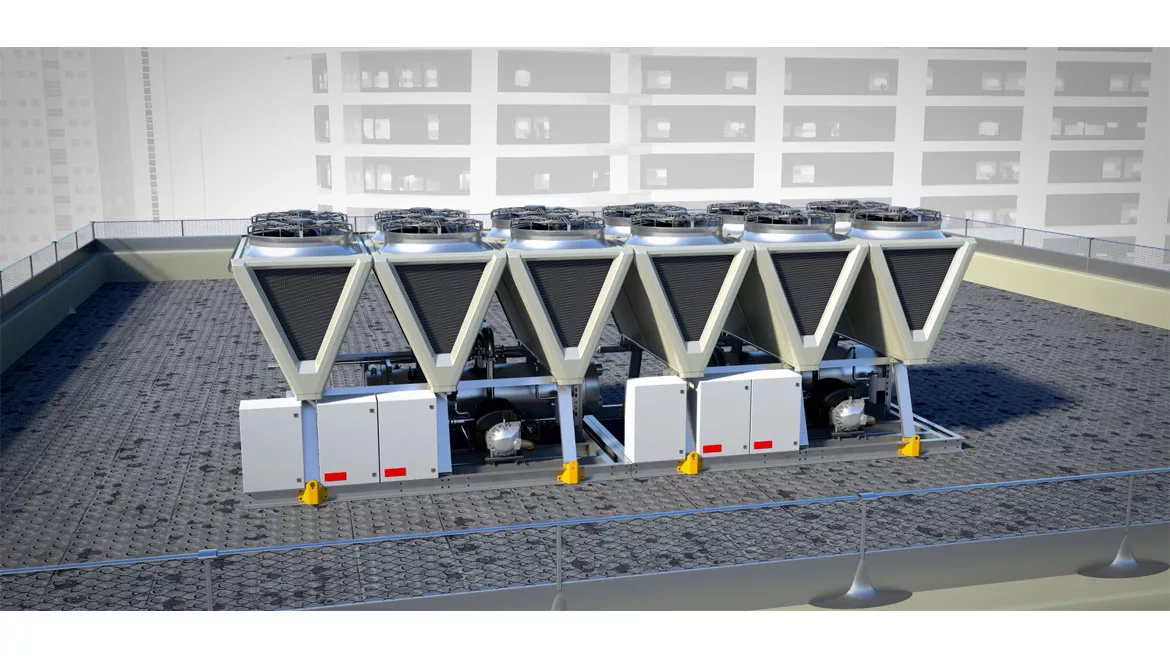
INNOVATION: Dual fuel systems, which use heat recovery chillers in combination with a boiler, are also an innovative approach to reducing carbon emissions in cases where building owners aren’t ready to replace their functioning boiler. (Courtesy of Danfoss)

April 13, 2022

Across the country, state and local governments are mandating lower building emissions, pushing building owners to full electrification. Building codes like California’s Title 24 are basically mandating full electrification and on-site renewables in new construction. Likewise, natural gas bans, which started in California cities such as Berkeley and San Jose and have also shown up in towns in New Jersey and Massachusetts, are forcing building owners to use all-electric appliances.

Building codes and natural gas bans, however, only target new construction. Our country’s building stock only turns over about 2% each year, which means we will need to target existing buildings to see a real shift toward decarbonization. Several cities, such as New York and Washington, D.C., have made a serious effort to do that with building emissions laws passed in the last several years. These laws set emissions caps for commercial and multi-family buildings and enforce financial penalties for emitting over those caps.


The Challenge of Retrofits

As a result, building owners must retrofit their buildings to reduce on-site fossil fuel use. These policies are pushing commercial building owners toward heat pump technologies. Using electricity as a power source, heat pumps can provide both heating and cooling functions without emissions from fossil fuels. In residential settings, air-to-air heat pumps are the most common type of heat pumps used, due to their ability to heat and cool with a single piece of equipment.

With the widespread adoption of electric heating in commercial buildings, hotels, hospitals and industry, air-to-water and water-to-water heat pumps are gaining momentum globally as a long-term integrated approach with a lot of potential due to their increased efficiency and ability to operate at lower ambient temperatures. Water-to-water heat pumps, which absorb heat in the evaporator in a waterside or hydronic system and then reject the heat through the condenser on the other side, can provide a sustainable heating source by allowing the building to recover rejected heat and reuse it, thereby saving energy and heating costs, while also reducing carbon emissions.

But in commercial buildings that currently use a combination of chillers and boilers, retrofitting with an air-to-air or air-to-water heat pump is a challenge. In cold weather, it’s very difficult to use the ambient air as a heat source and still heat water above 40 degrees Celsius. A hydronic heating system utilizing a heat pump generally requires at least 45-degree Celsius water to effectively heat. Air-to-water heat pumps are also currently at least 10-15% less efficient than water source heat pumps due to low ambient air temperatures and air-to-refrigerant heat transfer approach.


Alternative Solutions

Utilizing other heat sources is possible and, in terms of efficiency, makes a lot of sense. Heat recovery is gaining momentum globally as a way to provide heat in a more efficient and sustainable way. For example, using waste heat from data centers, commercial refrigeration systems, or wastewater treatment plants provides a steady and predictable source of heat all year round. In addition, these heat sources could be centralized near the heat source, creating the opportunity for district heating and cooling. Entire blocks of buildings could share resources to build an incredibly efficient district energy system and contribute heating or cooling to each other in an integrated symbiosis system. This is happening in many European cities and on some U.S. college campuses. Unfortunately, in most areas of the U.S., not only do we not have the district energy infrastructure to share heating and cooling between buildings, but we lack the business models and regulatory structures as well.

Rather than try to crack that regulatory nut, the industry is moving toward air-to-water heat pumps instead of a chiller and boiler combination. The climate, however, cannot wait until the next generation of air-to-water heat pumps are available for us start decarbonizing our commercial buildings. Hybrid solutions that can significantly reduce both emissions and operating costs can be implemented today. Combining air-source heat pumps with natural gas-fired heating does not eliminate fossil fuels altogether, but it can reduce the need for fossil fuels to the very coldest days of the year. In certain areas of the country — the mid-Atlantic, Southeast or South — that may only be a few weeks a year, depending on winter temperatures, building envelope and heating system design.

Looking for quick answers on air conditioning, heating and refrigeration topics? Try Ask ACHR NEWS, our new smart AI search tool. Ask ACHR NEWS →

Dual fuel systems, which use heat recovery chillers in combination with a boiler, are also an innovative approach to reducing carbon emissions in cases where building owners aren’t ready to replace their functioning boiler. The system can use the existing boiler with a flue gas scrubber, which provides cooling and removes contaminants from the atmosphere, to recover heat through a water-to-water heat pump, pre-heating the boiler feedwater and partially electrifying the heating system.

Danfoss continues to advocate a comprehensive approach to decarbonization. Utilizing heat pump technologies in new building design and retrofits will go a long way toward reducing carbon emissions and achieving compliance with local, state, and federal regulations. In addition to reducing emissions, using electricity as a power source creates more energy-efficient heating systems, often resulting in significant savings for building owners and increased comfort for occupants. Using oil-free compressors and variable-speed technology, Danfoss is developing components for the next generation of heat pumps, which will be more efficient and higher-performing as commercial buildings move toward full electrification.

KEYWORDS: decarbonization Electrification heat recovery natural gas regulations for HVACR retrofitting and HVACR

Share This Story

Looking for a reprint of this article?
From high-res PDFs to custom plaques, order your copy today!


John Sheff is the former director of public and industry affairs at Danfoss.

Recommended Content

JOIN TODAY
To unlock your recommendations.

Already have an account? Sign In

  • HVAC-enrollment

    The Trades Are Back: HVACR Programs See Nearly 30% Enrollment Spike

    A new wave of future technicians is entering the pipeline.  
    News
    By: Matt Jachman
  • 2025 Top 40 Under 40

    2025 Top 40 Under 40 HVACR Professionals List

    The 11th annual Top 40 Under 40 list highlights those...
    HVAC Commercial Market
    By: Hannah Belloli-Oster
  • LG Ductless Mini-Split Systems

    The 9 Types of Heat Pumps

    As the U.S. moves toward electrification, heat pumps are...
    Ground Source Heat Pumps
    By: Joanna R. Turpin
Subscription Center
  • Create an Account
  • Start a Subscription
  • Manage My Account
  • Sign Up for Newsletters
  • Visit Customer Service
  • Update Preferences

More Videos

Sponsored Content

Sponsored Content is a special paid section where industry companies provide high quality, objective, non-commercial content around topics of interest to The News audience. All Sponsored Content is supplied by the advertising company and any opinions expressed in this article are those of the author and not necessarily reflect the views of The News or its parent company, BNP Media. Interested in participating in our Sponsored Content section? Contact your local rep!

close
  • Piggy Bank
    Sponsored byWatercress Financial

    Energy Prices, Inflation, and HVAC: What Today’s Homeowners Care About

  • Refrigerated Food
    Sponsored bySolstice Advanced Materials

    R-455A Refrigeration: A Cold Storage Solution for the Future

  • Airex Rooftop Units
    Sponsored byAirex Manufacturing Inc

    Consolidating Roof Penetrations: A Growing Trend in Multifamily HVAC Design

Popular Stories

Refrigerants-and-gauge.jpg

HVAC Industry Warns of Counterfeit Refrigerants Entering U.S. Supply Chain

U.S. Supreme Court building

95% Furnace Efficiency Rule to Get New Hearing

Midea-training.jpg

HVAC Workforce Crisis Expands Beyond Technicians to Instructor Shortages

Data_Center_facility.jpg

HVAC Manufacturers Respond to Growing Data Center Backlash

HVAC Minute retail refrigeration system

EPA Final Rule’s Impact on R-410A Deadlines

View The ACHR NEWS
Centennial Anniversary Timeline

The ACHR News Timeline Chart
Submit a Letter
Submit a letter to our editors.

Events

November 6, 2025

Next-Gen Data Center Cooling: HVAC Innovation and Real-World Solutions

On Demand As AI workloads and high-density computing push traditional cooling methods to their limits, the data center industry is accelerating the adoption of next-generation HVAC technologies.

June 23, 2026

HVAC Duct Sealing Mastics: Why Selection Matters

In this webinar we will detail what HVAC material buyers and technicians need to know when selecting duct mastics, including matching mastic to substrate, alternatives to liquid mastic, and where UL 181 Listings fit into real world installations.

View All Submit An Event

Poll

Summer Staff

Are you fully staffed for the summer season?
View Results Poll Archive

Products

BNI Mechanical/Electrical Square Foot Costbook, 2026 Edition

BNI Mechanical/Electrical Square Foot Costbook, 2026 Edition

See More Products
HVAC Duct Sealing Mastics: Why Selection Matters - Free Webinar - 6/23/2026

Related Articles

  • HVAC Contractors Expand Their Role in Home Performance

    HVAC Contractors Expand Their Role in Home Performance

    See More
  • New Heat Pumps Flex Their Muscles

    See More
  • Weil-McLain

    Decarbonization and Energy Efficiency: The Role of Heat Pumps and Boilers in a Changing Industry

    See More

Related Products

See More Products
  • 112058072720552801834076395011509172226.jpg

    Heat Pumps, 2nd Edition

See More Products

Related Directories

  • Danfoss

    A leading manufacturer of high efficiency electronic and mechanical components and controls for air-conditioning, heating, refrigeration and motion systems, including compressors and variable frequency drives.
×

Sign Up. Stay Informed.

The #1 trusted source for the HVACR industry since 1926

SUBSCRIBE
  • RESOURCES
    • Advertise
    • Contact Us
    • Advisory Board
    • Classifieds
    • Submit a Letter
    • Directories
    • Store
  • ACCOUNT CENTER
    • Create an Account
    • Start a Subscription
    • Manage My Account
    • Sign Up for Newsletters
    • Visit Customer Service
    • Update Preferences
  • SERVICES
    • Marketing Services
    • Reprints
    • Market Research
    • List Rental
    • Survey/Respondent Access
  • STAY CONNECTED
    • LinkedIn
    • Facebook
    • Instagram
    • YouTube
    • X (Twitter)
  • PRIVACY
    • PRIVACY POLICY
    • TERMS & CONDITIONS
    • DO NOT SELL MY PERSONAL INFORMATION
    • PRIVACY REQUEST
    • ACCESSIBILITY

Copyright ©2026. All Rights Reserved BNP Media, Inc. and BNP Media II, LLC.

Design, CMS, Hosting & Web Development :: ePublishing