ACHR News
search
Ask ACHR NEWS AI
cart
facebook twitter instagram linkedin youtube
  • Sign In
  • Subscribe
  • Sign Out
  • My Account
ACHR News
  • NEWS
    • Breaking News
    • New HVAC Products
    • Featured Products
    • Manufacturer Reports
    • HVAC Data
    • Legislation
    • ACHR NEWS Centennial
  • RESIDENTIAL
    • Air Conditioners
    • Furnaces
    • Residential Heat Pumps
    • Ductless
    • Residential IAQ
    • Testing, Monitoring, Tools
    • Components & Accessories
  • COMMERCIAL
    • Air Handlers
    • Rooftop Units
    • Chillers and Cooling Towers
    • Commercial Heat Pumps
    • Boilers and Hydronics
    • VRF/Ductless
    • Commercial IAQ
  • REFRIGERATION
    • Refrigerants
    • Refrigerant Regulations
    • Leak Management
  • CONTRACTOR PRO
    • Geothermal
    • Homeowner Study
    • VRF and VRV Ductless
    • Unitary Trends
  • EDUCATION
    • Training and Education
    • Business Management
    • Service and Maintenance
    • Continuing Education
    • Market Research >
      • HVAC Brand Awareness Report
      • VRV, VRF, VRVZ Report
      • Unitary Trends Report
      • Water Heat Professionals Report
    • Webinars
    • Sponsor Insights
    • eProducts Info
    • White Papers
  • EVENTS
    • HVAC Contractor Forum
    • Industry Events and Webinars
  • MEDIA
    • Videos
    • AHR Expo 2025 Videos
    • Podcasts >
      • ACHR News Podcast
      • HARDI Podcasts
      • AHR Expo Podcasts
      • ACCA Podcasts
    • Interactive Spotlights
    • Quizzes
    • eBooks
    • HVAC Talkback
  • HVAC GROUP
    • ACHR NEWS >
      • Current Issue
      • Digital Edition
      • Subscribe
    • Distribution Trends
    • SNIPS NEWS >
      • Join SNIPS NEWS
    • Engineered Systems News >
      • Join ES News
    • HVACR Directory
    • Contests
    • Newsletters
    • Contact
    • Advertise
    • My Account
Manufacturer ReportsNewsHVAC Residential Market

District Heating Electric Boilers in Vogue Again

With zero emissions, economical electric steam and hot water boilers deliver heat and hot water in minimum spatial footprint
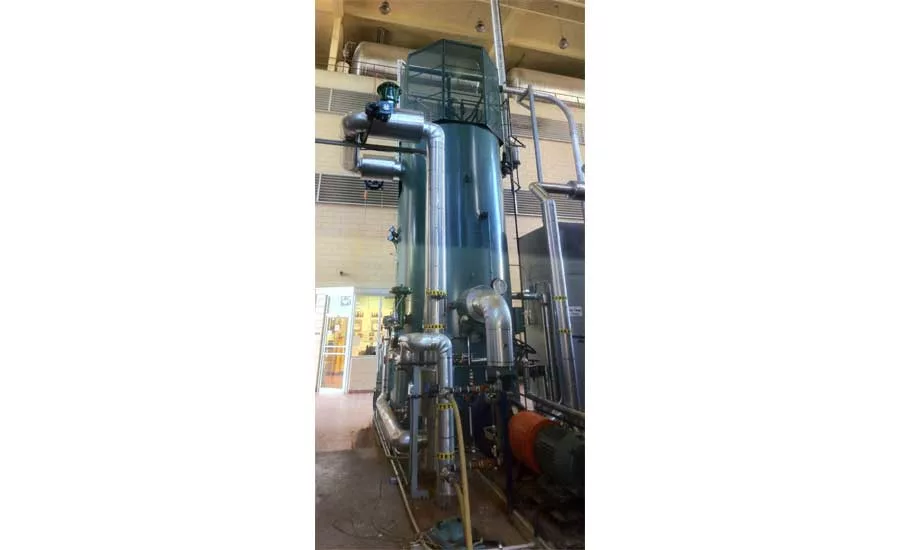
ACME-Boiler
(Courtesy of ACME Engineering)
May 20, 2021

Due to the threat of global warming as well as international commitments to the Paris Accord on Climate Change, municipalities and regions using district heating in Europe and North America are tasked with significantly reducing their environmental footprint in record time. With district heating, towns or large areas typically receive heat and hot water, distributed to commercial, residential, or public buildings at greater economies of scale than individual heating systems.

In response, last year the 27-nation European Union (EU) agreed to cut greenhouse gas carbon emissions by 55% by 2030 compared to 1990 levels. According to a recent report that has tracked the EU's power sector since 2015, renewables surpassed fossil fuels last year (38% to 37%), indicating that municipalities relying on district heating are already pivoting away from often inefficient, outdated equipment that produces excess carbon emissions.

Even the U.S., which recently rejoined the Paris Agreement, has targets for American businesses to achieve a carbon pollution-free power sector by 2035 and a net-zero economy by 2050.

While the interest of regions using district heating in electric boilers has waxed and waned in the last century, suddenly it is in vogue again. Whether to honor Environmental Social and Governance (ESG) goals, meet regulatory commitments, or take advantage of government credits and incentives, a growing number of municipalities are installing new or retrofit high-voltage electrode boilers that are compact, economical, and produce no emissions.

This is, in part, due to technological advances in electric boiler design that increase the output of the boilers. When utilized for district heating, electric-powered alternatives are sure to be a critical piece of the puzzle to meet future emission reduction goals.

Transitioning from High-Emission Gas and Oil-Fired Boilers

With district heating, besides the notorious greenhouse gasses carbon dioxide (CO2) and methane (CH4), natural gas-fired boilers and furnaces emit dangerous nitrogen oxides (NOx), carbon monoxide (CO), and nitrous oxide (N2O), as well as volatile organic compounds (VOCs), sulfur dioxide (SO2), and particulate matter (PM).

However, many facility engineers familiar with gas-fired boilers mistakenly believe that electric boilers cannot match the output of the traditional, fossil fuel burning units. Due to considerable advances in electric boiler technology, that is far from the case. Today, such technology can match the capacity of large gas or oil-fired boilers.

Looking for quick answers on air conditioning, heating and refrigeration topics? Try Ask ACHR NEWS, our new smart AI search tool. Ask ACHR NEWS →

Electric boilers utilize the conductive and resistive properties of water to carry electric current and generate steam. An AC current flows from an electrode of one phase to ground using the water as a conductor. Since chemicals in the water provide conductivity, the current flow generates heat directly in the water itself. The more current (amps) that flows, the more heat (BTUs) is generated, and the more steam produced. Crucially, almost 100% of the electrical energy is converted into heat with no stack or heat transfer losses.

As an example, the electrodes of the CEJS High Voltage Electrode Steam Boiler by Acme are vertically mounted around the inside of the pressure vessel. This enables the unit to produce maximum amounts of steam in a minimum amount of floor space, with boiler capacity from 6MW to 52MW.

The boiler operates at existing distribution voltages, 4.16 to 25 KV with up to 99.9% efficiency, and can produce up to 170,000 pounds of steam per hour. With pressure ratings from 105 psig to 500 psig, the boilers are designed to ASME Section 1, and are certified, registered pressure vessels at the location of the boiler.

According to Presser, the electric boiler technology is used for residential and commercial district heating, which is increasing in demand, particularly within urban centers. With district heating, distributed heat is generated in a central location through an insulated pipe system, and utilized for high-efficiency, low-pollution, space and water heating. For central heating applications, electric boiler technology quietly supplies ample power for its compact size. This approach is currently being considered to install several 50MW steam boilers in the center of Manhattan.

Typically, district heating upgrades are initiated due to high heating costs that customers find unaffordable, often due to expensive fossil fuels or an aging system that needs to be replaced. Increasingly, such upgrades are pursued to minimize environmental impact.

The upgrades often entail retrofitting or replacing boilers (the heat source) with cleaner, more efficient electric alternatives, along with the heat distribution network (pipes/ heat exchanger stations).

“Electric boilers do not need an operator because if anything goes wrong, the breaker trips, preventing further escalation of the issue,” says Presser. With electric boilers, the energy input as well as adjustment is also precise and virtually immediate. The electric units are also exceptionally quiet.

As the EU and U.S. resolve to dramatically cut their greenhouse gases to combat climate change, the urgency for areas using district heating to similarly reduce their carbon emissions will only grow. In this battle to protect the environment before the global climate hits an irreversible tipping point, municipalities along with state and federal government, and the commercial sector must do their part. Fortunately, advanced, zero-emission electric boiler technology can be a readily implementable part of the solution.

Content by ACME Engineering.

Want more HVAC industry news and information? Join The NEWS on Facebook, Twitter, and LinkedIn today!

KEYWORDS: boiler efficiency boiler industry boiler manufacturing HVAC Manufacturer News

Share This Story

Looking for a reprint of this article?
From high-res PDFs to custom plaques, order your copy today!


Recommended Content

JOIN TODAY
To unlock your recommendations.

Already have an account? Sign In

  • HVAC-enrollment

    The Trades Are Back: HVACR Programs See Nearly 30% Enrollment Spike

    A new wave of future technicians is entering the pipeline.  
    Training and Education
    By: Matt Jachman
  • 2025 Top 40 Under 40

    2025 Top 40 Under 40 HVACR Professionals List

    The 11th annual Top 40 Under 40 list highlights those...
    News
    By: Hannah Belloli-Oster
  • LG Ductless Mini-Split Systems

    The 9 Types of Heat Pumps

    As the U.S. moves toward electrification, heat pumps are...
    HVAC Commercial Market
    By: Joanna R. Turpin
Subscription Center
  • Create an Account
  • Start a Subscription
  • Manage My Account
  • Sign Up for Newsletters
  • Visit Customer Service
  • Update Preferences

More Videos

Sponsored Content

Sponsored Content is a special paid section where industry companies provide high quality, objective, non-commercial content around topics of interest to The News audience. All Sponsored Content is supplied by the advertising company and any opinions expressed in this article are those of the author and not necessarily reflect the views of The News or its parent company, BNP Media. Interested in participating in our Sponsored Content section? Contact your local rep!

close
  • Piggy Bank
    Sponsored byWatercress Financial

    Energy Prices, Inflation, and HVAC: What Today’s Homeowners Care About

  • Refrigerated Food
    Sponsored bySolstice Advanced Materials

    R-455A Refrigeration: A Cold Storage Solution for the Future

  • Airex Rooftop Units
    Sponsored byAirex Manufacturing Inc

    Consolidating Roof Penetrations: A Growing Trend in Multifamily HVAC Design

Popular Stories

HVAC-Price-Increase-graphic

HVAC Price Increase List: June 2026

Trump-Section-232.jpg

Trump Reduces Section 232 Tariffs on HVAC Equipment to 15%

Heat-pump-cutaway.jpg

PFAS Rules and A2L Building Codes Continue to Evolve

Midea-training.jpg

HVAC Workforce Crisis Expands Beyond Technicians to Instructor Shortages

Refrigerants-and-gauge.jpg

HVAC Industry Warns of Counterfeit Refrigerants Entering U.S. Supply Chain

View The ACHR NEWS
Centennial Anniversary Timeline

The ACHR News Timeline Chart
Submit a Letter
Submit a letter to our editors.

Events

November 6, 2025

Next-Gen Data Center Cooling: HVAC Innovation and Real-World Solutions

On Demand As AI workloads and high-density computing push traditional cooling methods to their limits, the data center industry is accelerating the adoption of next-generation HVAC technologies.

June 17, 2026

Decarbonization Without Disruption

This webinar will explore practical HVAC decarbonization strategies that minimize disruption while maximizing long-term performance and ROI.

View All Submit An Event

Poll

Summer Staff

Are you fully staffed for the summer season?
View Results Poll Archive

Products

BNI Mechanical/Electrical Square Foot Costbook, 2026 Edition

BNI Mechanical/Electrical Square Foot Costbook, 2026 Edition

See More Products
Decarbonization Without Disruption - Free Webinar - 6/17/2026

Related Articles

  • Acme

    District Heating Electric Boilers Suddenly in Vogue Again

    See More
  • Taking Care of Business: Negativity Is in Vogue

    See More
  • Acme Electrode Boilers

    Pivoting to More Efficient Energy Sources for District Heating

    See More

Related Products

See More Products
  • ghpm.png

    Gas Heating: Furnaces, Boilers, Controls, Components

  • Lessons Learned in a Boiler Room: A common sense approach to servicing and installing commercial boilers

  • EHEP002028.jpg

    Principles of Heating, Ventilation, and Air Conditioning in Buildings, 1st Edition

See More Products

Related Directories

  • Sussman Electric Boilers

    Electric steam and hot water boilers, stainless steel boilers, steam superheaters, steam to clean steam generators.
  • Ouellet Electric Heating

    Manufacturer of heating and ventilation equipment for institutional, commercial, industrial and residential applications; electric heating equipment to include unit heaters, ceiling heaters, cabinet heaters, baseboard, bath ventilation, Heating Cable, Self-Regulating Cable etc.
×

Sign Up. Stay Informed.

The #1 trusted source for the HVACR industry since 1926

SUBSCRIBE
  • RESOURCES
    • Advertise
    • Contact Us
    • Advisory Board
    • Classifieds
    • Submit a Letter
    • Directories
    • Store
  • ACCOUNT CENTER
    • Create an Account
    • Start a Subscription
    • Manage My Account
    • Sign Up for Newsletters
    • Visit Customer Service
    • Update Preferences
  • SERVICES
    • Marketing Services
    • Reprints
    • Market Research
    • List Rental
    • Survey/Respondent Access
  • STAY CONNECTED
    • LinkedIn
    • Facebook
    • Instagram
    • YouTube
    • X (Twitter)
  • PRIVACY
    • PRIVACY POLICY
    • TERMS & CONDITIONS
    • DO NOT SELL MY PERSONAL INFORMATION
    • PRIVACY REQUEST
    • ACCESSIBILITY

Copyright ©2026. All Rights Reserved BNP Media, Inc. and BNP Media II, LLC.

Design, CMS, Hosting & Web Development :: ePublishing