Pivoting to More Efficient Energy Sources for District Heating

District heating – the generation of heat in a central location and distribution of it to local residences, businesses, and industry at greater economies of scale than individual heating systems – plays an important role in helping the transition to clean energy in the fight against climate change. The challenge, however, is that district heating, used to provide hot water and heat within buildings through an insulated pipe system, must soon pivot from burning fossil fuels to cleaner forms of energy.
“District heating networks offer great potential for efficient, cost-effective, and flexible large-scale use of low-carbon energy for heating. However, the decarbonization potential of district heating is largely untapped, as 90% of the heat supplied in district networks is produced from fossil fuels …,” according to the International Energy Agency (IEA), a Paris-based autonomous intergovernmental organization that provides policy recommendations, analysis, and data on the global energy sector. The 31 member countries and 13 association countries of the IEA represent 75% of global energy demand.
Aligning with the IEA’s Net Zero Emissions by 2050 Scenario requires significant effort to rapidly improve the energy efficiency of existing networks, switch to renewable heat, integrate secondary heat sources, and develop new high-efficiency infrastructure.
Fortunately, innovation in the form of the latest, high-voltage immersed electrode or jet-type electrode boilers makes district heating much greener, particularly when the electricity comes from renewable sources like solar, wind, and hydropower.
Municipalities and businesses relying on district heating are already pivoting away from often inefficient, outdated equipment that produces excess carbon emissions in favor of economical electrode boilers that can quickly, flexibly rival the output of large gas or oil-fired boilers in a much smaller footprint, The advanced electrode boilers do not have a high minimum operating level to make them immediately available and offer much faster start-up and shut down time while being safely and easily maintained.
vice president
Acme Engineering
The Renewable Promise of District Heating with Electrode Boiler Technology
District heating systems offer substantial potential for improving energy efficiency, reducing greenhouse gas emissions, and integrating renewable and waste heat sources, particularly within urban centers.
In this effort, an increasing number of district heating plants are turning to high-voltage, electrode boilers to absorb excess power production, quickly provide grid service, and cost-effectively balance out fluctuations. A growing number of municipalities are also installing new or retrofit high voltage electrode boilers that are compact, economical, and produce no emissions. The upgrades often entail retrofitting or replacing boilers (the heat source) with cleaner, more efficient electric alternatives, along with the heat distribution network (pipes/ heat exchanger stations).
Looking for quick answers on air conditioning, heating and refrigeration topics? Try Ask ACHR NEWS, our new smart AI search tool. Ask ACHR NEWS
Electrode boilers utilize the conductive and resistive properties of water to carry electric current and generate steam with great responsiveness and efficiency.
“An AC current flows from an electrode of one phase to ground using the water as a conductor. Since chemicals in the water provide conductivity, the current flow generates heat directly in the water itself. The more current (amps) that flows, the more heat (BTUs) is generated, and the more steam produced for use in district heating,” explains Robert Presser, vice president of Acme Engineering, a manufacturer of industrial and commercial boilers with operations in the U.S., Canada, and Europe.
When supplying district heating, electrode boilers are much more responsive and flexible than fossil fuel burning units.
“With electrode boilers, the energy input and adjustment are very precise and virtually immediate. In contrast, increasing or decreasing the temperature in a gas-fired boiler is a slower process because it takes time for the heat in the boiler to rise or dissipate before reaching the targeted output,” says Presser.
Advanced high voltage electrode steam boilers like Acme’s CEJS also have a 100% turndown ratio, the ratio between a boiler’s maximum and minimum output. Most gas boilers have a ratio of 10:1 or 5:1, which means the units take a significant time to reach full capacity. The CEJW and CEJS immersed electrode hot water and steam boilers have a minimum output level of 7-8% of rated capacity, still far better than a modern gas-fired boiler.
“With a 100% turndown ratio, you can leave the boiler in standby at low pressure and bring it to full capacity in about 90 seconds as needed, which no other boiler type can achieve today,” says Presser.
“Communities and businesses utilizing district heating also appreciate the eco-friendly nature of electrode boilers. Without combustion, these boilers are clean and emission-free. The design also eliminates many environmental issues associated with fuel-burning boilers such as fuel fumes, fly ash, and large obtrusive exhaust stacks,” says Presser.
The energy efficiency of electrode boiler technology, however, is one of its most remarkable characteristics.
“For district heating, the extraordinarily efficient power-to-heat generation capability of electrode boilers, in which almost 100% of the electrical energy is converted into heat with no stack or heat transfer losses, combined with an ability to use and balance intermittent renewable energy, makes the technology crucial today,” says Presser.
As an example of energy and design efficiency, Acme’s CEJS electrode steam boiler produces maximum amounts of steam in minimal floor space, with boiler capacity from 6MW to 68MW. The electrode boiler operates at existing distribution voltages, 4.16 to 25 KV, and is up to 99.9% efficient at converting energy into heat. The boiler can produce steam in capacities up to 270,000 pounds per hour, with pressure ratings from 75 PSIG to 500 PSIG. All CEJS boilers are designed to ASME Code or EU Pressure Vessels Directive and are certified, registered pressure vessels. Electrical standards meet CSA, UL, or CE requirements.
According to Presser, there are additional reasons for municipalities and businesses to use high-voltage, jet-type electrode boilers for district heating. “Electrode boilers can match the heating output of fuel-burning boilers while converting almost all the energy to heat. Electrode boilers also are much smaller than fossil fuel burning boilers so are easier to use in smaller structures,” he says.
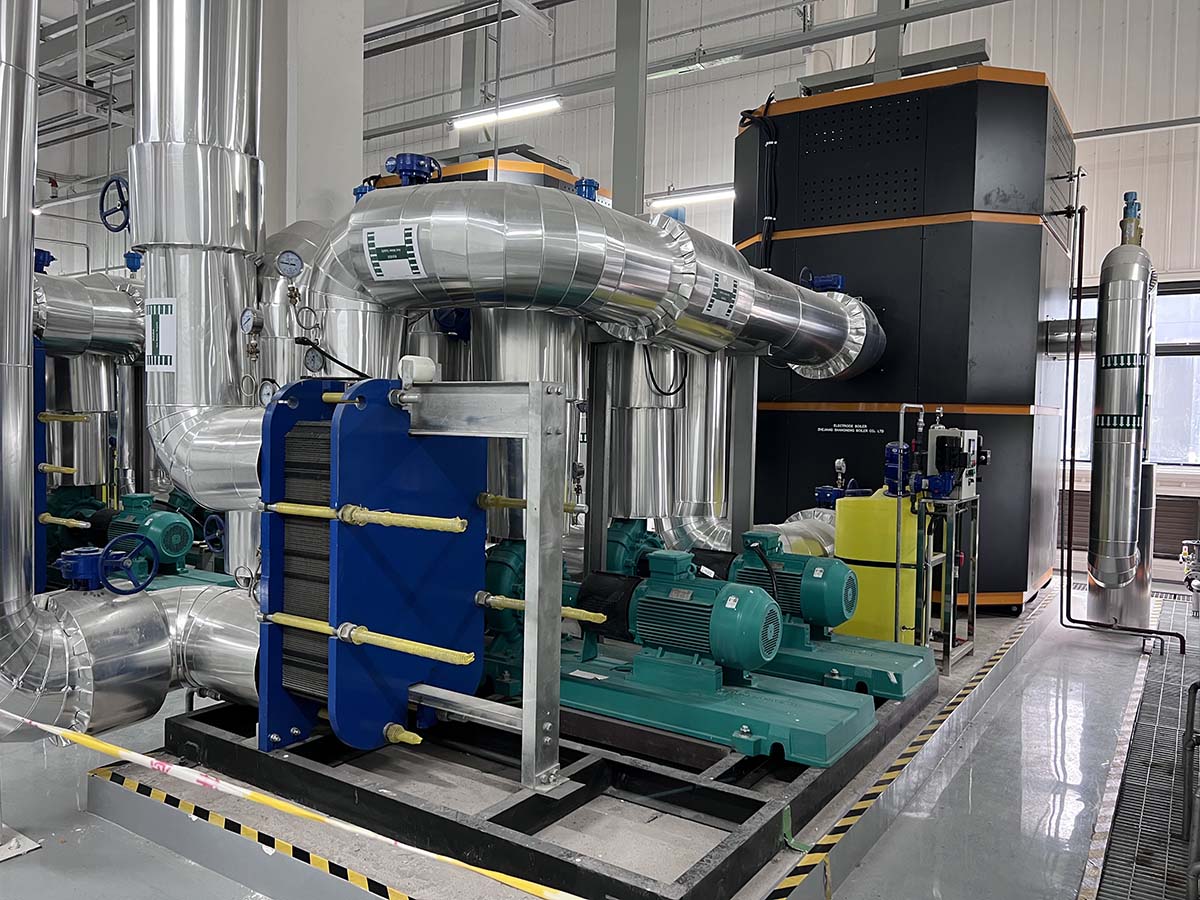
DISTRICT HEATING CEJW: Electrode boilers can match the heating output of fuel burning boilers while converting almost all the energy to heat. (Courtesy of Acme Boilers)
For residential or commercial property owners, electrode boilers also lower costs for installation, operation, and maintenance. Gas-fired boilers require fuel lines, storage and handling equipment, economizers, and emission control equipment. Advanced jet-type electrode boilers have a minimal number of components and electrical controls, with fewer parts. Under normal operation, the absence of excessive temperatures and electrode burnout also assures long operating life.
In addition, the units further lower operating costs with automatic controls that reduce the need for operating personnel.
The most advanced types of these boilers, such as Acme’s CEJS or CEJW, also offer greater safety than traditional fuel-burning models. “With the electrode boilers, there are no combustion hazards because there are no flames, fumes, fuel lines, or storage tanks. There are no problems with heat buildup or electrode burnout even if scaling should occur, and thermal shock is eliminated. Also, there is no low water danger since the current cannot flow without water,” Presser explains.
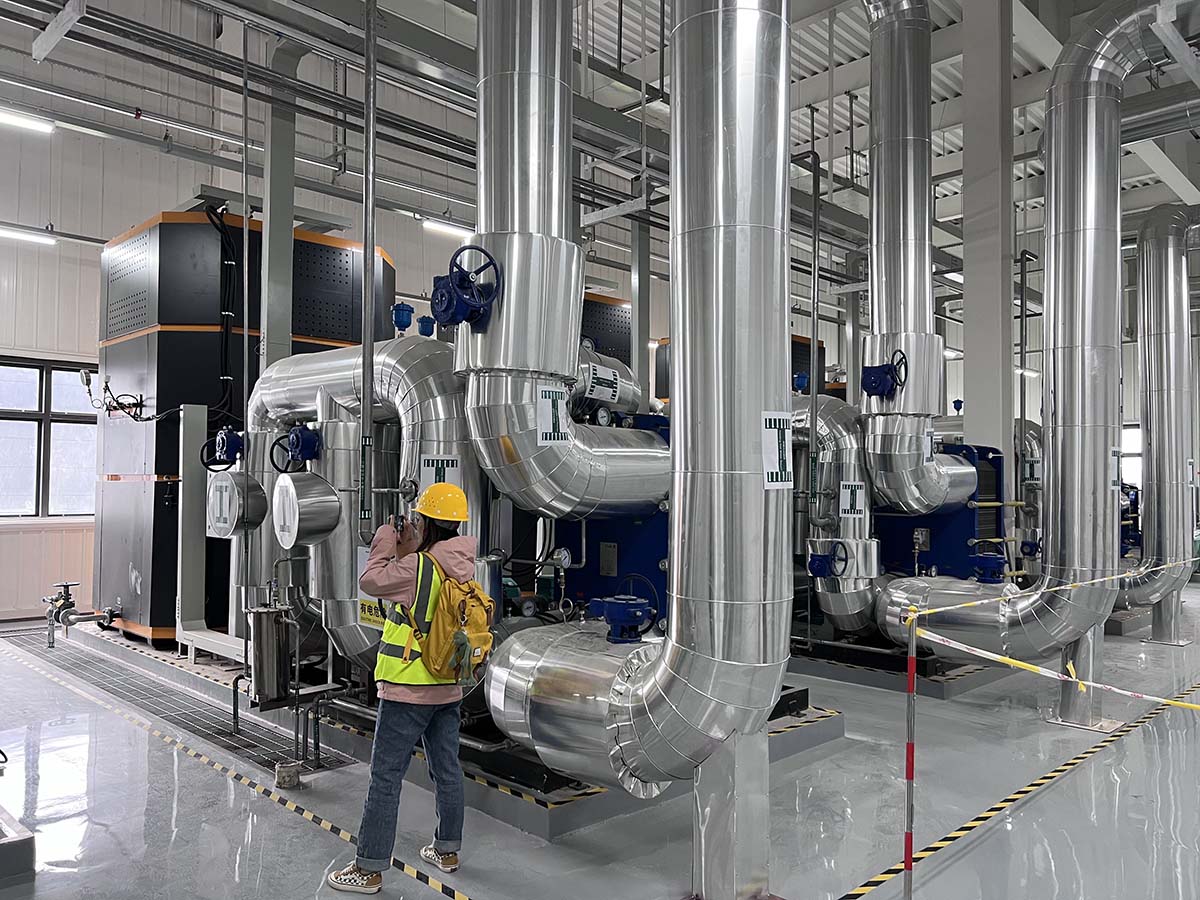
SAFER DISTRICT HEATING: The most advanced types of electrode boilers, such as Acme’s CEJS or CEJW, also offer greater safety than traditional fuel burning models. (Courtesy of Acme Boilers)
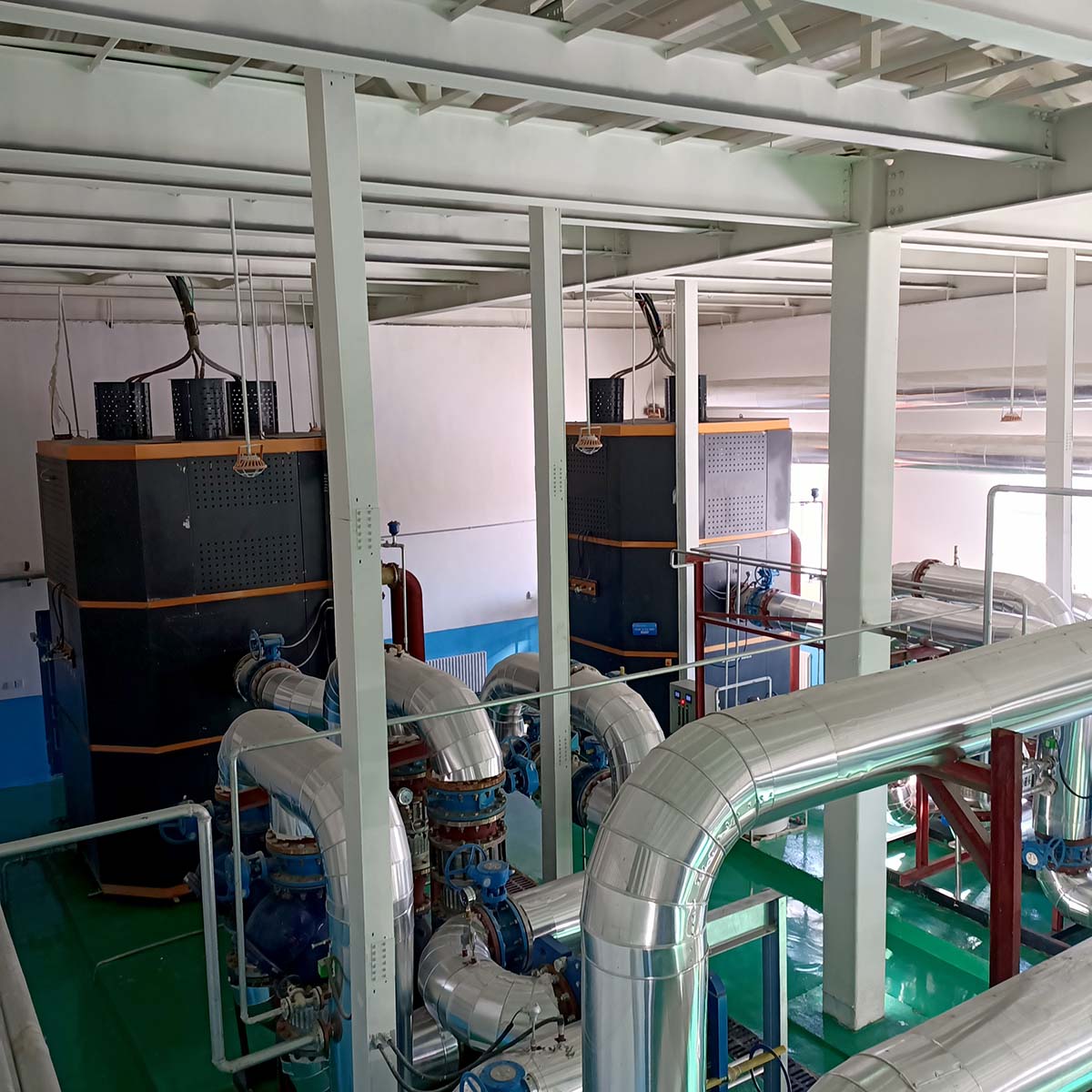
District Heating CEJS: With fewer parts than more complex fossil fuel burning units, electrical boilers are more compact and simpler to install than conventional systems. (Courtesy of Acme Boilers)
Unlike fossil fuel burning boilers, electric boilers require minimal maintenance since there is no burner, no material burned, no soot created, no chimney, and no wearing mechanical parts, says Presser. With fewer parts than more complex fossil fuel-burning units, electrical boilers are also more compact and simpler to install than conventional systems.
Finally, the electric units are exceptionally quiet compared to fuel-fired boilers. Unlike gas-powered burners that throttle like turbine engines almost continually, electric boilers keep operational noise levels down.
With all the advantages of high output jet type electrode boilers, in addition to their value in balancing out the use of intermittent renewable energy in the power grid, it is evident why a growing number of communities and businesses are selecting them for district heating.
As the effects of climate change become more severe, the urgency of switching to clean energy and decarbonizing the energy sector will only increase across the globe. In this effort, district heating paired with electrode boilers will be a vital part of the solution, as member countries strive to meet the IEA decarbonization goals.
For more info, contact Robert Presser at Acme Engineering via e-mail: rpresser@acmeprod.com; phone: (888) 880-5323 or (514) 342-5656; or web: https://www.acmeprod.com/jet-type-steam-boiler.
Looking for a reprint of this article?
From high-res PDFs to custom plaques, order your copy today!