ACHR News
search
Ask ACHR NEWS AI
cart
facebook twitter instagram linkedin youtube
  • Sign In
  • Subscribe
  • Sign Out
  • My Account
ACHR News
  • NEWS
    • Breaking News
    • New HVAC Products
    • Featured Products
    • Manufacturer Reports
    • HVAC Data
    • Legislation
    • ACHR NEWS Centennial
  • RESIDENTIAL
    • Air Conditioners
    • Furnaces
    • Residential Heat Pumps
    • Ductless
    • Residential IAQ
    • Testing, Monitoring, Tools
    • Components & Accessories
  • COMMERCIAL
    • Air Handlers
    • Rooftop Units
    • Chillers and Cooling Towers
    • Commercial Heat Pumps
    • Boilers and Hydronics
    • VRF/Ductless
    • Commercial IAQ
  • REFRIGERATION
    • Refrigerants
    • Refrigerant Regulations
    • Leak Management
  • CONTRACTOR PRO
    • Geothermal
    • Homeowner Study
    • VRF and VRV Ductless
    • Unitary Trends
  • EDUCATION
    • Training and Education
    • Business Management
    • Service and Maintenance
    • Continuing Education
    • Market Research >
      • HVAC Brand Awareness Report
      • VRV, VRF, VRVZ Report
      • Unitary Trends Report
      • Water Heat Professionals Report
    • Webinars
    • Sponsor Insights
    • eProducts Info
    • White Papers
  • EVENTS
    • HVAC Contractor Forum
    • Industry Events and Webinars
  • MEDIA
    • Videos
    • AHR Expo 2025 Videos
    • Podcasts >
      • ACHR News Podcast
      • HARDI Podcasts
      • AHR Expo Podcasts
      • ACCA Podcasts
    • Interactive Spotlights
    • Quizzes
    • eBooks
    • HVAC Talkback
  • HVAC GROUP
    • ACHR NEWS >
      • Current Issue
      • Digital Edition
      • Subscribe
    • Distribution Trends
    • SNIPS NEWS >
      • Join SNIPS NEWS
    • Engineered Systems News >
      • Join ES News
    • HVACR Directory
    • Contests
    • Newsletters
    • Contact
    • Advertise
    • My Account
NewsHVAC Residential MarketIndoor Air QualityVentilation

Preventing Moisture Problems in Direct Vent Gas Applications

Why installers should insulate direct gas vent penetrations with non-combustible insulation
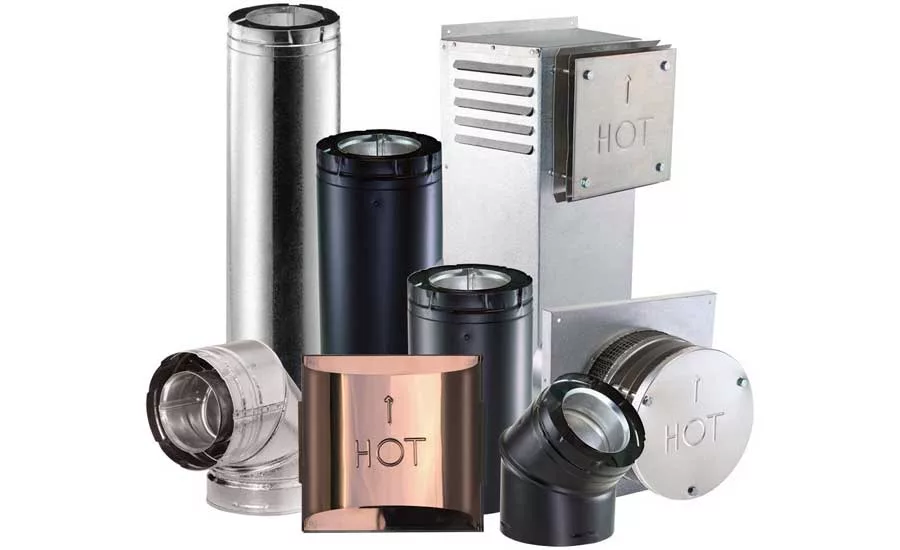
Direct Vent Gas Applications.
December 29, 2020

Moisture problems can be a frequent source of frustration. Unfortunately, most homeowners may not pay much attention until the damage is already done. Where is this moisture coming from, and how can it be stopped?

There are many different trades involved in residential construction. Plumbers, gasfitters, and electricians all routinely cut holes in exterior walls and up through attic ceilings, but the fireplace installer is usually responsible for the largest openings of them all. Not taking care to repair these openings properly will result in a world of hurt for the homeowner. Fortunately, in these cases, an ounce of prevention can save the homeowner gallons in damage.

Regardless of the region or season, condensation can occur when warm, moist air comes in contact with cool surface temperatures that are below the dew point. Cold air holds less moisture, so when this occurs, water vapor in the air will condense and collect on cool surfaces. Most of us have noticed the droplets of condensation that often collect upon a window’s exterior during summer mornings. This is the result of warm, humid outdoor air contacting the window’s surface, made cooler by air conditioning. In winter the physics are the same, but the circumstances are reversed. The moisture will collect on the window’s interior surface instead.

Most cold-weather condensation is due to warm air escaping from within a heated structure. This leakage is usually due to wall or ceiling penetrations that have not been sealed or insulated properly. In cold winter climates, condensation can accumulate as frost. With warmer weather, the frost begins to melt. If the moisture cannot easily escape, soaked wall and ceiling / attic assemblies will gradually deteriorate. Ironically, the tighter the home, the more problematic this can be. While there may be enough air leakage to cause condensation, there is not enough air circulation or venting available to allow this moisture to dry or escape to the outdoors. During long bouts of cold weather, severe frost can build up within an attic. A sudden spike in temperature can lead to a rapid melt leading to a phenomenon known as “attic rain” as water begins dripping down from the ceiling around vents or ceiling light fixtures.

This is with a 70⁰F/ 21⁰C interior ambient temperature and 40% relative humidity (RH) over a typical heating season.


A Preemptive Strategy

How does this relate to the wall or ceiling penetration for a typical direct vent gas fireplace? A mere 3/8-inch gap left around 5-inch x 8-inch direct vent pipe is equivalent to a 1-inch hole. The severe air leakage and subsequent condensation that will occur could be equivalent to over seven and a half gallons of water accumulating within an attic space or wall cavity over the course of just a single winter.

The problem has proven so widespread among solid-fuel fireplace installations that it prompted DuraVent to research, test, and ultimately approve the use of non-combustible rock (mineral) wool insulation around the wall thimble on sidewall penetrations and support boxes used for vertical attic terminations. When the vapor barrier is sealed and insulation is used, this helps to eliminate air leakage and to minimize heat loss from within the structure. This combined approach has proven quite successful on installations in the cold regions of Canada and the Northern mountain states in the U.S.

Looking for quick answers on air conditioning, heating and refrigeration topics? Try Ask ACHR NEWS, our new smart AI search tool. Ask ACHR NEWS →

Building on the success of this preemptive strategy, DuraVent now encourages manufacturers of direct vent gas fireplaces to recommend and approve this same approach.

The insulation provides a thermal barrier at the vent penetration, thus helping to maintain the overall thermal integrity of any well-insulated wall structure. Not only is the homeowner protected from potential condensation, but home efficiency gets a boost as well. High temperature silicone is typically used to seal the pipe to the wall thimble on the interior or exterior of the penetration. Sealing on the exterior will prevent rain and cold air from entering the house, while sealing the interior will prevent room air from entering the wall/ceiling space.


Role of the Vapor Barrier

In cold winter climates, maintaining the integrity of the vapor barrier is a crucial part of this strategy.

In retrofit applications, the installer has no choice but to cut the vapor barrier and penetrate through existing insulation. Once the thimble or support box is installed and insulated, the vapor barrier must be repaired. This is done by sealing it to the outer perimeter of the thimble or support box while also paying close attention to maintaining the required clearances to combustibles.

DuraVent has tested non-combustible rockwool (mineral wool) insulation that is listed and compliant with ASTM E126/ ULC S114 as non-combustible within the wall and ceiling passthrough components of the DirectVent Pro coaxial vent system. These tests have been conducted in cooperation with UL and have confirmed suitably low transfer of heat from the vent to any surrounding combustible framing materials.

Although DuraVent is absolutely confident that this solution will not only improve home energy efficiency when installing direct-vent gas fireplaces while also preventing long-term damage due to condensation, the ultimate approval to use field-installed mineral wool within our thimbles or ceiling supports must come from the appliance manufacturer. DuraVent is currently working to make appliance manufacturers aware of this solution. Dealers and installers can help facilitate this process by discussing this topic with manufacturers as well. DuraVent has created a sample form letter which installers can submit to manufacturers, asking for their approval to use field-installed mineral wool around the wall thimbles and support boxes.

Rather than offer parts that come pre-insulated with a one-inch or two-inch thickness from the factory, experienced installers want the freedom and flexibility to match the thickness of the insulation with the R-Value of insulation used in surrounding construction.

Note: The requirement for insulation and need for vapor barrier can vary widely according to climate or region. What works in cold climates may not work in warm, temperate climates. Familiarize yourself with building code, and check for any restrictions or rules that may apply in your location.

Content provided by DuraVent.

KEYWORDS: Moisture Control

Share This Story

Looking for a reprint of this article?
From high-res PDFs to custom plaques, order your copy today!


Recommended Content

JOIN TODAY
To unlock your recommendations.

Already have an account? Sign In

  • HVAC-enrollment

    The Trades Are Back: HVACR Programs See Nearly 30% Enrollment Spike

    A new wave of future technicians is entering the pipeline.  
    News
    By: Matt Jachman
  • 2025 Top 40 Under 40

    2025 Top 40 Under 40 HVACR Professionals List

    The 11th annual Top 40 Under 40 list highlights those...
    HVAC Light Commercial Market
    By: Hannah Belloli-Oster
  • LG Ductless Mini-Split Systems

    The 9 Types of Heat Pumps

    As the U.S. moves toward electrification, heat pumps are...
    Heat Pumps
    By: Joanna R. Turpin
Subscription Center
  • Create an Account
  • Start a Subscription
  • Manage My Account
  • Sign Up for Newsletters
  • Visit Customer Service
  • Update Preferences

More Videos

Sponsored Content

Sponsored Content is a special paid section where industry companies provide high quality, objective, non-commercial content around topics of interest to The News audience. All Sponsored Content is supplied by the advertising company and any opinions expressed in this article are those of the author and not necessarily reflect the views of The News or its parent company, BNP Media. Interested in participating in our Sponsored Content section? Contact your local rep!

close
  • Piggy Bank
    Sponsored byWatercress Financial

    Energy Prices, Inflation, and HVAC: What Today’s Homeowners Care About

  • Refrigerated Food
    Sponsored bySolstice Advanced Materials

    R-455A Refrigeration: A Cold Storage Solution for the Future

  • Airex Rooftop Units
    Sponsored byAirex Manufacturing Inc

    Consolidating Roof Penetrations: A Growing Trend in Multifamily HVAC Design

Popular Stories

HVAC-Price-Increase-graphic

HVAC Price Increase List: June 2026

Trump-Section-232.jpg

Trump Reduces Section 232 Tariffs on HVAC Equipment to 15%

R410A-Refrigerant-Cylinder.jpg

Refrigerant Recovery is a Revenue Opportunity

Heat-pump-cutaway.jpg

PFAS Rules and A2L Building Codes Continue to Evolve

Midea-training.jpg

HVAC Workforce Crisis Expands Beyond Technicians to Instructor Shortages

View The ACHR NEWS
Centennial Anniversary Timeline

The ACHR News Timeline Chart
Submit a Letter
Submit a letter to our editors.

Events

November 6, 2025

Next-Gen Data Center Cooling: HVAC Innovation and Real-World Solutions

On Demand As AI workloads and high-density computing push traditional cooling methods to their limits, the data center industry is accelerating the adoption of next-generation HVAC technologies.

June 17, 2026

Decarbonization Without Disruption

This webinar will explore practical HVAC decarbonization strategies that minimize disruption while maximizing long-term performance and ROI.

View All Submit An Event

Poll

Summer Staff

Are you fully staffed for the summer season?
View Results Poll Archive

Products

BNI Mechanical/Electrical Square Foot Costbook, 2026 Edition

BNI Mechanical/Electrical Square Foot Costbook, 2026 Edition

See More Products
Decarbonization Without Disruption - Free Webinar - 6/17/2026

Related Articles

  • Napoleon Fireplaces & Grills: Direct Vent Gas Inserts

    See More
  • Lennox Hearth Products: Direct-Vent Gas Fireplace

    See More
  • Lennox Hearth Products: Direct-Vent Gas Fireplace

    See More

Related Products

See More Products
  • Evaluating-and-Troubleshooting-Refrigeration-Systems-Video-Cover-210x300.jpg

    Evaluating Refrigeration Systems Troubleshooting & Identifying Problems CONTINUED

  • Modern Geothermal HVAC Engineering and Control Applications

  • ghpm.png

    Gas Heating: Furnaces, Boilers, Controls, Components

See More Products

Related Directories

  • Z-Flex (U.S.) Inc.

    Stainless steel and aluminum chimney liner in both flexible and rigid; Z-Vent special gas vent pipe CAT II, III, IV. 3 gas fired heating; OEM manufactured product for all heating equipment.
×

Sign Up. Stay Informed.

The #1 trusted source for the HVACR industry since 1926

SUBSCRIBE
  • RESOURCES
    • Advertise
    • Contact Us
    • Advisory Board
    • Classifieds
    • Submit a Letter
    • Directories
    • Store
  • ACCOUNT CENTER
    • Create an Account
    • Start a Subscription
    • Manage My Account
    • Sign Up for Newsletters
    • Visit Customer Service
    • Update Preferences
  • SERVICES
    • Marketing Services
    • Reprints
    • Market Research
    • List Rental
    • Survey/Respondent Access
  • STAY CONNECTED
    • LinkedIn
    • Facebook
    • Instagram
    • YouTube
    • X (Twitter)
  • PRIVACY
    • PRIVACY POLICY
    • TERMS & CONDITIONS
    • DO NOT SELL MY PERSONAL INFORMATION
    • PRIVACY REQUEST
    • ACCESSIBILITY

Copyright ©2026. All Rights Reserved BNP Media, Inc. and BNP Media II, LLC.

Design, CMS, Hosting & Web Development :: ePublishing