ACHR News
search
Ask ACHR NEWS AI
cart
facebook twitter instagram linkedin youtube
  • Sign In
  • Subscribe
  • Sign Out
  • My Account
ACHR News
  • NEWS
    • Breaking News
    • New HVAC Products
    • Featured Products
    • Manufacturer Reports
    • HVAC Data
    • Legislation
    • ACHR NEWS Centennial
  • RESIDENTIAL
    • Air Conditioners
    • Furnaces
    • Residential Heat Pumps
    • Ductless
    • Residential IAQ
    • Testing, Monitoring, Tools
    • Components & Accessories
  • COMMERCIAL
    • Air Handlers
    • Rooftop Units
    • Chillers and Cooling Towers
    • Commercial Heat Pumps
    • Boilers and Hydronics
    • VRF/Ductless
    • Commercial IAQ
  • REFRIGERATION
    • Refrigerants
    • Refrigerant Regulations
    • Leak Management
  • CONTRACTOR PRO
    • Geothermal
    • Homeowner Study
    • VRF and VRV Ductless
    • Unitary Trends
  • EDUCATION
    • Training and Education
    • Business Management
    • Service and Maintenance
    • Continuing Education
    • Market Research >
      • HVAC Brand Awareness Report
      • VRV, VRF, VRVZ Report
      • Unitary Trends Report
      • Water Heat Professionals Report
    • Webinars
    • Sponsor Insights
    • eProducts Info
    • White Papers
  • EVENTS
    • HVAC Contractor Forum
    • Industry Events and Webinars
  • MEDIA
    • Videos
    • AHR Expo 2025 Videos
    • Podcasts >
      • ACHR News Podcast
      • HARDI Podcasts
      • AHR Expo Podcasts
      • ACCA Podcasts
    • Interactive Spotlights
    • Quizzes
    • eBooks
    • HVAC Talkback
  • HVAC GROUP
    • ACHR NEWS >
      • Current Issue
      • Digital Edition
      • Subscribe
    • Distribution Trends
    • SNIPS NEWS >
      • Join SNIPS NEWS
    • Engineered Systems News >
      • Join ES News
    • HVACR Directory
    • Contests
    • Newsletters
    • Contact
    • Advertise
    • My Account
NewsService and MaintenanceIndoor Air QualityVentilationResidential Indoor Air QualityCommercial Indoor Air Quality

Five Timeless Indoor Air Quality Principles You’ll Use Daily

These principles result in success when you use them together correctly
By David Richardson
Five Timeless Indoor Air Quality Principles You’ll Use Daily
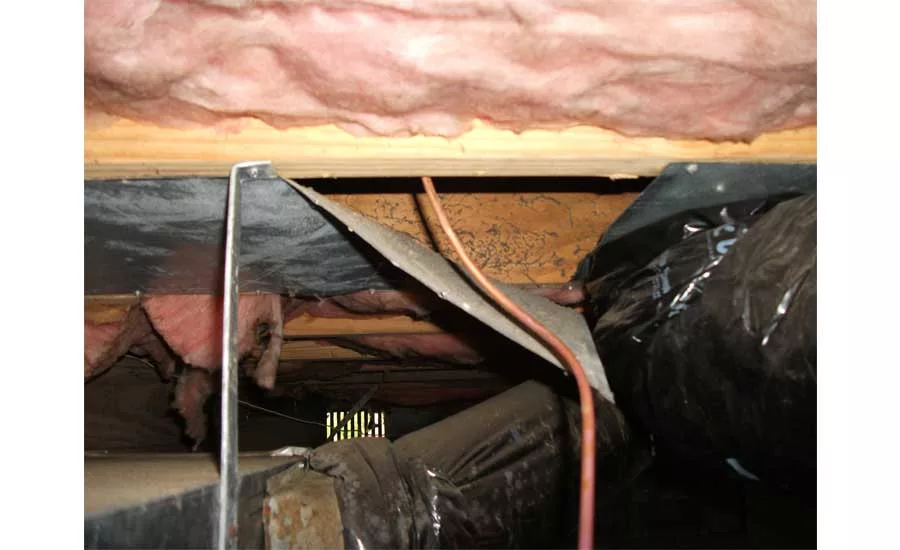
Sometimes you find indoor air quality influenced by unexpected sources.
July 22, 2020

Your customers are in their homes a lot these days. Because of this, they are more aware of their HVAC systems and the air it circulates. This awareness leads them to doing many internet searches for the best indoor air quality (IAQ) solutions. The odds are high they find a lot of silver bullets.

In stories, a silver bullet is the projectile of choice to kill scary things that we don’t understand. The term also describes a simple solution to a complicated problem. Unfortunately, silver bullets in the HVAC industry rarely hit the mark because we take them out of context and ignore foundational principles.

These principles result in successful solutions when you use them together correctly. They often provide a healthy environment and exceptional comfort at the same time. Let’s look at the top five IAQ principles and how you can use them daily to better serve your customers and address issues important to them.

READ MORE ABOUT

• Indoor Air Quality

• Ventilation

• Service & Maintenance


Equipment Cleanliness

For decades, our industry has promoted the benefits of clean equipment through maintenance. To clarify, I’m talking about thorough cleaning to prolong equipment life and keep it operating at peak performance — not a quick wipe down with a service rag. There’s no thrill in cleaning a blower wheel, but it gets results.

Another key area of equipment cleanliness is the indoor coil and drain pan. These are breeding grounds for all kinds of nasty stuff. In this situation you may consider ultraviolet (UV) light applications on coil and pan surfaces. Do your research and choose wisely before you randomly select a product. Some applications could have side effects and cause damage to system components.

As equipment cleanliness degrades, it’s important to ask yourself, “Why does the equipment get in this condition in the first place?” The answers to this question lead us to other principles. Let’s start at the air filter.


Air Filtration

The air filter is likely the first accessory most of your customers think about when they consider IAQ. Unfortunately, it could contribute to many of their IAQ issues. For a filter to work effectively, you must size it for the air volume you expect to move through it.

Looking for quick answers on air conditioning, heating and refrigeration topics? Try Ask ACHR NEWS, our new smart AI search tool. Ask ACHR NEWS →

An undersized or restrictive filter is ineffective — regardless of its minimum efficiency reporting value (MERV) rating. One factor that influences poor filtration is too much filter face velocity. In other words, the airspeed moving through the filter media.

Most filter manufacturers rate their filter media at different face velocities in feet per minute (fpm). A popular value for most filter types is 300 fpm. When you exceed the rated face velocity, it can cause decreased filter performance.

Remember, air takes the path of least resistance. If air can’t go through a filter, it will bypass it. This is one reason high-efficiency filters can decrease IAQ instead of improving it. You can learn more about how to deal with restrictive air filter issues in my past Duct Dynasty article, “Confronting Restrictive Air Filters,” published March 28, 2016.


Building Pressure

What if dirt and dust don’t make it to the air filter? Some time ago, I had insane dust issues in my home. I was a victim of negative building pressure and the consequences that go with it.

Mother Nature loves balance. She likes it when the same amount of air that goes in, comes out. My colleague Paul Wieboldt refers to this as the “gozinta” and “gozouta” effect. To put it another way, if one cubic foot (cfm) of air blows into the living space, the same amount should come out. So, one cfm in equals one cfm out.

Unfortunately, there are system defects that exist such as duct leakage, door closure, and airflow imbalances that cause air to come from places you don’t want. Air loaded with cellulose fibers from my attic flowed into my home from airflow imbalances (basement supply ducts with no return and no air balancing).

Once we identified these issues and corrected them, it changed the air quality of our home. Fixing the air distribution issues and air balancing played a big role in the solutions. The other principle we used to improve our dust issue was to add an outside air duct. That leads me to the next principle, ventilation.


Ventilation

In the late 1970s, there was an energy crisis. As a result, there was a push to tighten up buildings in the name of energy efficiency. This led to some air quality problems the World Health Organization (WHO) labelled as “sick building syndrome.” One of the major culprits in these buildings that led to their “sick” condition was lack of ventilation.

Over the years, we’ve gotten wiser about adding outside air in buildings. We better understand its ventilation benefits and side effects. The HVAC system is often the primary source that brings in outside air. This is typically through a controlled location, such as an economizer, outside air duct, or a dedicated system such as an Energy Recovery Ventilator (ERV) or ventilating dehumidifier.

In addition to ventilation, outside air can also change the way a building leaks air. Building air leakage is often random and uncontrolled. It is referred to as infiltration (air going in) and exfiltration (air going out).

When you use an outside air duct for ventilation, you also change the source(s) of infiltration and control the air. The last thing you want is air for ventilation coming in from a nasty source. Be aware of how much ventilation you provide, it may affect the next principle, indoor air conditions.


Indoor Air Conditions

The last principle we’ll look at are the aspects that determine indoor air conditions. Pay specific attention to dew point, humidity, enthalpy, and dry bulb temperature. These factors heavily influence the indoor air conditions and their relationship to comfort and air quality. In a future article, we’ll examine these relationships in more detail.

Each building has different load requirements. Therefore, it’s important to size your equipment correctly. It’s hard to achieve acceptable indoor air conditions with oversized equipment that short cycles and cannot remove enough moisture.

It’s not enough to assure the correct equipment size. You also must make sure the equipment operates near its rated capacity to condition the living space at design conditions. If you hook the equipment up to a pathetic duct system, your customers won’t have the comfortable indoor conditions they expect.


Next Steps

Now that you have an overview of these five IAQ principles, I have a reminder. There are no silver bullets, only silver shotgun shells. Each principle above is a piece of silver buckshot in a casing that provides a powerful punch when you use them together.

Learn the principles that truly impact IAQ and understand how they work together. While I briefly covered each item, you can find entire books on each subject. I encourage you to seek them out and do some research.

Realize that a single principle might not provide the intended results. It could even create additional issues that you didn’t predict if you misuse them. However, following these few basics goes a long way towards success:

  • Assure you size filters for the right amount of airflow and acceptable pressure drop.
  • Control building pressures with exceptional duct design, installation, and balancing practices.
  • Provide ventilation to assist with needed air changes and prevent the recirculation of stale air.
  • Properly size equipment so it can handle the building load and maintain comfortable conditions.

Above all, don’t prey on people’s fears. Maintain integrity in your daily operations and serve customers like they are family. Those actions remove their fear quicker than anything.

KEYWORDS: airflow management Duct Dynasty HVAC service maintenance for HVACR troubleshooting and HVACR

Share This Story

Looking for a reprint of this article?
From high-res PDFs to custom plaques, order your copy today!


David richardson
David Richardson serves the HVAC industry as Vice President of Training for National Comfort Institute, Inc. (NCI). NCI specializes in training focused on improving, measuring, and verifying HVAC and Building Performance. If you’re an HVAC contractor or technician interested in learning more about building science applied to HVAC, contact David at ncilink.com/ContactMe.

Recommended Content

JOIN TODAY
To unlock your recommendations.

Already have an account? Sign In

  • HVAC-enrollment

    The Trades Are Back: HVACR Programs See Nearly 30% Enrollment Spike

    A new wave of future technicians is entering the pipeline.  
    Training and Education
    By: Matt Jachman
  • 2025 Top 40 Under 40

    2025 Top 40 Under 40 HVACR Professionals List

    The 11th annual Top 40 Under 40 list highlights those...
    HVAC Contracting
    By: Hannah Belloli-Oster
  • LG Ductless Mini-Split Systems

    The 9 Types of Heat Pumps

    As the U.S. moves toward electrification, heat pumps are...
    News
    By: Joanna R. Turpin
Subscription Center
  • Create an Account
  • Start a Subscription
  • Manage My Account
  • Sign Up for Newsletters
  • Visit Customer Service
  • Update Preferences

More Videos

Sponsored Content

Sponsored Content is a special paid section where industry companies provide high quality, objective, non-commercial content around topics of interest to The News audience. All Sponsored Content is supplied by the advertising company and any opinions expressed in this article are those of the author and not necessarily reflect the views of The News or its parent company, BNP Media. Interested in participating in our Sponsored Content section? Contact your local rep!

close
  • An illustration shows a house with a geothermal heating system. Pipes are depicted running underground.
    Sponsored byClimateMaster

    Residential Tax Credits Are Ending, But Demand Continues

  • Piggy Bank
    Sponsored byWatercress Financial

    Energy Prices, Inflation, and HVAC: What Today’s Homeowners Care About

  • Refrigerated Food
    Sponsored bySolstice Advanced Materials

    R-455A Refrigeration: A Cold Storage Solution for the Future

Popular Stories

HVAC-Price-Increase-graphic

HVAC Price Increase List: July 2026

price-raising-practices.jpg

Rising Costs Force Contractors to Take a Harder Look at Pricing

DOE-sign.jpg

HVAC Groups Support DOE’s Rulemaking to Cut Energy Efficiency Mandates

Industry-Ethics_-Service-Calls.jpg

HVAC Contractor Agrees to $300K Settlement Over Alleged Deceptive Sales Practices

Daikin Applied CEO Yu Nishiwaki

Daikin Applied Announces New Top Leadership

View The ACHR NEWS
Centennial Anniversary Timeline

The ACHR News Timeline Chart
Submit a Letter
Submit a letter to our editors.

Events

November 6, 2025

Next-Gen Data Center Cooling: HVAC Innovation and Real-World Solutions

On Demand As AI workloads and high-density computing push traditional cooling methods to their limits, the data center industry is accelerating the adoption of next-generation HVAC technologies.

July 22, 2026

Designing VRF Systems Using A2L Refrigerant

In this session, we will cover how to design VRF systems for the U.S. market using new A2L refrigerants. These systems provide an advanced zoning solution by using inverter technology to deliver precise heating and cooling control across multiple zones and spaces.

View All Submit An Event

Poll

Summer Staff

Are you fully staffed for the summer season?
View Results Poll Archive

Products

BNI Mechanical/Electrical Square Foot Costbook, 2026 Edition

BNI Mechanical/Electrical Square Foot Costbook, 2026 Edition

See More Products
Designing Systems Using A2L Refrigerant - Free Webinar - 7/22/2026

Related Articles

  • Airflow through a system graph - The ACHR News

    Four Airflow Values You’ll Use Daily

    See More
  • A robot from UBTech Solutions cleans a room using ultraviolet light.

    Building Operators Use Array of Indoor Air Quality Tools to Ease Concerns

    See More
  • Simple indoor air quality solutions that HVAC techs can use in a residential space

    See More

Related Products

See More Products
  • EHEP002028.jpg

    Principles of Heating, Ventilation, and Air Conditioning in Buildings, 1st Edition

See More Products

Events

View AllSubmit An Event
  • October 14, 2025

    Maximize Every Home Visit: Indoor Air Quality Strategies to Grow HVAC Revenues

    On Demand In this webinar, you’ll learn how top HVAC pros are integrating IAQ into everyday service and sales calls to increase average job size, boost customer satisfaction and stand out from the competition.
View AllSubmit An Event

Related Directories

  • Indoor Air Quality Assn.

    IAQA is dedicated to bringing practitioners together to prevent and solve indoor environmental problems for the benefit of consumers and the public.
  • Panasonic, Indoor Air Quality Div.

    Panasonic delivers premium, energy-efficient ventilation and indoor air quality solutions engineered for exceptional performance. Trusted by professionals and homeowners alike, our products set the standard for code compliance, reliability, and superior comfort -- elevating every home to a higher standard of living.
×

Sign Up. Stay Informed.

The #1 trusted source for the HVACR industry since 1926

SUBSCRIBE
  • RESOURCES
    • Advertise
    • Contact Us
    • Advisory Board
    • Classifieds
    • Submit a Letter
    • Directories
    • Store
  • ACCOUNT CENTER
    • Create an Account
    • Start a Subscription
    • Manage My Account
    • Sign Up for Newsletters
    • Visit Customer Service
    • Update Preferences
  • SERVICES
    • Marketing Services
    • Reprints
    • Market Research
    • List Rental
    • Survey/Respondent Access
  • STAY CONNECTED
    • LinkedIn
    • Facebook
    • Instagram
    • YouTube
    • X (Twitter)
  • PRIVACY
    • PRIVACY POLICY
    • TERMS & CONDITIONS
    • DO NOT SELL MY PERSONAL INFORMATION
    • PRIVACY REQUEST
    • ACCESSIBILITY

Copyright ©2026. All Rights Reserved BNP Media, Inc. and BNP Media II, LLC.

Design, CMS, Hosting & Web Development :: ePublishing