What Causes Hydronic Pump Failure?
Manufacturers explain maintenance, assessment procedures
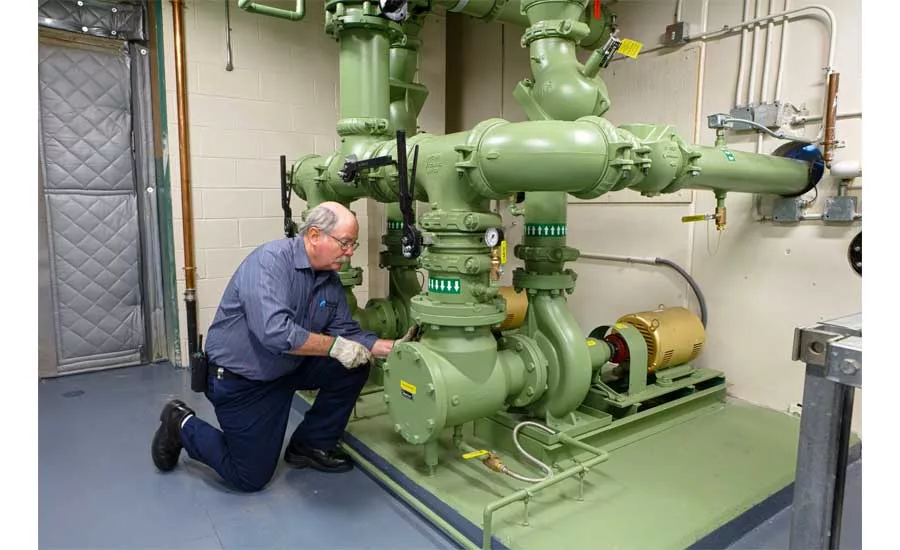
DESIGN CONDITIONS: “Proper pump operation at design conditions should be verified against the manufacturer’s published curve,” said Ben Needham, field applications engineer, Taco Comfort Solutions.
The argument can be made that pumps don’t fail, they just function less efficiently. If the bearings are completely seized and refuse to turn, then the failure argument is valid — otherwise, the pump keeps on pumping in most cases. Poor design, like operating too far to the left or right on the pump curve, can cause problems, and misapplications can bring about premature failure, but the pump still pumps.
Designed to do their job without wavering, hydronic pumps do require maintenance to optimize their performance — even the maintenance-free ones. According to Ben Needham, field applications engineer, Taco Comfort Solutions, there are two general types of pump maintenance to consider as a technician — mechanical maintenance and pump assessment.
“Regular maintenance, such as greasing bearings and realignment, will ensure proper mechanical performance,” he said. “Greasing pump and motor bearings will also help prevent bearing failures.”
Steven Lane, communications manager for Armstrong Fluid Technology, said that seized or failing bearings on a pump can definitely lead to failure, but stressed that early identification should help the technician avoid overall system failures.
“The most common pump component to experience problems is the mechanical seal,” he said. “Seals will often start to leak as they age or in response to excessive wear. As inconvenient as a leaking seal might be, as long as it is addressed early, the issue rarely leads to actual failure.”
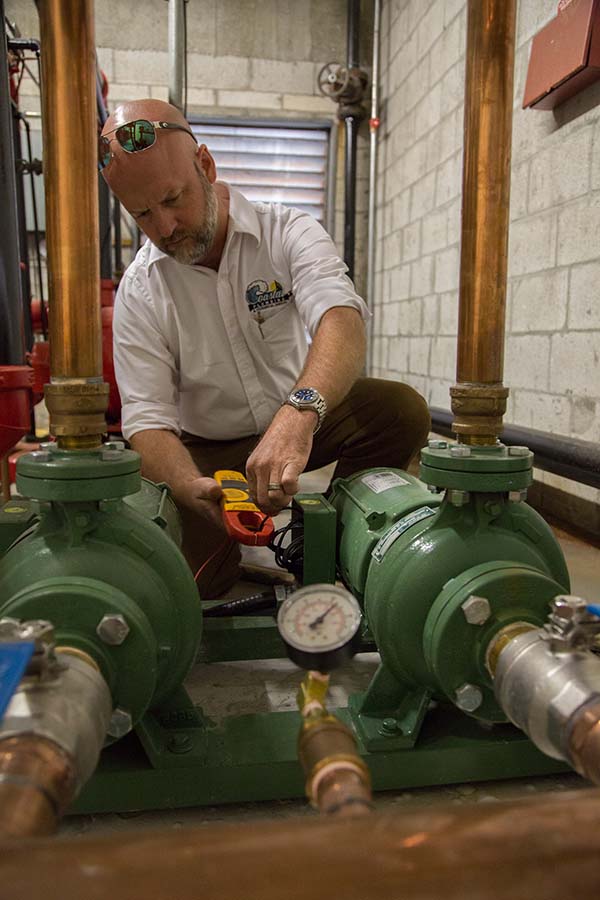
MAINTENANCE REQUIRED: Regular maintenance of traditional commercial pumps will contribute to better performance, but more so when paired with a proper pump assessment — which will vary by application.
Bearings, seals, and pump grease aside, there is another consideration for pump maintenance — performance. In order to understand how a pump is performing, Needham suggests that technicians conduct regular pump assessments along with the mechanical maintenance.
“A typical pump assessment will include an inspection of the pump, followed by gathering, analyzing, and comparing electrical and hydraulic performance readings to the manufacturer’s published performance data and system design requirements,” he said. “Visual inspection of suction/discharge flanges for leaks, as well as the pump volute, are important. An assessment should follow regular maintenance to ensure proper performance. Hydraulic and electrical readings should confirm that the pump is operating in accordance to the system design.”
Looking for quick answers on air conditioning, heating and refrigeration topics? Try Ask ACHR NEWS, our new smart AI search tool. Ask ACHR NEWS
According to Needham, a proper pump assessment will prevent failures by ensuring the pump is not operating outside of manufacturer recommendations.
Pumps Come In Variety
The choice of pump will put variations in pump maintenance procedures of which technicians should be aware.
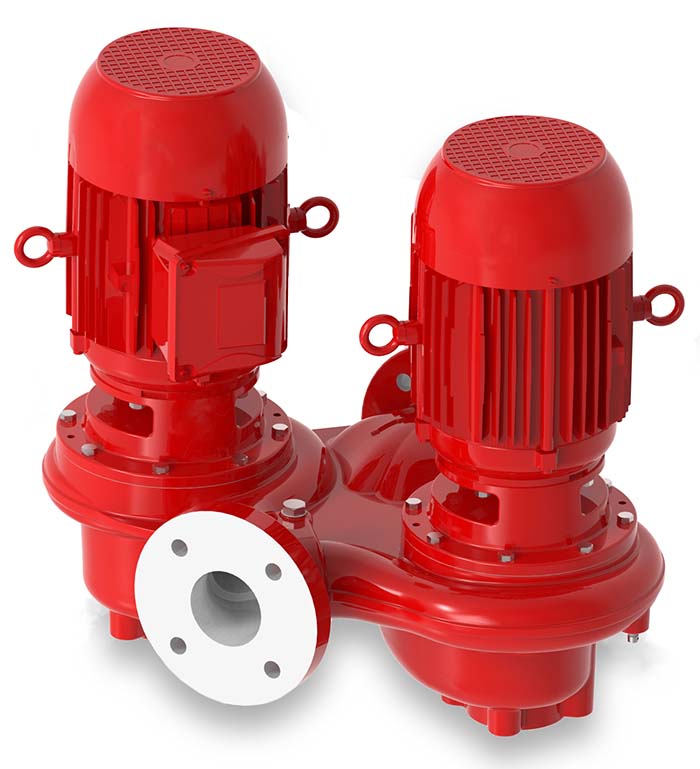
EASY ACCESS: The Bell & Gossett e-82 twin in-line vertical centrifugal pump design facilitates easy maintenance and part replacement, allowing the removal of the impeller, seal, and motor without disconnecting the piping system.
“Today’s pump choices for the residential/light commercial market offer many ‘maintenance-free’ designs, but the proven oil-lubricated three-piece style pumps still have their place with the installing contractor audience,” said Mike Licastro, training and education manager, commercial building systems & HVAC, Bell & Gossett of Xylem Inc. “Keeping oil clean and at the recommended levels provides proper bearing lubrication to reduce friction, maintain quiet operation, and prevent bearing and motor drag, or eventual seizure.”
Licastro advised that when it is applicable, couple alignment should be checked and motor mount rubber bushings should be inspected and replaced if a flat spot has developed due to compression.
“Make sure to look for signs of corrosion on metal surfaces and inside the motor, and occasionally, use compressed air to blow the motor out, removing accumulated dust and debris,” he said. “Maintenance should occur at the recommended frequency for inspection, which is at least every 90 days, although site conditions may require more periodic intervals.”
Needham explained that ECM pumps often feature high-powered magnets in their construction.
“These magnets are known to attract iron oxide debris into the pump,” he said. “Installing and regularly servicing a magnetic filtering element to the system will greatly aid in preventing the buildup of oxide debris inside the pump assembly. In-line filtration systems are constantly at work, filtering hydronic system fluids, and are designed specifically to remove iron oxide that may be suspended within circulated fluids.”
Despite some pumps having a maintenance free tag on them, Licastro and Needham agreed that these pumps will still benefit from regular system maintenance and assessment.
Environment Plays a Role
The pump’s environment can play a role in its performance and required maintenance.
“In many respects, regular maintenance to optimize pump performance involves inspecting both the pump and the environment in which the pump operates,” said Lane. “Systems should be checked regularly to ensure that valves are properly set, strainers are not clogged, and that the system fluid is clean. Any issues in this area should be addressed quickly.”
He cautioned that hard water can lead to calcification and scaling within water-based systems. Although not initially an issue, substantial scaling over time can lead to reductions in the pipe size and a drop off in fluid flow efficiency, he said. Saltwater exposure brings in a different set of concerns for technicians. With this liquid, regular seals and rubber components can be damaged.
“Those pumps operating in a saltwater environment typically use different materials for mechanical seals,” said Lane.
Pumping fluid is not the only concern when considering the environment. The key to each pump’s success in certain environments is that it is within manufacturer parameters.
“Extreme temperatures, humidity levels, or presence of corrosive materials in the atmosphere could require increased frequency of lubrication and the periodic application of a surface protectant, which removes iron oxides and protects from rust formation and spread,” said Licastro. “In some cases, a component may need replacement to provide different materials of construction better suited for actual field conditions, or an additional pump accessory may be added to protect the pump from a potential harmful situation.”
What Did We Miss?
Even good technicians can overlook issues that arise with pumps and hydronic systems, especially due to the fact that even when there are problems, pumps will continue to run. Greasing and assessments aren’t always enough to keep the pump running efficiently.
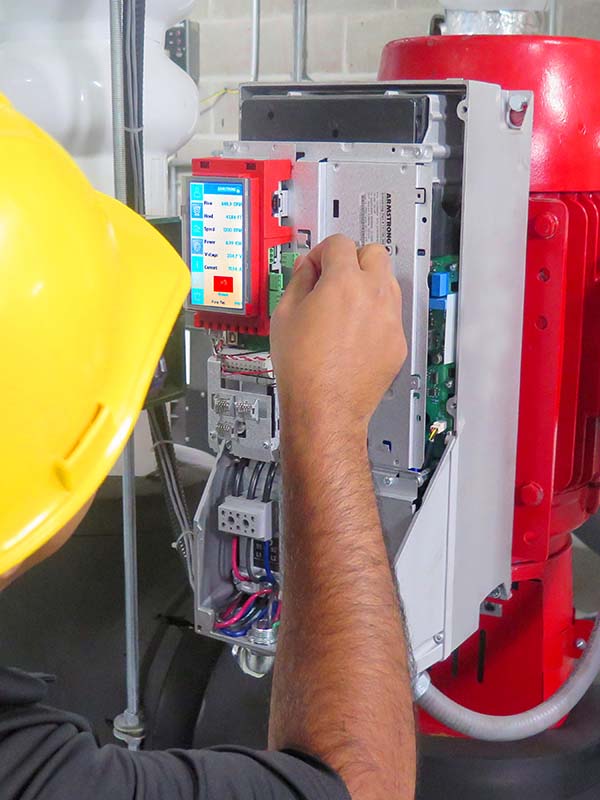
PUMP MONITORING: Pump manager, the performance tracking service offered by Armstrong tracks pump operation closely, and can provide alarms, alerts, and notifications to operators and service personnel.
According to Licastro, it is important that system fluid quality sampling is conducted, specifically pH level testing.
“Measurement of total dissolved, undissolved, and suspended solids are often overlooked,” he said. “In a glycol system, verification of mix ratio should be conducted as unfavorable results can force the pump to work harder to maintain desired operating conditions, and can lead to early failure of some components, such as mechanical seals.”
Another overlooked maintenance task is flow verification and corresponding motor amperage tests. Licastro explained that in three-phase power supply situations, confirming good voltage on all three legs of the motor should be done.
“Prolonged exposure to inconsistent low or high power will shorten the motor life and most certainly change the efficiency at which it operates,” he said. “Where flow is concerned, a noticeable reduction when compared to using consistent system operating conditions each time may be an indication that internal tolerances may have changed due to surface wear on the impeller or pump casing. This will also affect pump efficiency.”
Needham said that a hydraulic assessment can be missed in pump maintenance as well.
“Proper pump operation at design conditions should be verified against the manufacturer’s published curve,” he explained. “Pumps are typically selected as close to the Best Efficiency Point (BEP) as possible. Hydraulic readings should confirm that the pump is operating in accordance to the system design.”
Some other items related to maintenance that are frequently overlooked include closed valves and clogged strainers.
“Our field technicians also regularly find that pump controllers have been switched to ‘pump in hand’ mode,” said Lane. “While there is no immediate problem associated with this setting, removing the variable-speed capability negates the value of the intelligent variable-speed technology and prevents changes in operation that would lead to energy savings.”
Looking for a reprint of this article?
From high-res PDFs to custom plaques, order your copy today!