Keep Ducts Clean During Construction and Replacement
Industry experts stress the importance of keeping duct systems free from debris
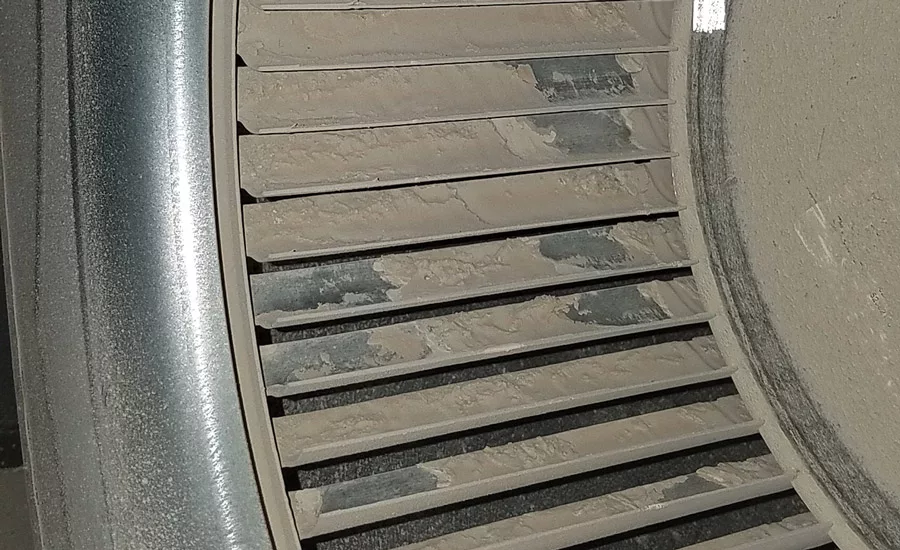
HEALTH HAZARDS: Dirt and drywall dust cover the blower wheel of a brand new HVAC system in a newly constructed home. Photo courtesy of Building Performance Group
When purchasing a newly constructed home, homeowners assume all the appliances and electrical and mechanical systems will be working as they should because they’re brand new. However, with some houses, that may not be the case. If builders don’t take proper steps to cover ducts during construction, homeowners may be in for a rude awakening.
“It’s extremely important to keep ducts clean during construction,” said David Richardson, curriculum developer and instructor, National Comfort Institute Inc. (NCI). “Drywall dust can get into the ductwork, and it’s very difficult to get it out once it’s in there. As soon as that system is turned on, the drywall dust is going to get thrown into the house, all over everything. That process can continue for several months. It can be a real nuisance.”
Eric George, owner of Building Performance Group in Louisville, Kentucky, agreed.
“If they [ducts] are not clean from the very beginning, most likely the homeowner doesn’t know it,” George explained. “They just assume, since it’s a brand new house and a brand new system, it should be clean. If they move into the house and start developing allergies or having issues with dust, usually it’s because they’re circulating contaminants throughout the house from an HVAC system that was never thoroughly cleaned. It’s an IAQ issue, but it’s also an HVAC performance issue, because once the blower wheel starts getting caked, the underside of the A coil is going to get caked. Once that happens, airflow drops, static pressure increases, the efficiency of the equipment drops, and you’re not getting the performance you’d expect out of your brand new heating and cooling system.”
Ken Summers, vice president of training, Comfort Institute Inc., also underlined the importance of keeping ducts clean.
“The minute you turn the air handler on, everything that’s in the ductwork is either going to be blown into a nice clean home, or it’s going to be sucked in on the return side into the equipment itself,” Summers said. “Most manufacturers will void your warranty if you get sheet rock dust or other contaminants in there.”
Keeping ductwork clean is also important for health reasons.
Looking for quick answers on air conditioning, heating and refrigeration topics? Try Ask ACHR NEWS, our new smart AI search tool. Ask ACHR NEWS
“You’re going to be breathing in everything that might be in the ductwork, so keeping it clean is important,” Summers added. “The bigger issue further on down the line is that the ductwork should never actually get dirty. If you have dirt in a duct system, something is broken. The supply side has cracked, or the ductwork is falling apart and creating something called the Venturi Effect that starts sucking insulation, dust particulates, and more out of the attic. The contaminants in attics are horrible — things like bugs, insects, rodents and their feces and urine. A rodent doesn’t have any bladder control, so as it walks, it urinates. As the urine dries, it forms a crystal that people with asthma are highly allergic to. A lot of people have told me
they were never allergic to anything before they moved into their new houses, or their asthma never bothered them until they moved in, so that type of thing can really affect the health of homeowners.”
HORROR STORIES
On occasion, there is more to be worried about than just drywall dust in the ducts, Richardson noted. “I’ve seen people use them as trash cans. Instead of using a dust pan, they’ll sweep trash right into the supply register. Of course, that’s going to kill the performance of the system. It’s hard to deliver airflow through a 7-inch round that’s got two Mountain Dew bottles in it.”
Richardson said he’s also pulled out a cat or two from returns before.
“There are some people who are lazy, and rather than go out to the porta-john or designated area, they go right into the duct system,” he said. “You start getting into some health issues there. It does happen, and it’s nasty.”
The Building Performance Group handles testing for Home Energy Rating System (HERS) ratings for new construction homes. George said he has seen a number of things during these inspections.
“We see the blown insulation product that’s used for wall cavities end up down in the ductwork all the time. Some contractors will take the time to put covers over the top of the supply ducts on the floor and some of them might even block off the return opening, but, nevertheless, there’s almost always some drywall dust, insulation debris, or something that falls into the ductwork. And after that stuff is uncovered and the system is turned on, it just gets sucked into the duct system.
“When we’re doing the final inspection on a house, we will open up the air handler because we need to do a duct-leakage test, and the inside of those air handlers, especially the blower wheels, are often caked with drywall dust. Sometimes there is sawdust on them as well as insulation debris. I’ve also seen trash bags in there and things like product manuals or installation instructions. Contractors need to make sure that space is clean.”
On the replacement end, George said contractors can sometimes be negligent about turning a system off before starting the work.
“Typically, this seems to occur when the system or ductwork is in the attic,” he said. “A lot of times, the attic insulation will somehow get sucked into the system and distributed throughout the ductwork. Usually, this will happen if they are replacing equipment and open the return side somewhere. If they don’t take the time to actually turn off the furnace while this is going on, it just sucks in whatever air is around it, and it gets past the filter and caked up on the underside of the coil and the blower wheel. So, make darn sure when you’re replacing equipment or renovating ductwork that the system is actually turned off.”
BEST PRACTICES
The most common best practice is to ensure all the ductwork is covered or sealed off during construction or renovation.
“Usually, the ductwork goes in long before the sheet rock goes up,” Summers said. “So you have an exposed boot in the floor. You need to put something inside that boot that would block anything from falling down inside. It’s not uncommon to see somebody cleaning up sheet rock debris and dust and just dump it down the register so the floor looked clean. And when you put new HVAC systems into existing homes, before the new system goes in, ducts should be inspected and cleaned. The ducts really should be looked at. It’s a pretty expensive repair in a home, so people should want it done properly.”
George added that ducts should also be inspected after construction and after the installation of a replacement unit, as well.
“When they’re doing their final checklist, before they turn the house over, they need to be vacuuming out the supply and return ducts,” he said. “A lot of times, we see they don’t change the air filters often enough during construction, so the systems are running and you have an air filter that’s completely clogged. That in itself could cause issues. Take the time to cover the supply and return openings in the house.”
Richardson said he used to use heavy-gauge sheet metal to cover registers and secure them into the subfloor using drywall screws.
“It wasn’t something somebody could pop up with a hammer,” he noted. “If they wanted to take it off, they were going to have to work at it.
“Ultimately, there’s always going to be something that gets down in there [ducts], but if you follow some best practices, such as covering registers, it greatly reduces the amount of stuff that gets in there.”
Publication date: 9/19/2016
Want more HVAC industry news and information? Join The NEWS on Facebook, Twitter, and LinkedIn today!
Looking for a reprint of this article?
From high-res PDFs to custom plaques, order your copy today!