Btu Buddy 154: Frozen Oil Line on Oil Furnace
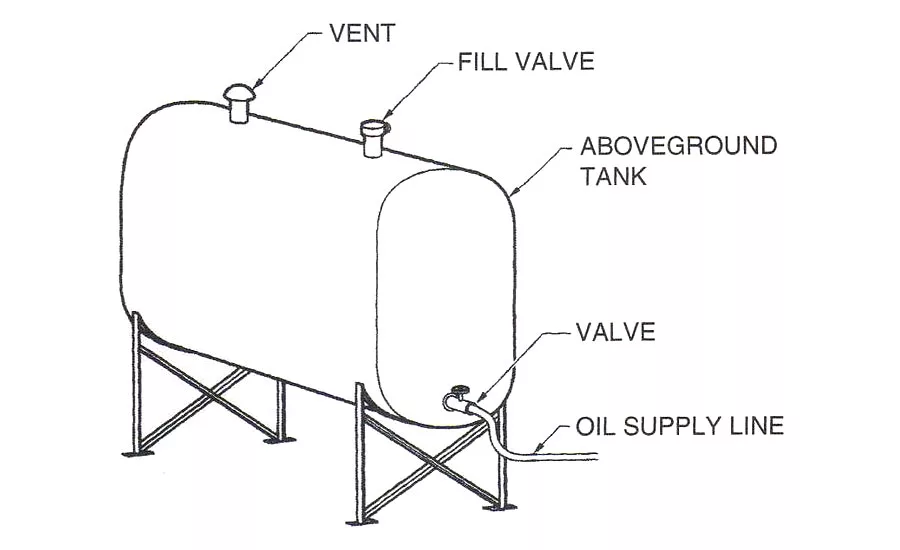
FIGURE 2. This aboveground oil tank is like the one in the example. Notice the oil line comes out the bottom of the tank. In this case, the line had water in it and it was frozen. (©Delmar Cengage Learning.)
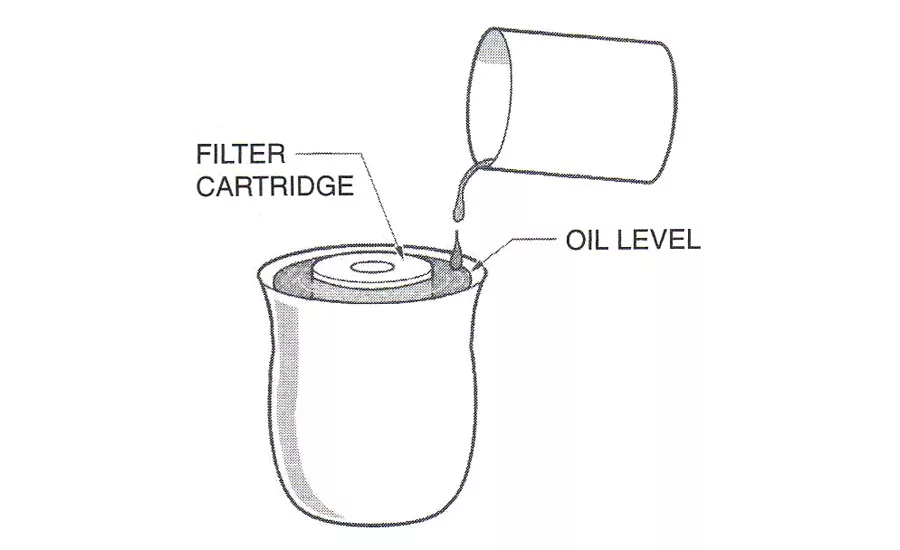
FIGURE 1. This shows a technician filling the oil filter cavity after changing the filter cartridge. This must be done to get all of the air out of the line. (Figures are from Practical Heating Technology, 2nd Edition, by William Johnson and Kevin Standiford, published by Delmar Cengage Learning.) (©Delmar Cengage Learning.)
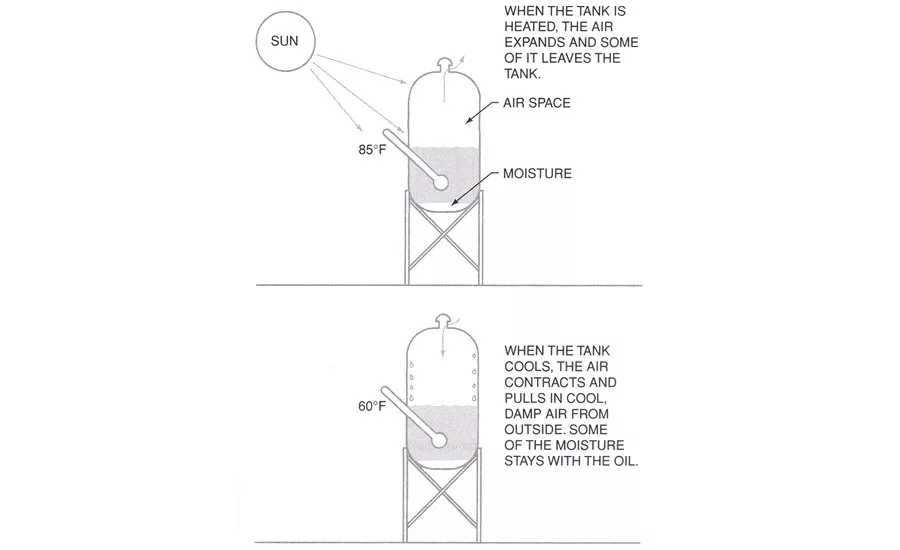
FIGURE 3. This illustration shows an above ground oil tank and how water accumulates in the tank over the years. (©Delmar Cengage Learning.)
Bob is a service technician who is well trained and nationally certified. However, he has sometimes suffered from the same confusion that all technicians occasionally do — the facts that he gathers may or may not point to the obvious cause of the problem or the best solution. But Bob has had something that no one else has. He recalled his long-time HVACR mentor and imagines him accompanying him as “Btu Buddy,” someone who reminded him to take time to stop and think before rushing to judgment, helping keep him on the right track, even with facts that are confusing.
Now, Bob’s company has promoted him to help train a new employee, right out of a school specializing in HVAC, just like Bob was. Bob is now Tim’s Btu Buddy. Tim is anxious to travel with Bob. Tim realizes that he is right out of school, with the theory and lab work that he accomplished in school, but still needs help. He knows that he worked with many of the components of the systems in the school, under ideal conditions with good light and air conditioning. Now it is into the field, sometimes under the house with poor lighting, or out on the rooftop in the sun, where the real action is. He is naturally and normally reluctant, but he has Bob to help guide him.
It was the first really cold day of the winter and Bob and Tim were on the way to a service call on an oil burner. The customer said that they had no heat. It was about 15°F outside so they were in a rush to get there.
When Bob and Tim arrived, the customer told them the circumstances. He said, “The heat quit during the night and I got up and reset it. It stayed on for just a minute and went out again. I got up this morning and reset it again, and it did the same thing. So I built a fire in the fireplace and started the stove in the kitchen to have a little bit of heat.”
Bob said, “Tim and I will get to the bottom of this as fast as we can. I know it’s very uncomfortable in your house at this time. It’s bitter cold outside.”
Bob and Tim went to the basement where the old furnace was and Bob said, “Tim, take the light and look in the burner section through the inspection door and see if there’s any residual oil laying around in there. We don’t know how many times this burner has been reset.”
Tim shined the light in the combustion chamber and took a cloth and reached in there and swabbed around and said, “There doesn’t seem to be any extra oil in here. I think it’s safe to push the reset button.”
Looking for quick answers on air conditioning, heating and refrigeration topics? Try Ask ACHR NEWS, our new smart AI search tool. Ask ACHR NEWS
Tim shut the inspection door and Bob reset the burner and they listened. The burner ran but the fire didn’t light. Tim opened the door and looked in and said, “There doesn’t seem to be any oil coming in from the burner nozzle.”
Bob then said, “Maybe the filter is plugged up.”
Tim put a pan under the filter and unscrewed the screw on the bottom and tried to empty the contents into the pan. There wasn’t any oil in the filter.
Bob said, “Let’s put in a new filter cartridge and fill the filter with fresh oil (Figure 1). There’s a can of fuel oil in the truck. While we’re at it, we may as well change the fuel oil nozzle because that will need to be done.”
They serviced the filter and changed the oil nozzle and were set up and ready to go again, but they still hadn’t solved the problem.
Bob said, “Let’s go check the tank and see how much oil is in the tank. While we’re at it, put some of that paste on the bottom of the dipstick and see if there’s any water in the bottom of the tank. When you apply that paste on the dipstick, it will show water at the bottom if there is any.”
Tim applied the paste and dropped the stick to the bottom of the tank and pulled it back out and said, “There is about 2 inches of water in the bottom of the tank and about 20 inches of oil.”
Bob said, “I bet water in the oil line is frozen. It wasn’t cold enough last night to freeze a body of water, like in the tank, but if there’s any water in the oil line it will freeze it (Figure 2). The oil pickup line in the tank is typically up off the bottom and would not suck up water until the water level got up to the pickup line. When it sucked up some water, it froze because of last night’s cold weather. The first thing we need to do is get our hand pump and pump the water out of the bottom of the tank. We will drop the inlet to the pump to the bottom of the tank and pump into that bucket until we no longer have water but have oil. Then we will have to take a torch and warm the oil line where it leaves the bottom of the tank and then flush the oil line out from the tank to the oil burner.”
After pumping the water out of the tank, they disconnected the oil line from the filter and put it into a bucket. Then they went outside and disconnected it from the tank and hooked up their hand pump and tried to pump oil through it and oil would not pump through. So they did what Bob had suggested; they got their hand propane torch and ran it up and down the line until it freed up the ice and then they pumped fresh oil through the line all the way to the filter.
Tim said, “I think we’re good to go now. We have a solid column of oil from the tank to the oil filter. We pumped the water out of the tank and freed up the frozen spot in the line, so I believe it’ll start up now.”
They went back to the basement where the furnace was and pushed the reset button while looking through the inspection door and, after a short pause, the burner fired up. The flame looked normal but Bob suggested that they run a combustion test on the burner and a draft test on the flue. While they were there, they needed to go ahead and do a complete tune up. So they proceeded with the tune up. They changed the air filter, and oiled the indoor fan motor. The system was ready for another season. They went upstairs and talked to the owner and explained what had happened and also explained to him that every year the furnace should be tuned up the way they did today. Bob explained to the owner that oil burners must be tuned up every year. They were probably the only system that really required a tune up every year to keep it operating correctly. He also explained that what they did was a typical annual tune up that they do for any oil burner they service every year. If you don’t do that tune up, the burner will drift out of calibration and start burning inefficiently.
The customer asked, “How did water get in the fuel oil tank?”
Bob explained with a picture, “During the mild season when the sun comes up, it heats the air that is inside the tank. The air swells up and some of it pushes to the outside of the tank. Then at night when it cools off, the air inside the tank shrinks and pulls in moist air from outside and it condenses and drops down into the bottom of the oil. It probably takes several years to get that much water in an outdoor fuel tank (Figure 3).”
The customer then asked, “Is this the most efficient and best heating system that I could have for my home?”
Bob responded, “Oil is great heat; it heats really warm. A heat pump would be another option in a rural area like you are in, but that would require an entirely new installation and survey of your house. A heat gain and a heat loss calculation would need to be run on your house in order to choose the correct equipment. It would also probably be suggested that you add insulation to various parts of your house to make that system more efficient. I think you’re good with oil heat and air conditioning like you have it, but when this system plays out someday it would be good to consider a heat pump.”
Tim said, “I think that was good advice that you gave the customer. Some people would suggest they change to a heat pump right now, but it would probably take years to pay the difference in fuel cost savings. When the system plays out, it would be more realistic because the air conditioning unit would need to be changed.”
Bob said, “People who have had oil heat or gas heat have a hard time converting to a heat pump because the air from the air registers is so much cooler. The cooler air will of course heat the house but they are used to feeling a blast of hot air every time the furnace starts up that they will never feel again with a heat pump.”
Publication date: 1/18/2016
Want more HVAC industry news and information? Join The NEWS on Facebook, Twitter, and LinkedIn today!
Looking for a reprint of this article?
From high-res PDFs to custom plaques, order your copy today!