Tips for High Speed Refrigerant Recovery
Refrigerant recovery is a necessary part of most air conditioning service calls. The increased use of high pressure refrigerants has created new challenges for technicians, yet it is still possible to perform high speed recovery of high pressure refrigerants. However, just like the difference between daily driving and NASCAR racing, with speed come different requirements. The tips and practices in this article will help keep your recovery out of the pits and speeding toward the finish.
With the valve cores removed, core depressors in the hose fittings are not needed and must be removed. Charging hoses with built-in check valve fittings (quick disconnect) can result in excessive back pressures. Always use the shortest length of hose with no internal restrictions for maximum flow.

Technicians should always use a larger hose (⅜-inch is recommended) from the outlet of the recovery machine to the liquid port of the recovery cylinder. Make sure that the recovery cylinder valve is fully open. A restrictive hose or partially closed valve will increase back pressure and can cause the recovery machine to slow or stop due to high head pressure.
The first step to combat high heat is to always keep the recovery machine and cylinder in the shade.
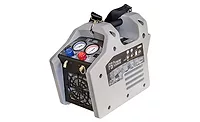
Another way to help keep the cylinder cool is to use the recovery machine’s fan to help remove heat from the cylinder. Recovery machines like the G5Twin from Appion use powerful cooling fans to keep the compressor and condensers cool. You can use this airflow to help cool the recovery cylinder. Place the recovery cylinder next to the fan shroud. The air circulating around the cylinder will improve the heat dissipation.
In some instances, especially with large amounts of refrigerant, the best way to maintain recovery speeds is to rotate tanks. Whenever the heat begins to build up in one tank, simply exchange it for a second tank. The first tank can be set aside and allowed to cool for use again when the second tank begins to build up heat.
In extreme ambient temperatures, submerging the recovery cylinder in ice or ice water is the most effective way to keep a cylinder cool. A well-cooled cylinder ensures a fast recovery process.
It is important to note that rapid heat buildup can be an indication of non-condensable gases. Even in the best and tightest system, it is possible for non-condensable gases to be pulled in during operation. The only way to tell if non-condensable gases are present is to consult a pressure temperature chart.
One more heat-related issue with recovery can stem from improperly sized extension cords. Higher ambient temperatures lower a cord’s ampacity, which stresses the motor and will result in higher operating temperatures of the recovery machine. Always use at least a 12/3 UL/CSA extension cord.
Whether it is racing around a track or racing to finish a job, faster is better. However, to maintain optimal performance, you need to be sure that you are doing everything to accommodate increased speeds.
Publication date: 06/20/2011
EQUIPMENT SELECTION
Start with equipment designed for high flow of liquid and vapor refrigerant. The recovery machine must be able to handle vapor and liquid refrigerant since refrigerant turns from vapor to liquid when compressed. Make sure that the recovery machine, manifold, and hoses are rated for the category of refrigerant being recovered.REMOVE RESTRICTIONS
Remove all of the Schraeder-style valve cores from all of the access ports. These valve cores block about 90 percent of the flow through the access valve - leaving them in is the equivalent of taking off from the starting line with a parking brake engaged. Removing these cores will enable the refrigerant to freely flow from the system into the refrigerant hoses.With the valve cores removed, core depressors in the hose fittings are not needed and must be removed. Charging hoses with built-in check valve fittings (quick disconnect) can result in excessive back pressures. Always use the shortest length of hose with no internal restrictions for maximum flow.
Always
use a recovery machine capable of handling refrigerant as both liquid and
vapor.
OPEN CONNECTIONS
It is important to properly connect to the air conditioning system. The system should be simultaneously accessed from the high and low side access ports, through a manifold and into the recovery machine. Start the recovery process with the liquid (low side) open first, and proceed to open the vapor (high side) after the liquid is mostly complete.Technicians should always use a larger hose (⅜-inch is recommended) from the outlet of the recovery machine to the liquid port of the recovery cylinder. Make sure that the recovery cylinder valve is fully open. A restrictive hose or partially closed valve will increase back pressure and can cause the recovery machine to slow or stop due to high head pressure.
HEAT MITIGATION
Just as with a high performance race car, high-speed recovery can bring elevated temperatures and result in slowed or stalled performance.The first step to combat high heat is to always keep the recovery machine and cylinder in the shade.
Another way to help keep the cylinder cool is to use the recovery machine’s fan to help remove heat from the cylinder. Recovery machines like the G5Twin from Appion use powerful cooling fans to keep the compressor and condensers cool. You can use this airflow to help cool the recovery cylinder. Place the recovery cylinder next to the fan shroud. The air circulating around the cylinder will improve the heat dissipation.
In some instances, especially with large amounts of refrigerant, the best way to maintain recovery speeds is to rotate tanks. Whenever the heat begins to build up in one tank, simply exchange it for a second tank. The first tank can be set aside and allowed to cool for use again when the second tank begins to build up heat.
In extreme ambient temperatures, submerging the recovery cylinder in ice or ice water is the most effective way to keep a cylinder cool. A well-cooled cylinder ensures a fast recovery process.
It is important to note that rapid heat buildup can be an indication of non-condensable gases. Even in the best and tightest system, it is possible for non-condensable gases to be pulled in during operation. The only way to tell if non-condensable gases are present is to consult a pressure temperature chart.
One more heat-related issue with recovery can stem from improperly sized extension cords. Higher ambient temperatures lower a cord’s ampacity, which stresses the motor and will result in higher operating temperatures of the recovery machine. Always use at least a 12/3 UL/CSA extension cord.
CYLINDER EVACUATION
Recovery cylinders must have at least 20 percent more capacity than the refrigerant to be recovered. A cylinder must be pulled down to a deep vacuum prior to use, in order to remove all non-condensable gases.PERSONAL PROTECTION
Finally, a note on safety. Never fill a recovery cylinder more than 80 percent. It is a Department of Transportation (DOT) violation to transport an overfilled tank. Relying on a tank float sensor (80 percent cut-off sensor) will not prevent siphon or migratory flow of refrigerant into the recovery cylinder and is a serious safety concern. Always use a refrigerant scale to monitor the refrigerant level in the cylinder and shut down the recovery unit before exceeding 80 percent of the cylinder capacity. Go to www.AppionInc.com/ACRSafety for more information about the risks involved with tank float sensors.Whether it is racing around a track or racing to finish a job, faster is better. However, to maintain optimal performance, you need to be sure that you are doing everything to accommodate increased speeds.
Publication date: 06/20/2011
Looking for a reprint of this article?
From high-res PDFs to custom plaques, order your copy today!