ACHR News
search
Ask ACHR NEWS AI
cart
facebook twitter instagram linkedin youtube
  • Sign In
  • Subscribe
  • Sign Out
  • My Account
ACHR News
  • NEWS
    • Breaking News
    • New HVAC Products
    • Featured Products
    • Manufacturer Reports
    • HVAC Data
    • Legislation
    • ACHR NEWS Centennial
  • RESIDENTIAL
    • Air Conditioners
    • Furnaces
    • Residential Heat Pumps
    • Ductless
    • Residential IAQ
    • Testing, Monitoring, Tools
    • Components & Accessories
  • COMMERCIAL
    • Air Handlers
    • Rooftop Units
    • Chillers and Cooling Towers
    • Commercial Heat Pumps
    • Boilers and Hydronics
    • VRF/Ductless
    • Commercial IAQ
  • REFRIGERATION
    • Refrigerants
    • Refrigerant Regulations
    • Leak Management
  • CONTRACTOR PRO
    • Geothermal
    • Homeowner Study
    • VRF and VRV Ductless
    • Unitary Trends
  • EDUCATION
    • Training and Education
    • Business Management
    • Service and Maintenance
    • Continuing Education
    • Market Research >
      • HVAC Brand Awareness Report
      • VRV, VRF, VRVZ Report
      • Unitary Trends Report
      • Water Heat Professionals Report
    • Webinars
    • Sponsor Insights
    • eProducts Info
    • White Papers
  • EVENTS
    • HVAC Contractor Forum
    • Industry Events and Webinars
  • MEDIA
    • Videos
    • AHR Expo 2025 Videos
    • Podcasts >
      • ACHR News Podcast
      • HARDI Podcasts
      • AHR Expo Podcasts
      • ACCA Podcasts
    • Interactive Spotlights
    • Quizzes
    • eBooks
    • HVAC Talkback
  • HVAC GROUP
    • ACHR NEWS >
      • Current Issue
      • Digital Edition
      • Subscribe
    • Distribution Trends
    • SNIPS NEWS >
      • Join SNIPS NEWS
    • Engineered Systems News >
      • Join ES News
    • HVACR Directory
    • Contests
    • Newsletters
    • Contact
    • Advertise
    • My Account
HVAC ContractingTechnical

Emerging Technology: Automated Fault Detection and Diagnostics for Rooftop Units

By Harvey Sachs Wilson Lin
August 23, 2010

INTRODUCTION

Smart HVAC equipment that recognizes when it is failing or has failed, or when environmental conditions have drifted outside its optimum capability range, could save substantial amounts of energy if the equipment sent useful information to the building owner or contractor. The necessary capabilities are referred to as automated fault detection and diagnostics (FDD). Implemented on commercial rooftop units (RTUs), these capabilities could save 10 percent or more.

Even the most efficient HVAC equipment will waste energy if it is operated incorrectly. In addition, the performance of HVAC equipment often degrades over time, so periodic maintenance is required to maintain equipment efficiency. Some of the problems that can affect the energy efficiency of RTUs include:

• Insufficient evaporator airflow

• Condenser coil fouling

• Incorrect refrigerant charge

• Compressor valve leakage

• Liquid line restrictions

• Economizer damper failure

• Sensor failure/degradation

Fault detection and diagnostics for rooftop units refers to technologies that monitor components, sense problems as “faults,” and can optimize operation and/or notify personnel, ensuring timely identification and correction of operating and service issues.

In recent years, advances in electronics have improved sensor capability and reduced the costs of sensors and controllers. Automated FDDs have been introduced for applications as diverse as nuclear power plants, aircraft, chemical process plants, and automobiles.

Manufacturers now produce “smarter” equipment that can self-diagnose faults, and some that can detect and adjust operations based on real-time conditions and performance data. This is partly due to growing awareness by building operators for the need to monitor building performance, which has resulted in the growth of building operation and maintenance services, and demand for extensive data reporting. This, coupled with the increasing use of information technology in buildings and building equipment, has helped to create basic infrastructure to enable widespread adoption of automated FDDs in RTUs.

Besides the energy efficiency benefits arising from ensuring the proper operation of RTUs, automated FDD on RTUs can also help:

• Provide greater comfort to occupants by providing information for building management and control systems (BAS, EMS);

• Minimize interruptions to building operations due to system failures;

• Reduce time (and costs) needed for maintenance and troubleshooting; and

• Avoid damage to RTU components (and replacement costs) by predicting component failure (prognostics) and implementing preventive maintenance.

Automated FDD with prognostics analyzes diagnostic data from sensors and generates trend lines to predict possible failures. It can also help promote other emerging technologies in HVAC: A common market barrier to emerging technologies is that customers are concerned about the availability of the technology, such as whether spare parts would be quickly available if there is a need to replace them. Prognostics can help address this by allowing the HVAC supplier ample time to ship the necessary parts and replace them even before failures occur.

SAVINGS POTENTIAL AND COST-EFFECTIVENESS

Automated FDD can help reduce utility and maintenance costs. It allows building operators to take early action to correct faults in the RTUs, helping to reduce the amount of time the RTUs are operating in an inefficient manner due to these faults.

Diagnostic data can help building operators better understand energy consumption patterns and may highlight ways in which to reduce energy consumption. The data allow building operators to take a more active approach towards building management, shifting towards a more “reliability-centered” approach from the current “reactive” one. It can also reduce the cost for the building to undergo continuous commissioning, since the data needed for commissioning is already collected.

A meta-analysis of building commissioning reviewed the cost-effectiveness of commissioning in improving energy efficiency. The analysis found that most of the reported building performance problems were due to the HVAC systems. A report by the International Energy Agency reported that typically 20-30 percent energy savings can be achieved in commercial buildings by correcting faulty operation in the HVAC system. It is likely that the potential energy savings from intelligent HVAC systems will exceed this estimate, since intelligent HVAC systems provide opportunities for energy savings that go beyond just the correction of faults (such as dynamic matching of capacity to load when installed with variable output components).

In a paper prepared for the U.S. Department of Energy (DOE), TIAX estimated that FDDs could reduce national primary energy consumption by 3-18 percent for RTUs, assuming that they only address three key faults: insufficient evaporator airflow, condenser coil fouling, and incorrect refrigerant charge.

A California Public Interest Energy Research (PIER) project on advanced automated HVAC fault detection and diagnostics commercialization estimates that at least 10 percent of the energy used in California commercial buildings is wasted due to excessive run time and problems in the HVAC equipment and controls - problems that could be addressed by diagnostics/prognostics.

Based on a review of field studies on commercial rooftop units in the Pacific Northwest and California, it was found that:

• An average of 46 percent of the units tested had refrigerant charge that deviated by more than 5 percent from the specifications. Correcting the refrigerant charge is estimated to result in 5-11 percent savings in the cooling energy;

• An average of 64 percent of the units tested had economizers that failed or required readjustment. Repairing a failed economizer is estimated to result in 15-40 percent savings in the cooling energy, depending on the climate zone and other factors; and

• An average of 42 percent of the units tested had airflow that was out of range. The correction of airflow is estimated to result in about 10 percent savings in the cooling energy.

Our study assumes 10 percent savings, a conservative estimate.

MARKET BARRIERS

The commercial rooftop unit market is fiercely competitive, and typically dominated by commoditized products sold as least purchase price solutions. Utility incentives, such as those coordinated by the Consortium for Energy Efficiency (CEE), are considered essential for moving the market to higher performance. It will be important for CEE to consider the results of field research and begin to require automated FDD measures for program eligibility.

RECOMMENDED NEXT STEPS

The fastest way to increase market penetration of FDD could be through building energy code provisions in progressive states like California. However, it is not clear whether a state can adopt an efficiency-related equipment requirement without violating the federal preemption requirements of the National Appliance Energy Conservation Act (NAECA) and Energy Policy Act (EPACT).

In the absence of state action, voluntary programs such as utility and public benefit incentives are likely to work well for increasing penetration and understanding of automated FDD’s savings potential.

Publication date: 08/23/2010

Share This Story

Looking for a reprint of this article?
From high-res PDFs to custom plaques, order your copy today!


Harvey Sachs is senior fellow, Buildings Program, with the American Council for an Energy-Efficient Economy (ACEEE). Wilson Lin is an assistant director with the Ministry of Environment and Water Resources, Singapore. For more information, see the ACEEE Emerging Technologies and Practices web page at www.aceee.org/topics/emerging-technologies-and-practices. Also, Sachs will be presenting a workshop on "Emerging HVACR Technologies and Practices" at the Air Conditioning Contractors of America (ACCA) Commercial Contracting Roundtable, being held Oct. 7-8, 2010 in Fort Worth, Texas. For more information, visit www.acca.org.

Recommended Content

JOIN TODAY
To unlock your recommendations.

Already have an account? Sign In

  • HVAC-enrollment

    The Trades Are Back: HVACR Programs See Nearly 30% Enrollment Spike

    A new wave of future technicians is entering the pipeline.  
    Training and Education
    By: Matt Jachman
  • 2025 Top 40 Under 40

    2025 Top 40 Under 40 HVACR Professionals List

    The 11th annual Top 40 Under 40 list highlights those...
    HVAC Light Commercial Market
    By: Hannah Belloli-Oster
  • LG Ductless Mini-Split Systems

    The 9 Types of Heat Pumps

    As the U.S. moves toward electrification, heat pumps are...
    Heat Pumps
    By: Joanna R. Turpin
Subscription Center
  • Create an Account
  • Start a Subscription
  • Manage My Account
  • Sign Up for Newsletters
  • Visit Customer Service
  • Update Preferences

More Videos

Sponsored Content

Sponsored Content is a special paid section where industry companies provide high quality, objective, non-commercial content around topics of interest to The News audience. All Sponsored Content is supplied by the advertising company and any opinions expressed in this article are those of the author and not necessarily reflect the views of The News or its parent company, BNP Media. Interested in participating in our Sponsored Content section? Contact your local rep!

close
  • Piggy Bank
    Sponsored byWatercress Financial

    Energy Prices, Inflation, and HVAC: What Today’s Homeowners Care About

  • Refrigerated Food
    Sponsored bySolstice Advanced Materials

    R-455A Refrigeration: A Cold Storage Solution for the Future

  • Airex Rooftop Units
    Sponsored byAirex Manufacturing Inc

    Consolidating Roof Penetrations: A Growing Trend in Multifamily HVAC Design

Popular Stories

Outdoor-condensing-units.jpg

EPA Removes R-410A Installation Deadline

Trump-Section-232.jpg

Trump Reduces Section 232 Tariffs on HVAC Equipment to 15%

HVAC-Price-Increase-graphic

HVAC Price Increase List: June 2026

cooling-habits.jpg

50 Percent of Americans Have Skipped HVAC Maintenance

ACHR NEWS Editor Chris Gray Presenting HVAC Minute 5-18-2026

HVAC Manufacturers Fight Pricing Lawsuits

View The ACHR NEWS
Centennial Anniversary Timeline

The ACHR News Timeline Chart
Submit a Letter
Submit a letter to our editors.

Events

November 6, 2025

Next-Gen Data Center Cooling: HVAC Innovation and Real-World Solutions

On Demand As AI workloads and high-density computing push traditional cooling methods to their limits, the data center industry is accelerating the adoption of next-generation HVAC technologies.

June 9, 2026

Before You Go All In on AI: Set Up Your Business to Actually Win

In this webinar, we'll walk you through exactly what to get in place before you add AI to your business. You'll leave with a clear picture of where you stand today and a practical action plan to set yourself up for real results.

View All Submit An Event

Poll

EPA Decision

Are you happy the EPA decided contractors can continue to install R-410A equipment?
View Results Poll Archive

Products

BNI Mechanical/Electrical Square Foot Costbook, 2026 Edition

BNI Mechanical/Electrical Square Foot Costbook, 2026 Edition

See More Products
A2L Refrigerants - Free Webinar - May 21, 2026

Related Articles

  • Emerging Technology: Advanced Rooftop Packaged Air Conditioners

    See More
  • Emerging Technology: Commercial Energy Recovery Ventilation Systems

    See More
  • Emerging Technology: Liquid Desiccant Air Conditioners

    See More

Related Products

See More Products
  • etahpm.png

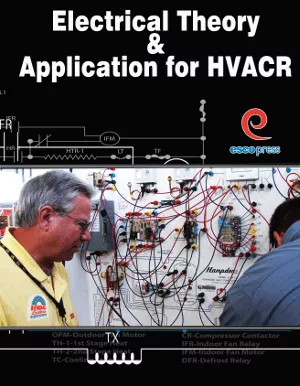
    Electrical Theory and Application for HVACR

  • SMACNA-logo8.gif

    Accepted Industry Practices for Sheet Metal Lagging

  • HVACR-Troubleshooting-Fundamentals-Cover-Image-One-Sheet.jpg

    HVACR Troubleshooting Fundamentals - Refrigeration & Air Flow Systems Training Package for Instructors & Service Managers

See More Products

Related Directories

  • Reliance Detection Technologies LLC

    Commercial-grade indoor plumbing leak detection and automatic water shutoff solutions for every space and budget. Monitor water mains, water heaters, washing machines, dishwashers, HVAC units.
×

Sign Up. Stay Informed.

The #1 trusted source for the HVACR industry since 1926

SUBSCRIBE
  • RESOURCES
    • Advertise
    • Contact Us
    • Advisory Board
    • Classifieds
    • Submit a Letter
    • Directories
    • Store
  • ACCOUNT CENTER
    • Create an Account
    • Start a Subscription
    • Manage My Account
    • Sign Up for Newsletters
    • Visit Customer Service
    • Update Preferences
  • SERVICES
    • Marketing Services
    • Reprints
    • Market Research
    • List Rental
    • Survey/Respondent Access
  • STAY CONNECTED
    • LinkedIn
    • Facebook
    • Instagram
    • YouTube
    • X (Twitter)
  • PRIVACY
    • PRIVACY POLICY
    • TERMS & CONDITIONS
    • DO NOT SELL MY PERSONAL INFORMATION
    • PRIVACY REQUEST
    • ACCESSIBILITY

Copyright ©2026. All Rights Reserved BNP Media, Inc. and BNP Media II, LLC.

Design, CMS, Hosting & Web Development :: ePublishing