ACHR News
search
Ask ACHR NEWS AI
cart
facebook twitter instagram linkedin youtube
  • Sign In
  • Subscribe
  • Sign Out
  • My Account
ACHR News
  • NEWS
    • Breaking News
    • New HVAC Products
    • Featured Products
    • Manufacturer Reports
    • HVAC Data
    • Legislation
    • ACHR NEWS Centennial
  • RESIDENTIAL
    • Air Conditioners
    • Furnaces
    • Residential Heat Pumps
    • Ductless
    • Residential IAQ
    • Testing, Monitoring, Tools
    • Components & Accessories
  • COMMERCIAL
    • Air Handlers
    • Rooftop Units
    • Chillers and Cooling Towers
    • Commercial Heat Pumps
    • Boilers and Hydronics
    • VRF/Ductless
    • Commercial IAQ
  • REFRIGERATION
    • Refrigerants
    • Refrigerant Regulations
    • Leak Management
  • CONTRACTOR PRO
    • Geothermal
    • Homeowner Study
    • VRF and VRV Ductless
    • Unitary Trends
  • EDUCATION
    • Training and Education
    • Business Management
    • Service and Maintenance
    • Continuing Education
    • Market Research >
      • HVAC Brand Awareness Report
      • VRV, VRF, VRVZ Report
      • Unitary Trends Report
      • Water Heat Professionals Report
    • Webinars
    • Sponsor Insights
    • eProducts Info
    • White Papers
  • EVENTS
    • HVAC Contractor Forum
    • Industry Events and Webinars
  • MEDIA
    • Videos
    • AHR Expo 2025 Videos
    • Podcasts >
      • ACHR News Podcast
      • HARDI Podcasts
      • AHR Expo Podcasts
      • ACCA Podcasts
    • Interactive Spotlights
    • Quizzes
    • eBooks
    • HVAC Talkback
  • HVAC GROUP
    • ACHR NEWS >
      • Current Issue
      • Digital Edition
      • Subscribe
    • Distribution Trends
    • SNIPS NEWS >
      • Join SNIPS NEWS
    • Engineered Systems News >
      • Join ES News
    • HVACR Directory
    • Contests
    • Newsletters
    • Contact
    • Advertise
    • My Account
HVAC ContractingTechnical

Emerging Technology: Liquid Desiccant Air Conditioners

By Harvey Sachs Wilson Lin
September 20, 2010

INTRODUCTION

Ongoing economic and indoor environmental concerns require HVAC innovation. New liquid desiccant air conditioning systems offer substantial energy savings and greatly improved humidity control in applications where latent loads (moisture) are very high relative to sensible loads. This includes hot-humid climates and applications such as supermarkets where low indoor humidity is required to avoid condensation on case doors, etc. These systems have been common in industry, and new equipment that decreases maintenance and reduces concerns about desiccant salt carryover makes them attractive for space conditioning.

The liquid desiccant air conditioner (LDAC) provides a cost-effective route to latent cooling needed to control indoor humidity while avoiding the high electrical demand of compressor-based approaches to reducing heat loads. The liquid desiccant is a concentrated salt solution that directly absorbs moisture without first cooling the air below its dew point. The sensible heat released as the desiccant absorbs the moisture is also removed from the air so the LDAC both cools and dries the air. The water absorbed by the desiccant is removed to ambient air by heating the desiccant to between 180° and 200°F (or higher). This heat is the primary energy input to the LDAC. The source can be a boiler fired by biofuel, natural gas, or other fossil fuel; solar thermal collectors; or heat recovered from an engine or industrial process (combined heat and power or CHP). The liquid desiccant air conditioner may be particularly attractive for building-scale CHP in applications like supermarkets where humidity control is important and there are high latent loads.

Thermal air conditioners reduce electricity use and peak electrical demand. Those that use waste heat or solar energy also conserve fossil fuels now used to generate the electricity for compressor-based air conditioners. Compared to other thermal technologies - absorption or adsorption chillers - LDAC should exhibit lower capital cost, easier application, lower cost for energy storage, and lower hot-water temperature requirements.

Liquid desiccants have been used to dehumidify air in industrial applications for over 70 years, but adaptation to comfort conditioning faced two high barriers: carryover of salt-containing droplets and high maintenance costs. Because of the high performance of the systems, these attributes have been acceptable in some industrial applications. The new low-flow LDAC should eliminate droplet carryover by using desiccant flow velocities that are 20 to 50 times lower than those used in industrial systems.

CURRENT STATUS

Within the past few years, two companies were unsuccessful in attempts to introduce a liquid desiccant air conditioner for HVAC applications. The products of both companies used high desiccant flow rates comparable to industrial systems, which may have contributed to their lack of success. A third company is now manufacturing and selling a high-flow LDAC. This unit is expected to have higher pressure drops, higher parasitic power, lower thermal COP, and more demanding maintenance requirements than a low-flow LDAC optimized for commercial applications.

Several companies manufacture and sell high-latent air conditioners that can be used to dry a building’s ventilation air. These high-latent air conditioners all use vapor-compression technology, so they do not significantly reduce the peak electrical demands for cooling.

Other companies supply solid wheel desiccants which are typically silica gel based thermally regenerated dehumidifiers. These systems are larger, less efficient, have higher air-side pressure drops, and typically require considerably higher regeneration temperatures than the LDAC. In addition the heat generated as the moisture is absorbed flows into the conditioned space adding to the building sensible load.

ENERGY SAVINGS AND COSTS

The most attractive applications for the LDAC will be in humid climates where its beneficial impact will include: (1) improved IAQ that leads to improved worker productivity in offices and student attentiveness in schools; (2) improved indoor comfort that increases patronage of restaurants, movies, and retail stores; (3) lowered indoor humidity that avoids remediation costs associated with mold and mildew; and (4) direct savings from the elimination (or reduction) of reheat as a means of humidity control. In humid climates with long cooling seasons, the elimination of reheat can reduce annual HVAC costs by 30 percent or more.

As a gas-fired alternative to high-latent electric air conditioners, the LDAC’s operational savings will be largely determined by local gas and electric utility rates and the length of the cooling season. Capital costs may be lower for LDAC (goal is $5/cfm) than for high-latent air conditioners ($8 to $10 per cfm of ventilation). At $0.10 per kWh and $1.00 per therm, the operating costs for the LDAC and electric alternatives will be comparable.

MARKET BARRIERS

The LDAC is unfamiliar to engineers and designers who specify HVAC equipment, and to the trades that install and maintain it. The little exposure that liquid desiccant equipment has had in the past pertains to industrial-type systems, and this exposure has too frequently uncovered maintenance problems from desiccant carryover. Also, many LDAC applications need a cooling tower, which may also require more maintenance than some building owners will accept.

The high cost of solar thermal collectors combined with the relatively low cost of electricity in many parts of the U.S. are also barriers to the wider use of solar and gas-fired LDACs.

NEXT STEPS

Demonstrations are needed to document the benefits of the low-flow LDAC including operating and maintenance costs. These early demonstrations, coupled with strong educational and promotional activities, can move the traditionally cautious HVAC community to adopt the technology. In preparation for commercialization, further market analysis is needed to formulate a practical and effective marketing and sales strategy. In addition, further analysis of the synergies with renewable energy and CHP are required to help position LDAC in the “green” market. The thermally driven LDAC could greatly expand the use of CHP for smaller applications by increasing summer load factors. Finally, an LDAC driven by solar thermal collectors would be the lowest cost alternative to converting the country’s cooling needs to a renewable energy source.

Publication date: 09/20/2010

Share This Story

Looking for a reprint of this article?
From high-res PDFs to custom plaques, order your copy today!


Harvey Sachs is senior fellow, Buildings Program, with the American Council for an Energy-Efficient Economy (ACEEE). Wilson Lin is an assistant director with the Ministry of Environment and Water Resources, Singapore. For more information, see the ACEEE Emerging Technologies and Practices web page at www.aceee.org/topics/emerging-technologies-and-practices. Also, Sachs will be presenting a workshop on "Emerging HVACR Technologies and Practices" at the Air Conditioning Contractors of America (ACCA) Commercial Contracting Roundtable, being held Oct. 7-8, 2010 in Fort Worth, Texas. For more information, visit www.acca.org.

Recommended Content

JOIN TODAY
To unlock your recommendations.

Already have an account? Sign In

  • HVAC-enrollment

    The Trades Are Back: HVACR Programs See Nearly 30% Enrollment Spike

    A new wave of future technicians is entering the pipeline.  
    Training and Education
    By: Matt Jachman
  • 2025 Top 40 Under 40

    2025 Top 40 Under 40 HVACR Professionals List

    The 11th annual Top 40 Under 40 list highlights those...
    News
    By: Hannah Belloli-Oster
  • LG Ductless Mini-Split Systems

    The 9 Types of Heat Pumps

    As the U.S. moves toward electrification, heat pumps are...
    HVAC Commercial Market
    By: Joanna R. Turpin
Subscription Center
  • Create an Account
  • Start a Subscription
  • Manage My Account
  • Sign Up for Newsletters
  • Visit Customer Service
  • Update Preferences

More Videos

Sponsored Content

Sponsored Content is a special paid section where industry companies provide high quality, objective, non-commercial content around topics of interest to The News audience. All Sponsored Content is supplied by the advertising company and any opinions expressed in this article are those of the author and not necessarily reflect the views of The News or its parent company, BNP Media. Interested in participating in our Sponsored Content section? Contact your local rep!

close
  • Piggy Bank
    Sponsored byWatercress Financial

    Energy Prices, Inflation, and HVAC: What Today’s Homeowners Care About

  • Refrigerated Food
    Sponsored bySolstice Advanced Materials

    R-455A Refrigeration: A Cold Storage Solution for the Future

  • Airex Rooftop Units
    Sponsored byAirex Manufacturing Inc

    Consolidating Roof Penetrations: A Growing Trend in Multifamily HVAC Design

Popular Stories

Outdoor-condensing-units.jpg

EPA Removes R-410A Installation Deadline

Trump-Section-232.jpg

Trump Reduces Section 232 Tariffs on HVAC Equipment to 15%

HVAC-Price-Increase-graphic

HVAC Price Increase List: June 2026

cooling-habits.jpg

50 Percent of Americans Have Skipped HVAC Maintenance

ACHR NEWS Editor Chris Gray Presenting HVAC Minute 5-18-2026

HVAC Manufacturers Fight Pricing Lawsuits

View The ACHR NEWS
Centennial Anniversary Timeline

The ACHR News Timeline Chart
Submit a Letter
Submit a letter to our editors.

Events

November 6, 2025

Next-Gen Data Center Cooling: HVAC Innovation and Real-World Solutions

On Demand As AI workloads and high-density computing push traditional cooling methods to their limits, the data center industry is accelerating the adoption of next-generation HVAC technologies.

June 9, 2026

Before You Go All In on AI: Set Up Your Business to Actually Win

In this webinar, we'll walk you through exactly what to get in place before you add AI to your business. You'll leave with a clear picture of where you stand today and a practical action plan to set yourself up for real results.

View All Submit An Event

Poll

EPA Decision

Are you happy the EPA decided contractors can continue to install R-410A equipment?
View Results Poll Archive

Products

BNI Mechanical/Electrical Square Foot Costbook, 2026 Edition

BNI Mechanical/Electrical Square Foot Costbook, 2026 Edition

See More Products
A2L Refrigerants - Free Webinar - May 21, 2026

Related Articles

  • Emerging Technology: Advanced Rooftop Packaged Air Conditioners

    See More
  • Emerging Technology: Automated Fault Detection and Diagnostics for Rooftop Units

    See More
  • Emerging Technology: Chilled Beam Cooling

    See More

Related Products

See More Products
  • HVACR Troubleshooting Fundamentals Cover Image One Sheet.jpg

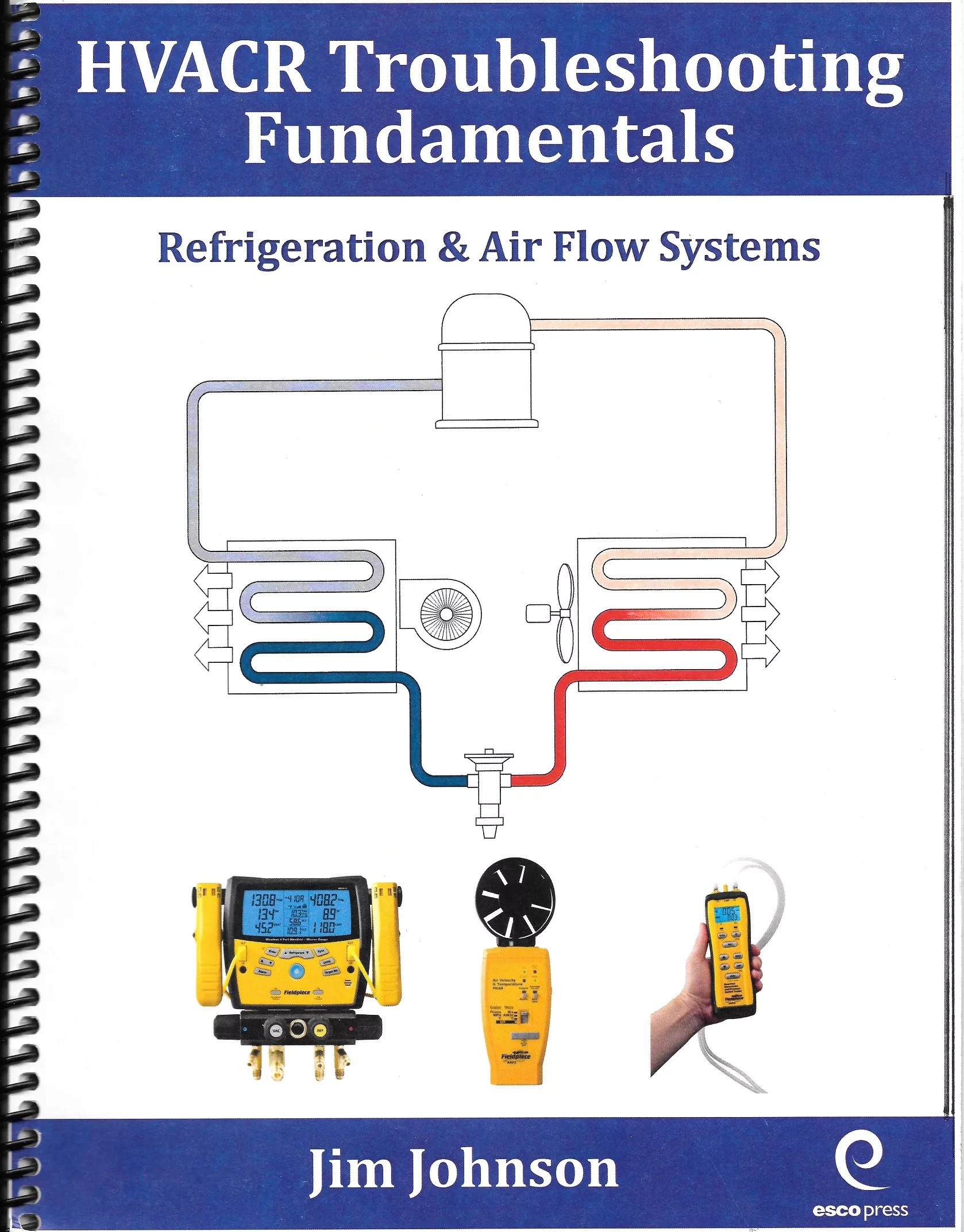
    HVACR Troubleshooting Fundamentals: Refrigeration and Air Flow Systems - Student Text

  • HVACR-Troubleshooting-Fundamentals-Cover-Image-One-Sheet.jpg

    HVACR Troubleshooting Fundamentals - Refrigeration & Air Flow Systems Training Package for Instructors & Service Managers

  • HVACR Troubleshooting Fundamentals  Electrical Book Cover Image.jpg

    HVACR Troubleshooting Fundamentals: Electricity and Wiring Diagrams

See More Products

Related Directories

  • Aire Technologies

    Aire Technologies offers a premier line of air management and life safety products featuring fire dampers, ceiling radiation dampers, leakage rated dampers, and louvers.
  • LG Air Conditioning Technologies, a business unit of LG Electronics USA Inc.

    LG is a leading player in the global air conditioning market, manufacturing both commercial and residential air conditioners and providing total sustainability and building management solutions.
×

Sign Up. Stay Informed.

The #1 trusted source for the HVACR industry since 1926

SUBSCRIBE
  • RESOURCES
    • Advertise
    • Contact Us
    • Advisory Board
    • Classifieds
    • Submit a Letter
    • Directories
    • Store
  • ACCOUNT CENTER
    • Create an Account
    • Start a Subscription
    • Manage My Account
    • Sign Up for Newsletters
    • Visit Customer Service
    • Update Preferences
  • SERVICES
    • Marketing Services
    • Reprints
    • Market Research
    • List Rental
    • Survey/Respondent Access
  • STAY CONNECTED
    • LinkedIn
    • Facebook
    • Instagram
    • YouTube
    • X (Twitter)
  • PRIVACY
    • PRIVACY POLICY
    • TERMS & CONDITIONS
    • DO NOT SELL MY PERSONAL INFORMATION
    • PRIVACY REQUEST
    • ACCESSIBILITY

Copyright ©2026. All Rights Reserved BNP Media, Inc. and BNP Media II, LLC.

Design, CMS, Hosting & Web Development :: ePublishing