50 Percent of Americans Have Skipped HVAC Maintenance
Economic uncertainty is changing how U.S. homeowners plan to cool their homes this summer

EVERYTHING COUNTS: Half of homeowners surveyed said they have skipped HVAC maintenance to save money.
As HVAC prices soar, new homeowner data from DuraPlas suggests there is also a growing “I’ll deal with it later” problem happening inside American homes.
Economic uncertainty is changing how U.S. homeowners plan to cool their homes this summer, with nearly 1 in 3 homeowners (31%) saying those changes will be “dramatic,” according to the DuraPlas 2026 Summer Cooling Report.
Heading into summer 2026, many Americans are doing more math before turning on the AC.
The survey found that 50% of Americans have skipped HVAC maintenance to save money heading into summer, even as more homeowners report signs of strain across their cooling systems.
“The economics of keeping cool have fundamentally changed,” said Paul Phillips, president of DuraPlas. “When half of American homeowners are skipping HVAC maintenance to save money, we’re watching people pushed into corners they don’t want to be in.”
Rising Heat Cools Consumer Sentiment on Maintenance
One of the more notable tensions in the survey data, according to DuraPlas, is that households trying to avoid short-term costs may be increasing the risk of larger repairs later, especially during peak cooling season.
Among the findings:
Looking for quick answers on air conditioning, heating and refrigeration topics? Try Ask ACHR NEWS, our new smart AI search tool. Ask ACHR NEWS
- 71% of homeowners say their cooling habits have changed over the past three years because of hotter summers.
- 50% of homeowners have skipped HVAC maintenance to save money, a trend that cuts across every income bracket, region, and generation. Homeowners in the West were the most likely to skip maintenance.
- 74% of respondents said they would choose a more durable HVAC component over a cheaper one, while 71% said they prefer a system that is less expensive to operate over one that is less expensive to install.
Skipping Maintenance at a Cost
Half of homeowners surveyed said they have skipped HVAC maintenance to save money, and the behavior showed little variation across income, gender, or parental status.
Geography produced the widest split in the data. According to the survey, 54% of homeowners in the West have skipped maintenance, compared to 46% in the Northeast. The South and Midwest landed in between, at 49% and 52%, respectively.
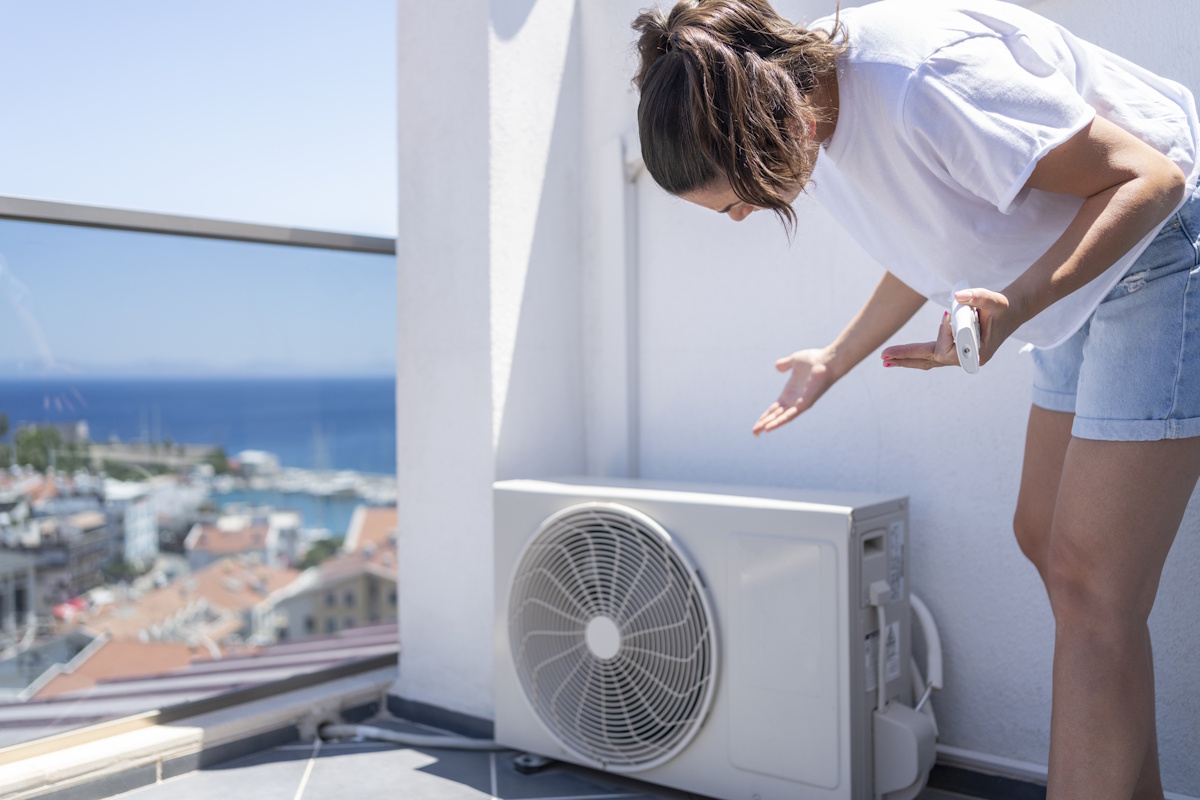
CHILLING EFFECT: Homeowners surveyed said economic uncertainty is changing their cooling plans this summer. (Courtesy of aquaArts / iStock / Getty Images Plus)
That is an issue because skipped maintenance can create additional costs later through reduced system efficiency and higher energy bills.
The report also found that $200 is the point where many homeowners begin adjusting cooling behavior in response to rising utility costs.
In the South and Southwest, monthly cooling bills of $200 are common during peak summer months, meaning many homeowners are already at or near that threshold each year.
Homeowners earning less than $50,000 annually were more than twice as likely as households earning more than $100,000 to begin changing cooling behavior once monthly bills reached $100, at 32% versus 14%.
Across several value-based tradeoffs — including cheaper installation versus lower operating costs, comfort upgrades versus efficiency upgrades, and lower upfront costs versus durability — homeowners consistently favored long-term value.
Durability ranked highest among the survey’s tradeoff categories. Nearly three-quarters of respondents (74%) said they would rather pay more for an HVAC component that lasts longer than purchase a lower-cost option that may need replacement sooner.
Similarly, 71% of respondents said they prefer a cooling system with lower operating costs over one with lower installation costs, while 62% said they would rather invest in efficiency upgrades than comfort upgrades.
Generational Trends Emerge
Nearly all homeowners surveyed (99%) said economic uncertainty is changing their cooling plans this summer, with 31% describing those changes as “dramatic” and another 68% calling them “somewhat” impactful.
Only eight of the 600 respondents reported no impact at all.
The report also tracked how economic concerns have evolved across previous DuraPlas surveys. In 2023, 77% of respondents cited inflation as affecting their cooling decisions. In 2024, 68% pointed to rising energy costs, while 80% in 2025 said economic changes had made them more cautious about spending.
Younger homeowners reported feeling the greatest impact. According to the survey, 48% of Gen Z homeowners ages 18-29 described the economic impact on their cooling plans as “dramatic,” compared to 31% of Millennials and 29% of Gen X respondents.
Parents also reported higher levels of concern, with 40% describing the impact as dramatic versus 23% of non-parents.
Thermostat Settings Shift Surprisingly
Americans are setting thermostats lower in 2026, though not necessarily for the reasons the industry might expect, according to DuraPlas.
The average planned summer thermostat setting dropped to 69.4°F in 2026 from 72.9°F in 2025, while 88% of homeowners said they plan to keep their homes at 75°F or below. Just 4% said they plan to use the U.S. Environmental Protection Agency’s Energy Star-recommended 78°F setting for summer cooling.
The report identified three homeowner “camps”:
- “The coolers”: 17% of homeowners said they are running their homes cooler than in previous years, more than triple last year’s 5%.
- “The holdouts”: 36% said they are still setting thermostats higher than they used to in an effort to save on energy bills. That figure has remained unchanged since 2025 and is up from 20% in 2023.
- “The shrinking middle”: 47% said they have not changed their cooling habits at all, down from 65% in 2023.
Regionally, homeowners in hotter climates planned to keep their homes warmer than those in cooler regions. Northeastern homeowners averaged 67.1°F, while homeowners in the South averaged 70.6°F. The Mountain West region — including Arizona, Nevada, and Colorado — reported the warmest planned average thermostat setting at 72.2°F.
Cooling Habits Continue to Change
The report found that many homeowners who already raised thermostat settings in previous years are now turning to additional cost-saving measures instead.
Opening windows at night increased 20 percentage points year over year, while use of box fans rose 13 points and closing off unused rooms climbed 11 points.
A Battle of Tradeoffs
DuraPlas concluded the survey with several “would you rather” questions centered on comfort and modern conveniences.
Among the findings:
- 53% of respondents said they would rather lose AC for a week than give up their phone for a week. Parents reversed that trend, with 58% saying they would rather keep AC and give up their phone.
- 55% said they would rather lose Wi-Fi for a day than lose AC, though 54% of Gen Z respondents said they would give up AC before Wi-Fi.
- 69% said they would rather lose AC in the living room than in the bedroom. Women expressed that preference more strongly than men, 75% to 63%.
- 55% said they would rather go one summer day without AC than one winter day without heat.
The full report is available through DuraPlas.
Looking for a reprint of this article?
From high-res PDFs to custom plaques, order your copy today!