ACHR News
search
Ask ACHR NEWS AI
cart
facebook twitter instagram linkedin youtube
  • Sign In
  • Subscribe
  • Sign Out
  • My Account
ACHR News
  • NEWS
    • Breaking News
    • New HVAC Products
    • Featured Products
    • Manufacturer Reports
    • HVAC Data
    • Legislation
    • ACHR NEWS Centennial
  • RESIDENTIAL
    • Air Conditioners
    • Furnaces
    • Residential Heat Pumps
    • Ductless
    • Residential IAQ
    • Testing, Monitoring, Tools
    • Components & Accessories
  • COMMERCIAL
    • Air Handlers
    • Rooftop Units
    • Chillers and Cooling Towers
    • Commercial Heat Pumps
    • Boilers and Hydronics
    • VRF/Ductless
    • Commercial IAQ
  • REFRIGERATION
    • Refrigerants
    • Refrigerant Regulations
    • Leak Management
  • CONTRACTOR PRO
    • Geothermal
    • Homeowner Study
    • VRF and VRV Ductless
    • Unitary Trends
  • EDUCATION
    • Training and Education
    • Business Management
    • Service and Maintenance
    • Continuing Education
    • Market Research >
      • HVAC Brand Awareness Report
      • VRV, VRF, VRVZ Report
      • Unitary Trends Report
      • Water Heat Professionals Report
    • Webinars
    • Sponsor Insights
    • eProducts Info
    • White Papers
  • EVENTS
    • HVAC Contractor Forum
    • Industry Events and Webinars
  • MEDIA
    • Videos
    • AHR Expo 2025 Videos
    • Podcasts >
      • ACHR News Podcast
      • HARDI Podcasts
      • AHR Expo Podcasts
      • ACCA Podcasts
    • Interactive Spotlights
    • Quizzes
    • eBooks
    • HVAC Talkback
  • HVAC GROUP
    • ACHR NEWS >
      • Current Issue
      • Digital Edition
      • Subscribe
    • Distribution Trends
    • SNIPS NEWS >
      • Join SNIPS NEWS
    • Engineered Systems News >
      • Join ES News
    • HVACR Directory
    • Contests
    • Newsletters
    • Contact
    • Advertise
    • My Account

Regional Efficiency Standards: What They Mean For Contractors

By Matt Lattanzi
January 25, 2010
Matt Lattanzi

As you’ve likely heard by now, the HVAC industry has reached an agreement with energy-efficiency advocates on the new federal minimum performance requirements. This agreement divides the United States into three regions, and the regions have been developed based on population weighted heating degree days (HDDs). The northern region consists of states with HDDs greater than or equal to 5,000 per year; the southern region consists of states with HDDs less than 5,000 per year; and the southwestern region is comprised of four states - California, Nevada, Arizona, and New Mexico. See Table 1 below for a regional breakdown of the new standards.

These new performance requirements apply to residential single-phase air conditioners and heat pumps that are less than 65,000 Btuh, small duct high velocity and through-the-wall products are excluded. Additionally, there are new minimum standards for single-phase weatherized (gas packs) and non-weatherized forced air furnaces below 225,000 Btuh. Also included in this agreement are provisions for individual states to adopt new construction building codes that exceed the federal minimums.

Without a doubt, this is an enormous change for the HVACR industry, and it will have a significant effect on contractors. For example, many contractors believe in and have adopted selling strategies based on the good, better, best sales approach. This approach has been utilized successfully for years and can still be used effectively in the future. With these new standards, however, it may be time to consider some adjustments in how the industry defines the good, the better, and the best.

SELLING IN THE SOUTH

Traditionally in southern climates, good, better, best is often defined based on SEER levels. In the southern states, these three levels might be 13, 14, and 15 SEER respectively. This may work well in today’s environment, but consider what happens when the federal minimum becomes 14 SEER. Good, better, best becomes 14, 15, and 16 SEER. All three tiers are more expensive than before; however, the better and best options just became significantly more expensive because 15 and 16 SEER equipment typically contains two-stage compressors, variable-speed fans, or requires larger footprints to reach these efficiency levels.

Good, better, best with 14, 15, and 16 SEER, however, may still work in some markets with the right consumer. This will depend on the consumer and the payback for the higher SEER equipment in a given market. For the consumer who is sensitive to the initial system cost - or where market conditions make the payback marginal for the higher SEER equipment - here is an alternative selling strategy.

The first tier - good - can be 14 SEER, better is 14 SEER plus a high-end thermostat, and best is 14 SEER plus a high-end thermostat and UV light. There are multiple combinations of IAQ products that can be used under this approach depending on the market and the consumer. In fact, upselling with IAQ products makes good sense regardless of federal minimum standards. IAQ accessories give you the ability to upsell based on comfort levels, energy savings, and the consumer’s health concerns, such as asthma or allergies.
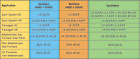
Table 1.

SPECIAL CONSIDERATIONS FOR THE NORTH

The northern region also has its own challenges in the regional standards world. Good, better, best is often defined there as 80-percent AFUE, 90- to 92-percent AFUE, and 95-percent-plus AFUE. In today’s environment, the difference between good and better is significant - 80-percent AFUE versus 90-percent AFUE. Fast-forward to regional standards and this makes the new minimum 90-percent AFUE. Good, better, best becomes 90-percent AFUE, 92-percent AFUE, and 95-percent-plus AFUE. Differentiation between good and better is significantly diminished, so this selling strategy will require some modifications.

Here are a couple of alternative selling strategies that should be effective depending on the local market:

• Differentiate based on heat staging and variable speed. For example, good might be a single-stage 92-percent or 95-percent AFUE furnace, better could be a 95-percent two-stage and a fixed-speed furnace, and best could be a 95-percent two-stage, variable-speed furnace. This strategy gives contractors the ability to upsell based on comfort and sound levels in addition to energy savings.

• IAQ accessories can also provide viable options. For example, good might be 92-percent AFUE, better could be 95-percent AFUE with two-stage and a high-end thermostat, and best could be 95-percent AFUE with two-stage and a high-end thermostat with a humidifier. There are many combinations and approaches with heat staging, variable speed, and accessories. AFUE is still usable, but to a significantly lesser extent.

• Another approach could be to provide service/maintenance contracts or extended warranty protection plans. For example, good might be 95-percent AFUE, better could be 95-percent AFUE and a two-year maintenance contract, and best could be 95-percent AFUE with a two-year maintenance contract and an extended 10-year labor plan with the warranty.

Beyond modifying the good, better, best approach, another consideration for the northern region is repair versus replace. When the new regional standards come into effect on May 1, 2013, it is predicted that many consumers will opt to repair their 80-percent AFUE furnaces as opposed to replacing them with 90-percent-plus AFUE condensing furnaces that have a higher price tag and installation cost. The savvy contractor should do everything possible to demonstrate the benefits of utilizing a 90-percent-plus AFUE furnace instead of repairing the 80-percent furnace - especially if market conditions indicate a short-term payback.

That being said, the industry can still expect a significant amount of repairs. Contractors should be aware of this upcoming trend and be prepared to deal with the need for additional service technicians, increased parts inventories, and more.

Additionally, in the northern region, 90-percent AFUE furnaces will likely create some installation challenges, particularly when replacing an existing 80-percent AFUE furnace.

These non-condensing furnaces are commonly vented through B vent, which is galvanized sheet metal pipe, while 90-percent-plus AFUE condensing furnaces are commonly vented through PVC or CPVC. If replacing an 80-percent AFUE furnace in the northern region, it will be necessary to install PVC or CPVC pipe to accommodate venting the furnace.

The existing B vent chimney cannot be utilized because the flue gas is too cool, which will likely lead to condensation issues inside the chimney. This installation could be problematic if there is no easily accessible route for the new PVC venting system. Contractors may have to install several elbows to facilitate venting the furnace, and the trouble with elbows is that each elbow reduces the overall allowable vent length. Additionally, a common application for 80-percent AFUE furnaces is to share the B vent chimney with a domestic hot water heater. Once the 80-percent AFUE furnace venting is removed from the B vent, this could cause the B vent chimney for the hot water heater to become oversized. A new chimney or hot water heater may be required.

MORE CHANGE? BRING IT

As an industry, HVACR has become very adept at handling change - first 13 SEER, then tax credits, then R-410A. These new regional standards will be one more rough patch to navigate. Of course, by planning now for the change to come, contractors can come out on the other end with a stronger business and keener selling strategies. With change comes opportunity, and if the industry prepares for and embraces change, then HVACR should be in a better position to prosper. Here’s hoping for smooth sailing ahead.

Publication date: 01/25/2010

Share This Story

Looking for a reprint of this article?
From high-res PDFs to custom plaques, order your copy today!


Matt lattanzi
Matt Lattanzi is the research and innovation lead for Nortek Global HVAC (NGH). In this role, Matt has broad responsibilities, including regulatory affairs and product development, as well as responsibility for testing, certification, and facility management.

Recommended Content

JOIN TODAY
To unlock your recommendations.

Already have an account? Sign In

  • HVAC-enrollment

    The Trades Are Back: HVACR Programs See Nearly 30% Enrollment Spike

    A new wave of future technicians is entering the pipeline.  
    News
    By: Matt Jachman
  • 2025 Top 40 Under 40

    2025 Top 40 Under 40 HVACR Professionals List

    The 11th annual Top 40 Under 40 list highlights those...
    HVAC Contracting
    By: Hannah Belloli-Oster
  • LG Ductless Mini-Split Systems

    The 9 Types of Heat Pumps

    As the U.S. moves toward electrification, heat pumps are...
    News
    By: Joanna R. Turpin
Subscription Center
  • Create an Account
  • Start a Subscription
  • Manage My Account
  • Sign Up for Newsletters
  • Visit Customer Service
  • Update Preferences

More Videos

Sponsored Content

Sponsored Content is a special paid section where industry companies provide high quality, objective, non-commercial content around topics of interest to The News audience. All Sponsored Content is supplied by the advertising company and any opinions expressed in this article are those of the author and not necessarily reflect the views of The News or its parent company, BNP Media. Interested in participating in our Sponsored Content section? Contact your local rep!

close
  • Piggy Bank
    Sponsored byWatercress Financial

    Energy Prices, Inflation, and HVAC: What Today’s Homeowners Care About

  • Refrigerated Food
    Sponsored bySolstice Advanced Materials

    R-455A Refrigeration: A Cold Storage Solution for the Future

  • Airex Rooftop Units
    Sponsored byAirex Manufacturing Inc

    Consolidating Roof Penetrations: A Growing Trend in Multifamily HVAC Design

Popular Stories

HVAC-Price-Increase-graphic

HVAC Price Increase List: June 2026

Trump-Section-232.jpg

Trump Reduces Section 232 Tariffs on HVAC Equipment to 15%

R410A-Refrigerant-Cylinder.jpg

Refrigerant Recovery is a Revenue Opportunity

Heat-pump-cutaway.jpg

PFAS Rules and A2L Building Codes Continue to Evolve

Midea-training.jpg

HVAC Workforce Crisis Expands Beyond Technicians to Instructor Shortages

View The ACHR NEWS
Centennial Anniversary Timeline

The ACHR News Timeline Chart
Submit a Letter
Submit a letter to our editors.

Events

November 6, 2025

Next-Gen Data Center Cooling: HVAC Innovation and Real-World Solutions

On Demand As AI workloads and high-density computing push traditional cooling methods to their limits, the data center industry is accelerating the adoption of next-generation HVAC technologies.

June 17, 2026

Decarbonization Without Disruption

This webinar will explore practical HVAC decarbonization strategies that minimize disruption while maximizing long-term performance and ROI.

View All Submit An Event

Poll

Summer Staff

Are you fully staffed for the summer season?
View Results Poll Archive

Products

BNI Mechanical/Electrical Square Foot Costbook, 2026 Edition

BNI Mechanical/Electrical Square Foot Costbook, 2026 Edition

See More Products
Decarbonization Without Disruption - Free Webinar - 6/17/2026

Related Articles

  • New Refrigerant Rules and What They Mean

    See More
  • Ice Breaker Joe Marchese

    Superheat, Subcooling, and Saturation – What Do They Mean?

    See More
  • Contractors Concerned Over Regional Efficiency Standards

    See More

Events

View AllSubmit An Event
  • August 21, 2025

    What the Big Beautiful Bill Means for HVAC Contractors

    On Demand In this webinar, we will take a look at the elimination of the residential and commercial HVAC tax incentives and how contractors can navigate this new landscape.
View AllSubmit An Event

Related Directories

  • Association for Facilities Engineering-AFE

    AFE provides education, certification, technical information and other relevant resources for plant and facilities operations, engineering and maintenance professionals worldwide.
×

Sign Up. Stay Informed.

The #1 trusted source for the HVACR industry since 1926

SUBSCRIBE
  • RESOURCES
    • Advertise
    • Contact Us
    • Advisory Board
    • Classifieds
    • Submit a Letter
    • Directories
    • Store
  • ACCOUNT CENTER
    • Create an Account
    • Start a Subscription
    • Manage My Account
    • Sign Up for Newsletters
    • Visit Customer Service
    • Update Preferences
  • SERVICES
    • Marketing Services
    • Reprints
    • Market Research
    • List Rental
    • Survey/Respondent Access
  • STAY CONNECTED
    • LinkedIn
    • Facebook
    • Instagram
    • YouTube
    • X (Twitter)
  • PRIVACY
    • PRIVACY POLICY
    • TERMS & CONDITIONS
    • DO NOT SELL MY PERSONAL INFORMATION
    • PRIVACY REQUEST
    • ACCESSIBILITY

Copyright ©2026. All Rights Reserved BNP Media, Inc. and BNP Media II, LLC.

Design, CMS, Hosting & Web Development :: ePublishing