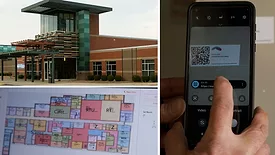
Airoverse and Lowder Brothers partnered to bring scalable, accessible building automation to Fort Smith School District, helping the district manage HVAC across 33 campuses and roughly 100 buildings.
In a first for the industry, Carrier submits standardized Title 24 JA18 logic to regulators, promising faster compliance and simpler commissioning for building automation projects
The submission covers a broad range of applications – VAVs, air handlers, exhaust fans, and fan coil units. The i-Vu system will include locked logic to support compliance.
How a proactive approach to building automation and control can drive dramatic savings, boost efficiency, and extend facility life – as proven by a Maryland courthouse’s turnaround
A case study from RMF Engineering on the Rockville District Courthouse highlights how targeted retro-commissioning can slash utility costs and maximize building performance.
Why the construction industry’s traditional approach to building automation is broken, and how truly smart buildings start with smarter decisions, better integration, and technology leaders at the table
Metasys 15.0 can be scaled across multiple buildings and sites, bringing advantages to industries such as healthcare systems, data centers and large campuses, while enhancing uptime and efficiency.
Consistent graphics streamline commissioning and troubleshooting, making it easier for teams to verify systems and reduce mistake, writes ES NEWS guest columnist Dan McCarty, owner of QA Graphics.
Breaking down how building owners and operators can use advanced trending strategies to boost HVAC performance, solve problems faster, and make data-driven decisions for the future
This column by ES NEWS' Miles Ryan explores how building owners and operators can unlock the full potential of BAS trending for smarter facility management.
David Suskie brings to his new role at Controls Group North America more than 35 years of experience in the HVACR wholesale supply, temperature controls, and building management systems industries.
Why general alarm monitoring for standalone equipment is more complex than it seems: common pitfalls, key reasons for integration with BAS, and practical recommendations to ensure reliable alarms
This article explores why designers lean on BAS integration for critical alarms, highlights the most common points of failure encountered during commissioning, and offers practical guidance for ensuring that alarm notifications are both reliable and truly necessary for your facility operations team.