Promoting Building Longevity and Cost Optimization Through Retro-commissioning
How a proactive approach to building automation and control can drive dramatic savings, boost efficiency, and extend facility life – as proven by a Maryland courthouse’s turnaround

EFFICIENT: Author Jon Logue spearheaded a retro-commissioning strategy at the Rockville District Courthouse, turning runaway costs into long-term efficiency.
As electricity costs continue to rise across the United States, commercial building operators and contractors are under increasing pressure to mitigate their growing utility expenses. Building Automation Systems (BAS) can reduce building energy consumption by 30%, according to the U.S. Department of Energy, and have become a popular, data-driven solution for optimizing energy use and efficiency. But, like all technology, these systems require continual monitoring and recalibration to prevent control deficiencies from eroding utility cost savings over a building’s lifespan.
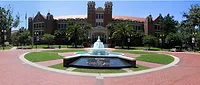
This was the case with the Rockville District Courthouse (RDC) in Rockville, Maryland. Despite being equipped with a state-of-the-art BAS at its 2011 opening, by 2018, the Courthouse had become the Maryland Department of General Services’ (MD DGS) highest energy consumer. Control deficiencies – 34, to be exact – were to blame, providing a compelling case study for common issues and knowledge gaps in the operation of these systems. RMF Engineering worked alongside Control Sources, a Baltimore-based specialized BAS controls subcontractor, to correct these issues and effectively implement solutions to ensure that the system not only returned to optimal efficiency but was also equipped with the support needed for long-term maintenance.
The Investigation Phase
By the time the control deficiencies in the BAS were identified, the 167,000-square-foot building was consuming an average of 98,815 Therms per year – and costing more than $76,000 annually in natural gas consumption alone. Its energy use intensity (EUI) had grown to 134,386 BTUs per square foot per year – or approximately 3,680,587 kWh per year. As designed, the building should have been consuming roughly half of its current rate.
RMF's retro-commissioning process took place in two phases: Investigation and Implementation. The team gathered historical building utility data and costs, replaced workstation computers, upgraded the BAS software, and reviewed the system's graphics and logic with Control Sources to pinpoint inefficiencies and inconsistencies.
The findings revealed that the original BAS was not functioning as intended. Automation was no longer maintained, with many HVAC components operating in manual mode. Through the investigation, RMF learned that the building's routine service provider had training and knowledge gaps in this specific system – which is not uncommon, even for seasoned professionals, as few technicians are qualified or licensed to work on them end-to-end. In some cases, manufacturers even require specific training to access certain parts or software features. As a result, control devices that simply needed to be repaired or replaced were disconnected from the software, which was also no longer up to date and could introduce security vulnerabilities for some systems. Ultimately, the building was being operated “in hand,” causing data inaccuracies, lack of energy management, and reduced efficiency returns.

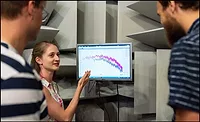
HANDS ON: A hands-on approach to building automation led the Rockville District Courthouse to dramatic energy savings and national recognition. (Courtesy of RMF Engineering)
The Implementation Phase & Results
RMF and Control Sources worked together to remedy all 34 priority control deficiencies, which were organized according to their cost impact on building operations and energy budgets and implemented in order of importance to the overarching objective.
Following the update to the BAS software, some of the largest impacts were felt by the smallest corrections, such as replacing defunct temperature control devices and reprogramming the occupancy schedule to align with the building's present-day use. While the building was operating in hand, temperature set points had also been changed, no longer following the design strategy and leaving most equipment running 24/7. The heating and cooling systems were automated to "power down" overnight and on weekends when the Courthouse was not in use, rather than run continuously as they had been. For example, during a typical unoccupied schedule, equipment is allowed to go “off” based on setback parameters, permitting spaces to reach 80 degrees before cooling as opposed to 72 degrees. Fans and dampers were automated, and the remaining controls were reconfigured, promoting system accuracy and efficiency.
This resulted in a 50% cut in heating and cooling energy use, a $40,000 utility rebate, and a payback period of less than three months – earning the State Building Energy Award in 2021. The average annual consumption of natural gas had dropped by 46% by the end of 2023, compared to the 2018 baseline average. Electricity consumption fell by 30% over the same period. To achieve and continue maintaining these returns, the Courthouse's staff was thoroughly educated on the software and setpoint schedule, enabling the facilities team to recognize system drift as soon as it begins.
"We have discovered that retro-commissioning a building is one of the few low-cost solutions available to us that leads to significant energy, carbon, and financial savings," says David St. Jean, director, Office of Energy and Sustainability at the Maryland Department of General Services. "Between 2018 and 2024, the energy use index of the Rockville District Court declined 46%. After our success with this project, we scheduled several more candidate buildings to undergo a similar process, and we're looking forward to tracking the savings at those facilities over the next few years."
Conclusion
The investment in RCx is certainly worthwhile for optimizing building performance, as the data for the RDC demonstrates, but it’s not a one-and-done process. According to the Building Commissioning Association, retro-commissioning should be considered every 3–5 years to pinpoint broken or underperforming sensors and used as an opportunity to explore new technology options that may offer greater efficiency returns. The "full reset" window can be pushed out by partnering with a service provider certified in the specific BAS being used, but the software is only as effective as the building's mechanical equipment.
Facing limited budgets, staff turnover, and aging systems, these issues are common in commercial buildings, but they are more costly to ignore than to correct. For the RDC, the strategic investment in long-term performance continues to deliver $220,000 in annual savings, proving it as a vital step in building maintenance and longevity.
Looking for a reprint of this article?
From high-res PDFs to custom plaques, order your copy today!