LG’s thermal and power solutions support AI data centers with advanced air cooling, liquid cooling, immersion cooling, intelligent energy management and high-efficiency power infrastructure.
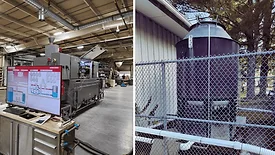
Installed in 1981, an HDPE cooling tower at Radio Frequency Company has operated continuously for over 40 years – far surpassing the typical lifespan of metal models.
Dig into how data center mechanical systems must be engineered to handle stricter power and water limits, increasing computing density, and heightened community concerns, all while staying flexible for the future.
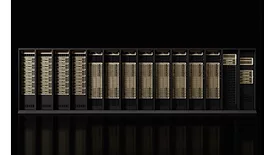
When Nvidia’s CEO said the company’s latest AI system could be cooled with hot water and no chillers, investors reacted quickly. Shares of several HVAC manufacturers fell sharply, underscoring how closely tied the industry’s growth has become to data center cooling assumptions.
The proposed new approach to chilled water HVAC systems promises to provide significant capital cost savings, energy cost savings, and a path to eliminate CO2 emissions.
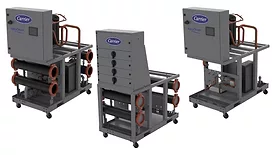
Carrier's AquaSnap 30MP will now come with the refrigerant R-32, which was chosen for its lower environmental impact, high energy efficiency, wide availability, and ease of use, the company said.
The city of Phoenix sought an energy-efficient HVAC solution that would restore Phoenix Art Museum’s lost efficiency and improve the indoor climate for the museum’s specialized environment while also contributing to the city’s energy conservation goals.
The expansion at Tocumen included the addition of a new $697 million terminal that would increase the airport’s current service capacity from 5.8 million passengers to 18 million passengers per year. The new 860,000 square foot South Terminal, created the need for an additional 5,750 tons of cooling capacity and 60,000 linear feet of chilled water piping, all of which had to be fabricated, installed, and insulated by Integ.