How to Future-Proof the Mechanical Systems in the Modern Data Center Campus
Designing adaptable, efficient mechanical systems for evolving power, water, and community needs in data centers
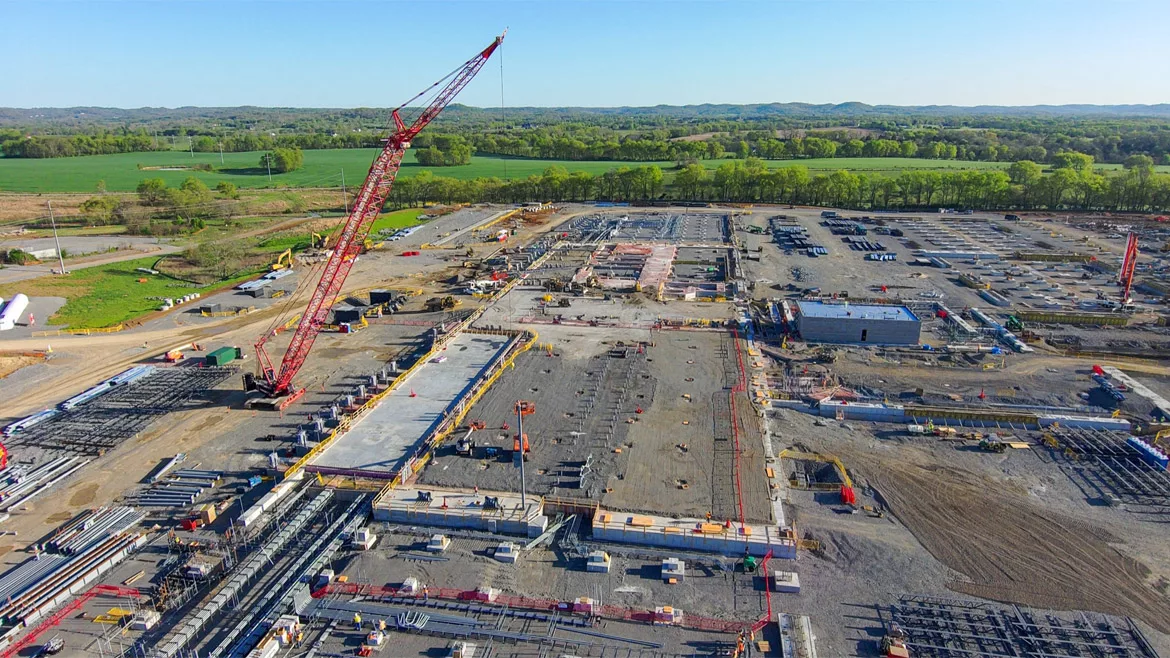
DEMANDING: Futureproofing is a necessity, demanding mechanical designs that use resources wisely, minimize disruption, and stay flexible.
Mission critical data centers have always been designed with reliability at the forefront. Downtime isn’t inconvenient; it is costly and can be catastrophic. And as demand for these facilities continues to surge housing ever-evolving capacity needs and technology developments, “futureproofing” has expanded beyond functionality, redundancy and uptime. Today, it encompasses a much broader set of challenges and considerations.
While mechanical systems continue keeping the increasingly powerful and densely packed servers cool, they must also adapt to tight constraints around power, water and more knowledgeable and engaged communities. Designing a system that will perform 20 or 30 years from now requires a comprehensive view of how these forces interact. Futureproofing a modern data center campus ultimately comes down to designing systems that are durable, resource-efficient and adaptable as technologies and infrastructure demands evolve.
Designing Under New Constraints
Mechanical design decisions in data centers are increasingly shaped by three major constraints: power availability, water use and community impact.
Power is the most immediate limitation, in many regions, utilities are struggling to keep pace with the explosive demand created by AI and hyperscale data center growth. It is not uncommon for sites to be capped with a fixed allocation of power availability and for sites to be selected by data center developers based on that availability. In all cases, the goal becomes maximizing computing capacity within a limited electrical envelope.
Water is the second major constraint. Data centers have historically relied on evaporative cooling strategies that can be highly energy efficient but require significant water consumption. As more facilities are proposed in regions facing water scarcity and cooling loads increase in data halls, owners and designers are reconsidering how best to utilize water in their cooling systems affect long-term water usage.
Finally, community impacts need to be understood for the future success of data centers. Increasingly larger data center campuses place significant demands on local infrastructure and resources. Communities are increasingly concerned about the strain these facilities place on the local environment and infrastructure beyond utilities including roads, connection to the outdoors, noise impacts and the local culture during and after construction.
For developers and designers, futureproofing increasingly means designing systems that can operate efficiently within these environmental and social constraints.
Balancing Energy and Water
Two industry metrics help frame this challenge: power usage effectiveness (PUE) and water usage effectiveness (WUE).
PUE measures the total energy consumed by a facility relative to the energy used by IT equipment. A perfect score of 1.0 would mean every watt of energy goes directly to computing, though in practice that is impossible.
WUE, meanwhile, measures the liters of water used for cooling and other building needs per kilowatt-hour of IT energy consumed.
Balancing these two metrics is a delicate trade-off. Improving energy efficiency sometimes requires increased water usage and vice versa. As communities become more sensitive to resource consumption, optimizing both PUE and WUE is becoming a necessity for securing project approvals and maintaining a positive public profile.
Defining goals for these metrics early in the planning phase allows teams to tailor mechanical systems to the specific environmental constraints of the project site.
Addressing Community Impact
Every data center campus leaves a major footprint on the municipality where it is built, and how these facilities interact with their surroundings simply cannot be ignored.
In places where water is scarce, adding a resource-intensive facility understandably raises alarms and puts a spotlight on responsible resource management. Deploying closed-loop water systems and advanced cooling techniques can minimize consumption, especially in drought-prone regions.
Meanwhile, land scarcity in crowded cities means space where these are being built is often exceptionally tight, which creates its own set of challenges. Pushing massive amounts of heat from limited rooftop space has the potential to intensify the urban heat island effect, a very real issue for people living and working nearby.
Addressing these concerns requires both resource stewardship and proactive engagement. Prefabrication strategies can reduce on-site workforce demand and traffic congestion during construction. Building mechanical modules off-site lessens disruption to surrounding neighborhoods. Early engagement with local stakeholders and careful evaluation of municipal needs is becoming essential for successful project integration.
The Evolution of Cooling Strategies
Cooling technology itself is evolving rapidly to keep up with these new constraints.
Just five years ago, evaporative or adiabatic cooling systems were generally the standard approach. Today, there has been a strong shift toward air-cooled approaches that reduce water consumption and simplify the underlying infrastructure.
However, that shift may not represent the final answer. As facilities move closer to urban environments and buildings become taller and more compact, heat rejection becomes more complicated. Traditional hyperscale campuses often consist of large single-story buildings with expansive roof space, making it relatively easy to place air-cooled equipment.
In denser urban settings, that luxury disappears. Multi-story buildings concentrate large amounts of heat into smaller footprints while available roof space remains limited. At the same time, air-cooled systems reject heat directly into the surrounding environment, which can contribute to localized heat island effects.
These challenges may eventually push some facilities back toward water-cooled systems or hybrid approaches that offer better energy performance while managing heat rejection more effectively. The industry is still experimenting, and futureproofing means avoiding designs that lock owners into a single cooling approach as technologies evolve.
Preparing for Higher Densities
One of the most significant forces shaping mechanical design today is the rapid increase in computing density. Today’s artificial intelligence workloads are pushing server racks to unprecedented power levels.
Traditional air-based cooling strategies are increasingly being supplemented or entirely replaced by liquid cooling technologies. This includes direct-to-chip cooling methods. These advanced systems remove heat much more efficiently. Coupled with increases in server technology that allow servers to tolerate much higher temperatures, these direct to chip liquid cooled systems can subsequently reduce the need for massive, compressor-driven mechanical plants.
Design of semiconductors and processing units is also advancing, allowing them to operate at higher temperatures. That double pronged effect is giving a tolerance can reduces the reliance for compressor-driven refrigeration based mechanical cooling.
Designing mechanical plants that can support these emerging cooling technologies is becoming a vital part of futureproofing. Systems must be able to handle higher densities, accommodate different cooling approaches and evolve as data center technology continues to change.
At the same time, simplicity remains a guiding principle. Mechanical systems with fewer moving parts tend to be more reliable over the long term. Reducing overall complexity can improve longevity while drastically lowering ongoing maintenance demands.
Designing for Flexibility
In such a rapidly evolving environment, flexibility is a critical element of futureproofing. Mechanical systems should be designed with scalability in mind from the very beginning.
Expansion pathways and adaptable cooling strategies can help owners respond to changing technology without requiring major system overhauls. The project delivery process itself also plays a critical role in achieving this flexibility.
Bringing contractors into the design process early can significantly improve constructability and scalability. A common challenge today is the lack of contractor involvement during the initial design phases. Early collaboration allows teams to evaluate modular solutions, optimize equipment layouts and avoid designs that are difficult or excessively expensive to build.
At Harris, our engineers, designers, construction experts and field leaders invest time and resources in planning to understand how each decision affects the budget, timeline and operational efficiency. By leveraging virtual design and construction tools early on, teams can map out modular components and identify potential clashes long before ground is broken. This kind of proactive engagement helps ensure that systems are not only efficient on paper but practical to update and expand over time.
Looking Ahead
The future of mechanical design for data center projects will likely involve continued experimentation. Operators must constantly balance energy efficiency, water use, infrastructure limits and community impact.
What is abundantly clear is that the definition of futureproofing has permanently evolved. It is no longer just about building durable systems that last for decades. It is about designing intelligent systems that can readily adapt to the unknown.
For owners and designers, that means fully embracing flexibility, understanding local resource constraints and building mechanical infrastructure that can evolve alongside the technology it supports.
Looking for a reprint of this article?
From high-res PDFs to custom plaques, order your copy today!