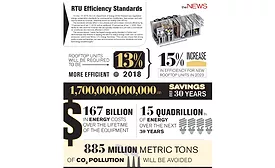
On Dec. 17, 2015, the U.S. Department of Energy (DOE) finalized new negotiated energy conservation standards for commercial air conditioners, heat pumps, and commercial warm-air furnaces, otherwise known as rooftop units (RTUs).
The current law ‘has not been updated to reflect new technologies and economic realities’
June 10, 2016
Stephen Yurek, president and CEO of the Air-Conditioning, Heating, and Refrigeration Institute (AHRI) today called on Congress to reform the Energy Policy and Conservation Act (EPCA), the law governing product energy efficiency standards.
The European Union’s stringent energy efficiency regulations are influencing policies in other regions, report finds
June 8, 2016
During the past five years, the number of energy efficiency polices around the world has continued to increase, notes Navigant Research. While policies vary by region and country, and with more developed nations taking more stringent approaches, a lack of enforcement remains a significant barrier to implementation.
The International Code Council (ICC) and Residential Energy Services Network (RESNET) have collaborated to publish two American National Standards Institute (ANSI)-approved standards.
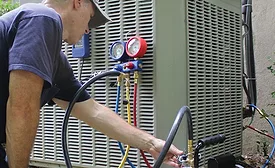
Dozens of regulations affecting HVACR equipment manufacturers, along with refrigerant regulations and technological innovations in variable-speed technology, have resulted in a bevy of change for condenser unit manufacturers.
The divisiveness of the presidential campaign on top of what was already a difficult political climate in Washington means pushing through any kind of legislation this year will be highly unlikely, though that doesn’t necessarily mean the trends aren’t moving in the right direction for ammonia and other natural refrigerants.
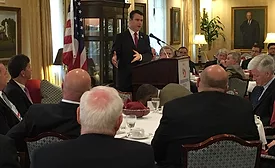
The two-day event drew a record number of distributors, wholesalers, manufacturers, and manufacturer’s representatives to Capitol Hill and included a legislative briefing, guest presentations from several members of Congress, networking events, and the opportunity for participants to meet with legislators from their districts.
Announcement is first step in establishing energy-efficiency standard for portables
May 30, 2016
DOE has determined that classifying portable a/c units as a covered product is necessary or appropriate to carry out the purposes of EPCA, and that average U.S. household energy use by portable a/c units is likely to exceed 100 kWh per year.
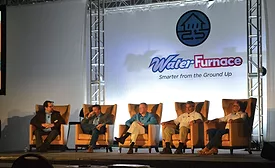
The two day event, which was focused on helping dealers strengthen and grow their businesses, featured presentations on WaterFurnace products, marketing tools, training, financing, and more.
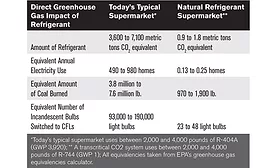
The supermarket industry realized a long time ago that it is impossible to solve environmental problems related to refrigerant leaks using a repair-based approach (i.e., with policies that focus on leak repair and record-keeping). Yet, the U.S. Environmental Protection Agency’s (EPA’s) main regulatory program to address harmful refrigerant emissions reflects a repair-based policy.