The goal is to upgrade the user experience overall
August 3, 2016
As part of its efforts to improve the exhibitor and attendee experience, International Exposition Co. said it has expanded its social media efforts and enhanced its website for the International Air-Conditioning, Heating, Refrigerating Exposition (AHR Expo).
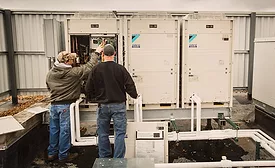
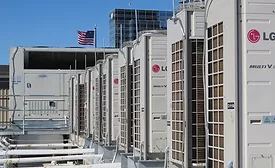
As the American market becomes more familiar with variable refrigerant flow (VRF) systems, it’s discovering firsthand the technology’s ability to deliver exceptional comfort with lower life cycle costs. Additionally, contractors are touting the ability to perform maintenance on systems individually, allowing them to fix a problem without disrupting the comfort delivered to the remainder of the facility.
The backdrop for the contests was the 52nd SkillsUSA National Leadership and Skills Conference, where more than 15,000 people, including students, teachers, and business partners participated in the weeklong event.
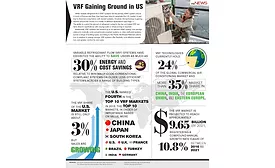
The global VRF market is projected to reach approximately $9.65 billion by 2021, registering a compound annual growth rate (CAGR) of 10.8 percent between 2016 and 2021.
VRF systems can achieve up to 30 percent HVAC energy cost savings relative to minimally code-conventional-compliant systems or older inefficient systems across a range of building types, according to the Pacific Northwest National Laboratory. In addition to energy savings, VRF systems offer flexibility, cost-effective installation, and greater comfort for end users.
Market is projected to expand at an even faster pace in terms of volume
August 1, 2016
The global market for air conditioning systems was pegged at a value of $104.4 billion in 2015 and is projected to rise to $167 billion by the end of 2024, expanding at a 5.1 percent compound annual growth rate (CAGR) from 2016 to 2024, according to a report from Transparency Market Research.
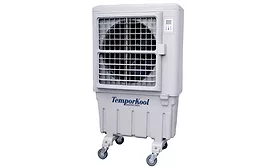
Each portable evaporative cooler unit includes a digital display to control fan speed, oscillation, cooling on-off, low water level, and a 24-hour timer. This cooler is ETL-approved and only uses 110 V and 4 A at 60 Hz.
As net-zero-energy buildings (NZEBs) become more popular, HVACR manufacturers are working to create highly efficient products and systems to help meet these ambitious performance goals.
High-performance-building-related credentials from certifying bodies like ASHRAE, the Building Performance Institute Inc. (BPI), the U.S. Green Building Council (USGBC), the International Code Council (ICC), and many others can help mechanical contractors show they have expertise and experience in certain areas.
With commercial building codes mandating increasing levels of efficiency and energy prices only continuing to rise, many building owners are looking for ways to boost building performance in both new and existing buildings. These case studies highlight several ways in which HVACR solutions have been implemented to help building owners meet their energy-efficiency and comfort goals.
 RSS
RSS