With cooling tower technologies advancing, customers research new advancements
March 4, 2019
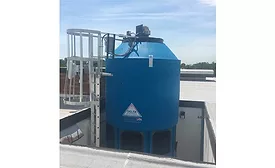
The longevity and cost-saving features of today’s advanced HDPE “plastic” cooling towers tests the wisdom of choosing yesteryear’s conventional metal-clad models.
For many, being proactive with chiller maintenance in the early winter has led to better results in the spring, when it’s time to start the systems up again. Performing chiller maintenance as early in the winter as possible gives facility managers the benefit of finding major damage with plenty of time to fix the problems before the chiller needs to be back in operation.
The video begins by showcasing the sizes of the three cooling tower models side-by-side with computer-generated schematics of the towers and a life-size human figure standing next to each tower to provide context.
South Bronx hospital adopts new anti-microbial cooling tower technology to stave off Legionnaires' Disease
July 23, 2018
Legionnaires' disease is a severe form of lung infection caused by exposure to bacteria known as Legionella. Found naturally in freshwater environments like lakes and streams, Legionella becomes a health hazard when it grows unabated in water that is not properly treated. While this can include shower heads, hot tubs, and hot water heaters, cooling towers are often found to be the source of outbreaks.
The Environmental Protection Agency (EPA)-registered BioSpray® Tower kills 99.9 percent of Legionella pneumophila when it is properly applied to hard, non-porous surfaces like cooling towers.
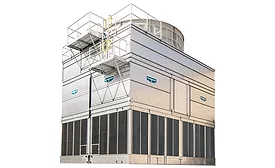
To facilitate faster installation and safer assembly processes, the Everest arrives at the site in modules that are pre-constructed in a controlled factory environment.