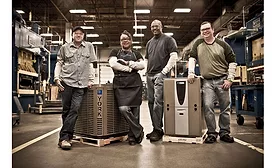
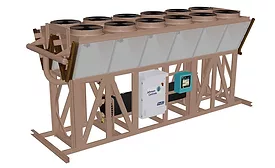
The HFO-1234yf production facility begins operations at its Corpus Christi manufacturing plant in Ingleside, Texas
February 14, 2019
The Chemours Company, a global chemistry company, today announced the startup of the new Opteon YF (HFO-1234yf) low global warming potential (GWP) refrigerant production facility at its Corpus Christi manufacturing plant in Ingleside, Texas. This facility will enable Chemours to triple the global capacity of its hydrofluoroolefin (HFO) 1234yf-based products to meet increasing market demands for more environmentally sustainable refrigerants and blends.
California has now signaled that it, too, intends to follow Germany down the renewable energy path. In September, the governor signed a bill requiring that 100 percent of the state’s electricity be generated by renewable energy sources such as solar or wind by 2045. This is an expensive proposition and will significantly boost California’s already high residential electricity costs, which are currently about $.20/kWh.
According to the report, the forms of the resilience challenge are potentially diverse — including climate change, disease pandemics, economic fluctuations, and terrorism. And communities, specifically urban areas that are expected to house nearly 70 percent of the earth’s population by 2050, were not designed to handle the impacts.
Armed with trend information and knowledge, contractors can provide effective and advanced quotes to their customers that expertly balance money and comfort. To the victor go the spoils, which, in this case, is a new hospital or hospitality account.
The survey of nearly 2,000 facility and energy management executives from 20 countries found that 57 percent of organizations in the U.S. and 59 percent of global organizations plan to increase investment in energy efficiency in the next year.
A one-paragraph, simple overview of the basic CHP approach reads like this: A building’s (or campus’) system uses fuel to make its own electricity, and then it applies the waste heat from that process toward its HVAC needs.
It is difficult to imagine a city running out of water, but it’s no longer impossible. Water conservation is getting more important in the U.S., and HVAC systems on a large scale represent a chance to make an impact (or not).
To kick off the event, Armstrong announced its “2 in 22” initiative: a commitment to reducing greenhouse gas emissions among its installed customer base by 2 million tons by the year 2022.