ACHR News
search
Ask ACHR NEWS AI
cart
facebook twitter instagram linkedin youtube
  • Sign In
  • Subscribe
  • Sign Out
  • My Account
ACHR News
  • NEWS
    • Breaking News
    • New HVAC Products
    • Featured Products
    • Manufacturer Reports
    • HVAC Data
    • Legislation
    • ACHR NEWS Centennial
  • RESIDENTIAL
    • Air Conditioners
    • Furnaces
    • Residential Heat Pumps
    • Ductless
    • Residential IAQ
    • Testing, Monitoring, Tools
    • Components & Accessories
  • COMMERCIAL
    • Air Handlers
    • Rooftop Units
    • Chillers and Cooling Towers
    • Commercial Heat Pumps
    • Boilers and Hydronics
    • VRF/Ductless
    • Commercial IAQ
  • REFRIGERATION
    • Refrigerants
    • Refrigerant Regulations
    • Leak Management
  • CONTRACTOR PRO
    • Geothermal
    • Homeowner Study
    • VRF and VRV Ductless
    • Unitary Trends
  • EDUCATION
    • Training and Education
    • Business Management
    • Service and Maintenance
    • Continuing Education
    • Market Research >
      • HVAC Brand Awareness Report
      • VRV, VRF, VRVZ Report
      • Unitary Trends Report
      • Water Heat Professionals Report
    • Webinars
    • Sponsor Insights
    • eProducts Info
    • White Papers
  • EVENTS
    • HVAC Contractor Forum
    • Industry Events and Webinars
  • MEDIA
    • Videos
    • AHR Expo 2025 Videos
    • Podcasts >
      • ACHR News Podcast
      • HARDI Podcasts
      • AHR Expo Podcasts
      • ACCA Podcasts
    • Interactive Spotlights
    • Quizzes
    • eBooks
    • HVAC Talkback
  • HVAC GROUP
    • ACHR NEWS >
      • Current Issue
      • Digital Edition
      • Subscribe
    • Distribution Trends
    • SNIPS NEWS >
      • Join SNIPS NEWS
    • Engineered Systems News >
      • Join ES News
    • HVACR Directory
    • Contests
    • Newsletters
    • Contact
    • Advertise
    • My Account

Lay It On The Line Sets

By Barbara A. Checket-Hanks
May 12, 2004
It's a fact. Any number of service problems can be prevented if technicians take proper care when installing new line sets on replacement heat pumps or new installations.

According to the trainers at York UPG, "Many service problems can be avoided by taking adequate precautions to provide an internally clean and dry system, and by using procedures and materials that conform to established standards." However, this is just one consideration among many when it comes to installing line sets correctly.

Think Before You Install

Planning is critical when it comes to installing line sets for optimum efficiency, serviceability, and homeowner satisfaction.

Whether it's a factory line set or field-fabricated tubing for that new heat pump system, the pros from the UPG training department want you to make sure that the lines are installed so that they will not obstruct service access to the indoor coil, air-handling system, or filter. Such obstructions can impede proper service and maintenance later.
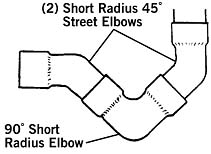
Figure 1. Recommended construction of oil traps.
Moreover, take care to install the lines with as few bends as possible. "Care must be taken not to damage the couplings or kink the tubing," recommend the trainers. Also, by isolating the refrigerant lines, you will help minimize noise traveling from the equipment to the home.

"Never solder vapor and liquid lines together," they warn. If you need to, tape them together for convenience sake and for support; but make sure they are completely insulated from each other. Support them at appropriate intervals with suitable hangers and brackets. In particular, do not allow metal-to-metal contact.

When it comes to elbows, use long-radius types whenever possible, the trainers pointed out - except when you are fabricating oil return traps. These require short-radius elbows in order to minimize the volume of oil returning to the compressor. (See Figure 1.)

Going Underground

Installing contractors should use PVC piping "as a conduit for all underground installations," the trainers state. Keep buried lines as short as possible; this helps minimize the buildup of liquid refrigerant in the vapor line during long periods of shutdown.

Wherever refrigerant lines penetrate a wall, the company recommends packing the area with fiberglass insulation and a sealing material (i.e., permagum). This helps reduce vibration as well as retaining some flexibility.

"Insulate all vapor lines with a minimum of 1/2 inch of foam rubber," the company recommends. "Liquid lines that will be exposed to direct sunlight also need to be insulated."

If you need to fabricate your own piping in the field:
  • Use hard-drawn "L"-type copper tubing if there will be no significant bending around pipes or other obstructions. "If soft copper must be used," the trainers add, "care should be taken to avoid sharp bends which may cause a restriction."

  • Braze all copper-to-copper joints with Silfos-5 brazing material (or equivalent). Do not use soft solder.

  • While you are brazing, flow nitrogen through the system to prevent scaling and contamination.

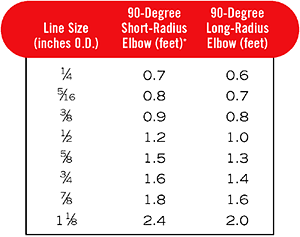
    Table 1. Equivalent lengths of elbows. (*Two 45-degree-radius ells equals one 90-degree-radius ell.)

    Line Lengths

    There are many important considerations for line lengths and sizing for heat pump systems. We will touch on just a few of the more important ones mentioned by the UPG trainers. (For more information, contact a reputable source of unitary installation particulars, such as the manufacturer.)

    According to this manufacturer, "The total length of interconnecting tubing is the sum of all horizontal and vertical runs from the indoor unit to the outdoor unit." For heat pumps, the limiting factor is the accumulator's storage capacity.

    "Total equivalent line lengths must only be used when calculating pressure drop," states UPG. Therefore, use the information in Table 1 to calculate equivalent lengths for elbows.

    Elevation differences between the indoor and outdoor units can cause performance and reliability problems, the trainers say, "if special considerations are not given to line sizes and orifice sizes."

    For split-system heat pumps, interconnecting refrigerant lines need to be sized so that they match the manufacturer's factory-supplied fittings. Vapor lines may be increased by one size to minimize pressure drop; however, liquid lines should never be increased or decreased, the manufacturer says. "The additional charge required for larger liquid lines will overflow the accumulator in the heating cycle."

    Publication date: 05/17/2004

  • Looking for quick answers on air conditioning, heating and refrigeration topics? Try Ask ACHR NEWS, our new smart AI search tool. Ask ACHR NEWS →

    Share This Story

    Looking for a reprint of this article?
    From high-res PDFs to custom plaques, order your copy today!


    Barbara Checket-Hanks is Service & Maintenance Editor. E-mail her at barbarachecket-hanks@achrnews.com.

    Recommended Content

    JOIN TODAY
    To unlock your recommendations.

    Already have an account? Sign In

    • HVAC-enrollment

      The Trades Are Back: HVACR Programs See Nearly 30% Enrollment Spike

      A new wave of future technicians is entering the pipeline.  
      Training and Education
      By: Matt Jachman
    • 2025 Top 40 Under 40

      2025 Top 40 Under 40 HVACR Professionals List

      The 11th annual Top 40 Under 40 list highlights those...
      HVAC Commercial Market
      By: Hannah Belloli-Oster
    • LG Ductless Mini-Split Systems

      The 9 Types of Heat Pumps

      As the U.S. moves toward electrification, heat pumps are...
      Ground Source Heat Pumps
      By: Joanna R. Turpin
    Subscription Center
    • Create an Account
    • Start a Subscription
    • Manage My Account
    • Sign Up for Newsletters
    • Visit Customer Service
    • Update Preferences

    More Videos

    Sponsored Content

    Sponsored Content is a special paid section where industry companies provide high quality, objective, non-commercial content around topics of interest to The News audience. All Sponsored Content is supplied by the advertising company and any opinions expressed in this article are those of the author and not necessarily reflect the views of The News or its parent company, BNP Media. Interested in participating in our Sponsored Content section? Contact your local rep!

    close
    • Piggy Bank
      Sponsored byWatercress Financial

      Energy Prices, Inflation, and HVAC: What Today’s Homeowners Care About

    • Refrigerated Food
      Sponsored bySolstice Advanced Materials

      R-455A Refrigeration: A Cold Storage Solution for the Future

    • Airex Rooftop Units
      Sponsored byAirex Manufacturing Inc

      Consolidating Roof Penetrations: A Growing Trend in Multifamily HVAC Design

    Popular Stories

    HVAC-Price-Increase-graphic

    HVAC Price Increase List: June 2026

    Trump-Section-232.jpg

    Trump Reduces Section 232 Tariffs on HVAC Equipment to 15%

    Refrigerants-and-gauge.jpg

    HVAC Industry Warns of Counterfeit Refrigerants Entering U.S. Supply Chain

    Heat-pump-cutaway.jpg

    PFAS Rules and A2L Building Codes Continue to Evolve

    Midea-training.jpg

    HVAC Workforce Crisis Expands Beyond Technicians to Instructor Shortages

    View The ACHR NEWS
    Centennial Anniversary Timeline

    The ACHR News Timeline Chart
    Submit a Letter
    Submit a letter to our editors.

    Events

    November 6, 2025

    Next-Gen Data Center Cooling: HVAC Innovation and Real-World Solutions

    On Demand As AI workloads and high-density computing push traditional cooling methods to their limits, the data center industry is accelerating the adoption of next-generation HVAC technologies.

    June 17, 2026

    Decarbonization Without Disruption

    This webinar will explore practical HVAC decarbonization strategies that minimize disruption while maximizing long-term performance and ROI.

    View All Submit An Event

    Poll

    Summer Staff

    Are you fully staffed for the summer season?
    View Results Poll Archive

    Products

    BNI Mechanical/Electrical Square Foot Costbook, 2026 Edition

    BNI Mechanical/Electrical Square Foot Costbook, 2026 Edition

    See More Products
    Decarbonization Without Disruption - Free Webinar - 6/17/2026

    Related Articles

    • Mueller Industries Inc.: Line Sets

      See More
    • Heat Pumps, Coils, and Line Sets

      See More
    • JMF Co.: Line Sets

      See More
    ×

    Sign Up. Stay Informed.

    The #1 trusted source for the HVACR industry since 1926

    SUBSCRIBE
    • RESOURCES
      • Advertise
      • Contact Us
      • Advisory Board
      • Classifieds
      • Submit a Letter
      • Directories
      • Store
    • ACCOUNT CENTER
      • Create an Account
      • Start a Subscription
      • Manage My Account
      • Sign Up for Newsletters
      • Visit Customer Service
      • Update Preferences
    • SERVICES
      • Marketing Services
      • Reprints
      • Market Research
      • List Rental
      • Survey/Respondent Access
    • STAY CONNECTED
      • LinkedIn
      • Facebook
      • Instagram
      • YouTube
      • X (Twitter)
    • PRIVACY
      • PRIVACY POLICY
      • TERMS & CONDITIONS
      • DO NOT SELL MY PERSONAL INFORMATION
      • PRIVACY REQUEST
      • ACCESSIBILITY

    Copyright ©2026. All Rights Reserved BNP Media, Inc. and BNP Media II, LLC.

    Design, CMS, Hosting & Web Development :: ePublishing