ACHR News
search
Ask ACHR NEWS AI
cart
facebook twitter instagram linkedin youtube
  • Sign In
  • Subscribe
  • Sign Out
  • My Account
ACHR News
  • NEWS
    • Breaking News
    • New HVAC Products
    • Featured Products
    • Manufacturer Reports
    • HVAC Data
    • Legislation
    • ACHR NEWS Centennial
  • RESIDENTIAL
    • Air Conditioners
    • Furnaces
    • Residential Heat Pumps
    • Ductless
    • Residential IAQ
    • Testing, Monitoring, Tools
    • Components & Accessories
  • COMMERCIAL
    • Air Handlers
    • Rooftop Units
    • Chillers and Cooling Towers
    • Commercial Heat Pumps
    • Boilers and Hydronics
    • VRF/Ductless
    • Commercial IAQ
  • REFRIGERATION
    • Refrigerants
    • Refrigerant Regulations
    • Leak Management
  • CONTRACTOR PRO
    • Geothermal
    • Homeowner Study
    • VRF and VRV Ductless
    • Unitary Trends
  • EDUCATION
    • Training and Education
    • Business Management
    • Service and Maintenance
    • Continuing Education
    • Market Research >
      • HVAC Brand Awareness Report
      • VRV, VRF, VRVZ Report
      • Unitary Trends Report
      • Water Heat Professionals Report
    • Webinars
    • Sponsor Insights
    • eProducts Info
    • White Papers
  • EVENTS
    • HVAC Contractor Forum
    • Industry Events and Webinars
  • MEDIA
    • Videos
    • AHR Expo 2025 Videos
    • Podcasts >
      • ACHR News Podcast
      • HARDI Podcasts
      • AHR Expo Podcasts
      • ACCA Podcasts
    • Interactive Spotlights
    • Quizzes
    • eBooks
    • HVAC Talkback
  • HVAC GROUP
    • ACHR NEWS >
      • Current Issue
      • Digital Edition
      • Subscribe
    • Distribution Trends
    • SNIPS NEWS >
      • Join SNIPS NEWS
    • Engineered Systems News >
      • Join ES News
    • HVACR Directory
    • Contests
    • Newsletters
    • Contact
    • Advertise
    • My Account
HVAC ContractingTechnical

Providing More Precise System Charging

June 25, 2004
In a conventional refrigeration system, one of the most common problems occurs because of improper refrigerant charge. Although the proper amount of refrigerant may be readily determined by checking the pressure and temperature of liquid from the condenser, many service technicians just don't use this method, and frequently have their own personal methods.

The variety of methods used is unknown, but there are a number of them. The difficulty with each one is that none of them will give the precise charge amount of refrigerant required.

The result is loss in efficiency, and longer compressor run time. The waste of electrical power, and higher electricity expense, is incalculable.

A new refrigerant charging device (patent pending) has been developed to supply a simplified method of providing more precise system charging. It is intended to give technicians an easy and more accurate way to charge. It assures the correct method of refrigerant charging, without consulting tables and using pressure and temperature gauges. This article details the invention.

The Refrigeration Cycle

Figure 1 shows a refrigeration cycle superimposed on a Mollier diagram. This diagram is an engineering tool, and a lot of detail is not required for these purposes, other than it shows the properties of a given gas/liquid.

Figure 1. This illustration shows a refrigeration cycle superimposed on a Mollier diagram.


Following the cycle on Figure 1:

A-B (compression) - Superheated gas is compressed from the low pressure (cooling coil) to high pressure in the condenser.

B-D (condensation) - Heat is rejected, by fan or water cooling, at nearly a constant pressure. The superheated refrigerant vapor is condensed to a slightly subcooled state. Note the line crosses the saturation line, and extends slightly to its left.

D-E (expansion) - The high-pressure liquid from the condenser is throttled through a control valve into the cooling coil. This is called expansion, where the liquid is sprayed into the coil, which is at low pressure, supplied by the suction of the compressor.

E-A (heat absorption) - The spray from the expansion device absorbs heat as it passes through the evaporator coil. As the name implies, all the liquid droplets evaporate, and absorb heat in doing so.

Looking for quick answers on air conditioning, heating and refrigeration topics? Try Ask ACHR NEWS, our new smart AI search tool. Ask ACHR NEWS →

The term enthalpy is the measure of heat, expressed in Btu/lb. The values in the cooling cycle are approximately 105 and 44. The difference is the amount of cooling in the evaporator, or about 61 Btu/lb.

Condenser coils are designed to allow some 10 percent of the coil for subcooling liquid refrigerant. This simply means moving Point D to the left, as shown in Figure 2. This is a must, in order to supply all liquid to the expansion valve, with no entrained gas bubbles.

Figure 2. In this refrigeration cycle diagram, Point D is moved to the left, indicating subcooling of the refrigerant.


There is a limit to the degrees subcooling in the condenser, and the system must be charged correctly to obtain this value. Subcooling is decreased through the system, because of pressure drops in the tubing, evaporator elevation above the condenser, as well as liquid lines running across hot roofs and attics. Any of these, or combination thereof, may cause the evaporator to be underfed, because of gas bubbles entrained in the liquid. It is critical, therefore, to system efficiency to properly charge the system.

It is not simply good practice to maintain 100 percent liquid to the expansion valve. It is imperative. Otherwise, there will be additional running time requiring more electrical power, and system efficiency will be lowered significantly.

To see the efficiency gain with proper subcooling, one needs only to look at Figure 2 and see the Btu gained per pound of refrigerant. However, if gas bubbles are in the liquid line, the loss in efficiency can be substantial. Looking at Figure 1, this would place the reference line at Point D farther to the right, depending on the degree of gas at the expansion valve.

Unfortunately, with this problem nothing will show up waving a red flag. The inefficiency gets buried in the customer's electrical bill. But it makes no sense to waste electrical resources in today's economy.

Checking subcooling is done by measuring the temperature and pressure at the condenser outlet. Available charts show the degree of subcooling. However, it can be difficult to get techs to do this. The methods used to determine proper refrigerant charge are as varied as the personalities of the techs - one of which is that the "compressor sounds right."

Many systems have a liquid line sight glass at the condenser or receiver outlet. The inlet of the sight glass, or receiver, is supplied refrigerant from the last row of tubes in the condenser. Technicians charge until the sight glass has no more gas bubbles, but this simply means there are no bubbles in the last tube. This does not take into consideration the remainder of the coil which is devoted to subcooling.

This is at least better than remote A/C units, which generally do not have a sight glass, and a "seat of the pants" method may be used for charging.

Figure 3. This is the basic refrigerant charging tool.

The Elements Of The New Charging Device

The first part of this invention is the charging tool. This tool is used to its best advantage if the condenser coil is modified. Thus, the second part concerns a minor modification of the condenser coil. The first tube in the subcooling circuit is fitted with a special return bend, having a stub tube in the side for subcooling checks. The third part of the invention is a simple method of remotely checking the sight glass.

The charging tool (Figure 3) has a small orifice, 0.010 inch or less. It is typically used with a standard sight glass, as shown in Figure 4.

For the return bend in the coil (Figure 5), the coil manufacturer would add this in the first row of the subcooling section of the condenser. Any method using the last tube in the condenser will bear no relationship to the additional amount of refrigerant required. The modification would allow the tech to check the subcooling level, since a conventional sight glass only indicates the condition in the last tube.

Figure 4. The charging tool is typically assembled to a standard sight glass.
Each coil would have this return bend, as determined by the manufacturer, with a stub brazed into the return bend. The stub should be long enough to be accessible to the area where the condensing unit sits. Its location would allow the tech to install the charging tool. This stub must also have an access valve or fitting attached.

There is no comparison between checking liquid level from the last tube in the condenser and the level at the first tube in the subcooling circuit. If this revision is part of the condenser, charging can be done in the most efficient way possible, assuring the best possibility of solid liquid at the expansion valve.

A special sight glass may be installed in the liquid line near the expansion valve to allow the tech to monitor refrigerant level from a remote location. This is basically a normal sight glass incorporating a sensor with output connected near the condensing unit, for remote checking (Figure 6).

Figure 5. This photo shows the modified return bend in the condenser coil.
The sensor is a self-heating thermistor, in close proximity to the glass, with leads encapsulated in the cap, which is threaded into the body. This is perhaps the simplest method of sensing liquid, as well as being extremely reliable. If no liquid is present, a rudimentary control sends a small amount of current through the thermistor and it heats up. When the thermistor is surrounded by liquid, it cools immediately, and current stops. This provides feedback that may be translated into lighting an LED or operating an alarm.

The most basic output would be a green LED for refrigerant OK, or a red one to add charge. The tech would simply charge until the green LED lights.

Using the feedback in conjunction with an alarm, this may alert a supermarket owner of low refrigerant. Leaks may then be repaired quickly, without the loss of a great deal of refrigerant. Supermarket installations can lose hundreds of pounds of refrigerant should a leak continue until the system malfunctions.
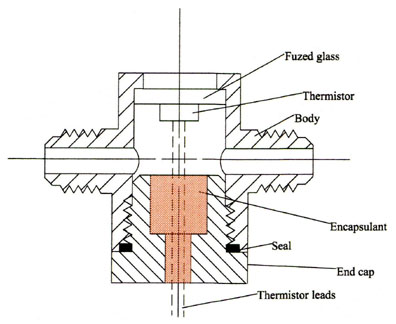
Figure 6. Special sight glass assembly with sensor for liquid level.


How The Basic Device Works

The charging tool, as noted above, is generally used by attaching it to a standard sight glass. The other end is attached to the high-pressure fitting on the charging manifold. The valve is tightly closed, and a hose is attached from the sight glass inlet to the system high-pressure fitting. A quick disconnect fitting is recommended.

The other hoses are hooked up in the usual manner, and purged with refrigerant to remove air. The high-pressure manifold fitting is loosened and purged for a few seconds.

After all the hoses have been hooked up, the tech starts the compressor, opens the low-pressure manifold valve, and slightly opens the high-pressure valve. The sight glass is held in the horizontal position, for easy viewing.

If the unit is low on refrigerant, the line to the sight glass will quickly warm. After a short time period, charging is started, liquid begins to appear in the sight glass, and the liquid level will continue to rise. Normally, a few gas bubbles appear, but as charging proceeds, the sight glass fills up. Once it is completely full of liquid, the system is properly charged.

If the proposed modification on the coil is in place, correct subcooling will be a simple matter, by hooking the gauge to the subcooling loop. If the coil is not modified, the charging tool will give results equal to a sight glass. If no sight glass is installed, the use of this tool will ensure proper refrigerant level. This is especially critical on small deli cases, salad bars, beer coolers, etc.

John T. Eschbaugh, P.E., inventor of the refrigerant charging device, is a 40-year veteran of the HVACR industry. He has worked for a major refrigeration equipment manufacturer and a valves and controls manufacturer, as well as his own A/C and refrigeration service business. For more information, call 440-729-4069 or e-mail pushpull@excite.com.

Publication date: 06/28/2004

Share This Story

Looking for a reprint of this article?
From high-res PDFs to custom plaques, order your copy today!


Recommended Content

JOIN TODAY
To unlock your recommendations.

Already have an account? Sign In

  • HVAC-enrollment

    The Trades Are Back: HVACR Programs See Nearly 30% Enrollment Spike

    A new wave of future technicians is entering the pipeline.  
    Training and Education
    By: Matt Jachman
  • 2025 Top 40 Under 40

    2025 Top 40 Under 40 HVACR Professionals List

    The 11th annual Top 40 Under 40 list highlights those...
    HVAC Residential Market
    By: Hannah Belloli-Oster
  • LG Ductless Mini-Split Systems

    The 9 Types of Heat Pumps

    As the U.S. moves toward electrification, heat pumps are...
    News
    By: Joanna R. Turpin
Subscription Center
  • Create an Account
  • Start a Subscription
  • Manage My Account
  • Sign Up for Newsletters
  • Visit Customer Service
  • Update Preferences

More Videos

Sponsored Content

Sponsored Content is a special paid section where industry companies provide high quality, objective, non-commercial content around topics of interest to The News audience. All Sponsored Content is supplied by the advertising company and any opinions expressed in this article are those of the author and not necessarily reflect the views of The News or its parent company, BNP Media. Interested in participating in our Sponsored Content section? Contact your local rep!

close
  • Piggy Bank
    Sponsored byWatercress Financial

    Energy Prices, Inflation, and HVAC: What Today’s Homeowners Care About

  • Refrigerated Food
    Sponsored bySolstice Advanced Materials

    R-455A Refrigeration: A Cold Storage Solution for the Future

  • Airex Rooftop Units
    Sponsored byAirex Manufacturing Inc

    Consolidating Roof Penetrations: A Growing Trend in Multifamily HVAC Design

Popular Stories

Outdoor-condensing-units.jpg

EPA Removes R-410A Installation Deadline

Trump-Section-232.jpg

Trump Reduces Section 232 Tariffs on HVAC Equipment to 15%

cooling-habits.jpg

50 Percent of Americans Have Skipped HVAC Maintenance

ACHR NEWS Editor Chris Gray Presenting HVAC Minute 5-18-2026

HVAC Manufacturers Fight Pricing Lawsuits

tim-brooks.jpeg

2026’s Best Distributor Partners With Customers

View The ACHR NEWS
Centennial Anniversary Timeline

The ACHR News Timeline Chart
Submit a Letter
Submit a letter to our editors.

Events

November 6, 2025

Next-Gen Data Center Cooling: HVAC Innovation and Real-World Solutions

On Demand As AI workloads and high-density computing push traditional cooling methods to their limits, the data center industry is accelerating the adoption of next-generation HVAC technologies.

June 9, 2026

Before You Go All In on AI: Set Up Your Business to Actually Win

In this webinar, we'll walk you through exactly what to get in place before you add AI to your business. You'll leave with a clear picture of where you stand today and a practical action plan to set yourself up for real results.

View All Submit An Event

Poll

EPA Decision

Are you happy the EPA decided contractors can continue to install R-410A equipment?
View Results Poll Archive

Products

BNI Mechanical/Electrical Square Foot Costbook, 2026 Edition

BNI Mechanical/Electrical Square Foot Costbook, 2026 Edition

See More Products
A2L Refrigerants - Free Webinar - May 21, 2026

Related Articles

  • Ice Breaker: System Charging for Flooded Condensers

    See More
  • Monday, Jan. 26, 2009: UEi Combustion Meter Provides More Precise Testing

    See More
  • Airgas Refrigerants

    Aspen is the New Airgas Refrigerants, Providing More Service to its Customers

    See More

Related Products

See More Products
  • Converting Phone Calls Into More Sales - DVD

  • Uncomplicating The Heat Pump: Electrical System Troubleshooting DVD

  • Training-System-2017.jpg

    Customer Service Training System by Steve Coscia

See More Products

Events

View AllSubmit An Event
  • April 14, 2026

    Inside HVAC Lending: What Contractors Need to Know to Close More Sales

    On Demand From this webinar, attendees will learn how to use financing as a strategic sales tool for growth in a repair market. 
  • June 10, 2025

    HVAC and Plumbing Marketing 101: How to Stand Out, Get Hired, and Get More Jobs

    On Demand It’s not enough to just get more leads. You need to get more of your ideal customers. And this webinar will show you how.
View AllSubmit An Event

Related Directories

  • Ambrose Precision Environments

    American made Air Conditioning for DOAS, IAQ, Comfort cooling, Data Center and Critical Systems Environmental Control. Custom and stock, horizontal and vertical, packaged or split air conditioning and more.
  • Iowa Precision

    Iowa Precision is the worldwide leader in custom designed and manufactured automated HVAC coil processing systems, as well as duct fabrication systems, seam closers, round fitting solutions, and corner inserts.
×

Sign Up. Stay Informed.

The #1 trusted source for the HVACR industry since 1926

SUBSCRIBE
  • RESOURCES
    • Advertise
    • Contact Us
    • Advisory Board
    • Classifieds
    • Submit a Letter
    • Directories
    • Store
  • ACCOUNT CENTER
    • Create an Account
    • Start a Subscription
    • Manage My Account
    • Sign Up for Newsletters
    • Visit Customer Service
    • Update Preferences
  • SERVICES
    • Marketing Services
    • Reprints
    • Market Research
    • List Rental
    • Survey/Respondent Access
  • STAY CONNECTED
    • LinkedIn
    • Facebook
    • Instagram
    • YouTube
    • X (Twitter)
  • PRIVACY
    • PRIVACY POLICY
    • TERMS & CONDITIONS
    • DO NOT SELL MY PERSONAL INFORMATION
    • PRIVACY REQUEST
    • ACCESSIBILITY

Copyright ©2026. All Rights Reserved BNP Media, Inc. and BNP Media II, LLC.

Design, CMS, Hosting & Web Development :: ePublishing