ACHR News
search
Ask ACHR NEWS AI
cart
facebook twitter instagram linkedin youtube
  • Sign In
  • Subscribe
  • Sign Out
  • My Account
ACHR News
  • NEWS
    • Breaking News
    • New HVAC Products
    • Featured Products
    • Manufacturer Reports
    • HVAC Data
    • Legislation
    • ACHR NEWS Centennial
  • RESIDENTIAL
    • Air Conditioners
    • Furnaces
    • Residential Heat Pumps
    • Ductless
    • Residential IAQ
    • Testing, Monitoring, Tools
    • Components & Accessories
  • COMMERCIAL
    • Air Handlers
    • Rooftop Units
    • Chillers and Cooling Towers
    • Commercial Heat Pumps
    • Boilers and Hydronics
    • VRF/Ductless
    • Commercial IAQ
  • REFRIGERATION
    • Refrigerants
    • Refrigerant Regulations
    • Leak Management
  • CONTRACTOR PRO
    • Geothermal
    • Homeowner Study
    • VRF and VRV Ductless
    • Unitary Trends
  • EDUCATION
    • Training and Education
    • Business Management
    • Service and Maintenance
    • Continuing Education
    • Market Research >
      • HVAC Brand Awareness Report
      • VRV, VRF, VRVZ Report
      • Unitary Trends Report
      • Water Heat Professionals Report
    • Webinars
    • Sponsor Insights
    • eProducts Info
    • White Papers
  • EVENTS
    • HVAC Contractor Forum
    • Industry Events and Webinars
  • MEDIA
    • Videos
    • AHR Expo 2025 Videos
    • Podcasts >
      • ACHR News Podcast
      • HARDI Podcasts
      • AHR Expo Podcasts
      • ACCA Podcasts
    • Interactive Spotlights
    • Quizzes
    • eBooks
    • HVAC Talkback
  • HVAC GROUP
    • ACHR NEWS >
      • Current Issue
      • Digital Edition
      • Subscribe
    • Distribution Trends
    • SNIPS NEWS >
      • Join SNIPS NEWS
    • Engineered Systems News >
      • Join ES News
    • HVACR Directory
    • Contests
    • Newsletters
    • Contact
    • Advertise
    • My Account

Duct Losses Reach Epidemic Levels

By Barbara A. Checket-Hanks
February 26, 2004
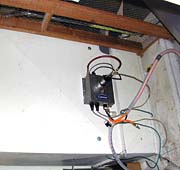
Airflow testing is more commonly performed in commercial-industrial buildings, but is seldom done in homes, where IAQ can in fact be much worse. (Photo courtesy of Carrier Aeroseal.)
Recent reports have estimated that, on average, 90 percent of all residential duct systems have significant loss of airflow. Losses are caused by system leaks, such as poor seals and damage to sheet metal or ductboard ductwork, and damage and restrictions found in flex duct systems.

The ramifications in terms of wasted energy and system performance are staggering. The opportunities for HVAC contractors are huge, according to Mark Modera, Ph.D., P.E., who spoke at the 2004 Winter Meeting of the American Society of Heating, Refrigerating, and Air-Conditioning Engineers (ASHRAE).

When Modera addressed homeowners at the 2004 ASHRAE Public Session, he said, "Most of what you have heard is, there's a box, and there's a building. What about the ducts?"

"Do your ducts leak?" asked Modera, who is with Carrier Aeroseal in Piedmont, Calif. "The typical attic or crawl space duct system leaks 30 to 35 percent in the Sunbelt," he said. This particularly affects comfort on the hottest days. The energy savings potential runs from 15 percent to 35 percent, Modera estimated.

Forty percent to 60 percent of typical basement ducts leak, he continued, and there is more return than supply leakage; specifically, there is more leakage in panned-joist returns. This results in uneven cooling and heating, with an energy savings potential of 10 percent, Modera said.

All together, Modera estimated that in the Sunbelt (the Southeast and Southwest), 85 percent of the primarily flex duct or ductboard ductwork leaks. In the Frost Belt (upper Midwest and New England states), 100 percent of the primarily sheet metal ductwork leaks, according to Modera.

Problems with duct leakage often stem from poor installations practices. This leak may as well have the customer’s money, comfort, and goodwill pouring out of it.

Opportunities

Duct leakage and its efficiency ramifications are nothing new to contractors like Fred Seed, president of Arizona Air Balance Co., Tempe, Ariz. He has been involved in air testing and balancing since 1977, and has owned this company since 1987. "We sometimes test for $10 [million] to $15 million homes," he said. The company's services are priced for the commercial-industrial market.

"The gist of our work is extensive field measurements," he said. "Not many homeowners are willing to pay $500 to $600 for the report alone."

Does that mean the opportunity isn't there for residential airflow testing and balancing? By no means, implied Seed; it just means his company doesn't target that sector, except as part of the specs for those multimillion-dollar homes - and sometimes to provide empirical evidence in lawsuits involving tract homes.

There are similarities between commercial and residential airflow problems, he pointed out. The problems involving ductwork often result from poor installation practices. "Duct joints are not sealed properly," he pointed out, primarily due to the way it's sealed, more than the product being used. "It's more application than material," he said. Sealant may not be applied thick enough, or not thoroughly enough - if it's applied at all. "This is primarily what we would see in [the tract] homes," Seed said.

This agrees with findings of the Florida Solar Energy Center (FSEC) study, "Achieving Airtight Ducts in Manufactured Housing." The report cited these areas as the most common for airflow losses:
  • Leaky supply and return plenums.

  • Misalignment of components.

  • Free-hand cutting of holes in ductboard and sheet metal.

  • Insufficient connection area at joints.

  • Mastic applied to dirty surfaces.

  • Insufficient mastic coverage.

  • Mastic applied to some joints and not others.

  • Loose strapping on flex-duct connections.

  • Incomplete tabbing of fittings.

  • Improperly applied tape.

    Carrier Aeroseal’s duct-sealing technology can help seal holes up to 3/8 inches wide, after larger duct breaches have been repaired.

    Recommendations

    The study made the following duct system recommendations:

  • Achieve duct tightness by properly applying tapes and sealing joints with mastic.

  • Accurately cut holes for duct connections.

  • Fully bend all tabs on collar and boot connections.

  • Trim and tighten zip ties with a strapping tool.

  • Provide return air pathways from bedrooms to main living areas.

    Of course, these tasks are less costly to perform before the house is completed. However, they are not impossible to achieve in retrofit situations. Because of this, the California Energy Commission is mandating airflow measurement and repair as one of its energy options for all residential retrofits in Title 24, which will go into effect in January 2005.

    Why is it being mandated? So it will be done, Modera said. It's one thing to say, "You should seal your ducts," he said. "That's nice. You should also call your mother." If it's still true that California leads the country in environmental regulations, look for this one to spread.

    In manufactured houses, at least, "Duct tightness goals can be achieved with minimal added cost," the study concludes. "Reported costs range from $4 to $8 [per house]. These costs include in-plant quality control procedures critical to meeting duct tightness goals."

    This brings up the issue of quality control during construction and during a retrofit.

    Checks And Balances

    Besides the obvious differences in system complexities, the main difference between commercial and residential airflow testing is when it takes place. Most testing services Seed performs in commercial-industrial projects take place before the building is handed over to the owners, at the commissioning phase. Most residential buildings are not commissioned at all - except, perhaps, for those very expensive ones.

    "Effective design for leakage means testing for leakage," Modera said. In California, one study found energy savings increased 15 percent with duct system testing. Without testing - when it was assumed that people had learned what to do - there was only a savings of 4 percent, Modera said.

    "You can't fix what you don't measure," stated Modera. "Most duct systems leak."

    John Proctor, P.E., is the principal of Proctor Engineering Group in San Rafael, Calif. "Residential and small commercial air conditioning rated efficiencies aren't automatic," he said at the ASHRAE Public Session. In order for homeowners to get the efficiency their unit was designed to produce, they need to be installed by quality contractors.

    Will all contractors be the best? No, he said. Will better-quality contractors cost more? Yes, because they need to maintain a higher profit margin and hire better-quality technicians.

    Proctor pointed out that in one study of residential air conditioning systems, 95 percent of them had failures in duct efficiencies (leakage), airflow (typically low), and refrigerant charge.

    Out of 55,462 field tests, low airflow was a widespread problem. "Efficiency is affected by low airflow," he pointed out. It can reduce furnace efficiency and cause premature heat exchanger and compressor failures.

    Commercial rooftop units had low airflow 63 percent of the time, he added.

    "Quality assurance is really important," Proctor said. It can range from the technician having a jobsite checklist, to having someone in the office check the technician's measurements, to having a third party check the measurements over the phone.

    "Variable-speed equipment is capable of going down to very low airflow rates," said airflow-testing contractor Seed. "Any air distribution problem is aggravated when the variable-speed system goes into low-airflow operation. For instance, if the home already has hot spots and cold spots, those problems are exacerbated by low-airflow problems. Other potential problems made worse include insufficient fresh air intake and excess humidity, depending on the climate."

    So, when does it make sense for a residential customer to have leaky ducts repaired? It depends on many factors, including the customer's priorities and living conditions, according to Seed. "Residences have the worst IAQ of any building," he said, due to careless cleaning, extreme amounts of cleaning, cooking fumes, pets, smoking, and relying on open doors and windows for fresh air.

    Poor airflow can directly affect comfort levels and energy efficiency, and can indirectly affect occupant health and medical bills.

    "Thorough testing and balancing will define duct-leakage problems, amount of fresh air intake, control, unit capacity, and IAQ, excluding mold," he said.

    Yes, there are opportunities for contractors in the residential market, Seed confirmed. Contractors looking for more information may want to contact the Associated Air Balance Council (www.aabchq.com), a nonprofit association of independent test and balance agencies.

    Publication date: 03/01/2004

  • Looking for quick answers on air conditioning, heating and refrigeration topics? Try Ask ACHR NEWS, our new smart AI search tool. Ask ACHR NEWS →

    Share This Story

    Looking for a reprint of this article?
    From high-res PDFs to custom plaques, order your copy today!


    Barbara Checket-Hanks is Service & Maintenance Editor. E-mail her at barbarachecket-hanks@achrnews.com.

    Recommended Content

    JOIN TODAY
    To unlock your recommendations.

    Already have an account? Sign In

    • HVAC-enrollment

      The Trades Are Back: HVACR Programs See Nearly 30% Enrollment Spike

      A new wave of future technicians is entering the pipeline.  
      News
      By: Matt Jachman
    • 2025 Top 40 Under 40

      2025 Top 40 Under 40 HVACR Professionals List

      The 11th annual Top 40 Under 40 list highlights those...
      News
      By: Hannah Belloli-Oster
    • LG Ductless Mini-Split Systems

      The 9 Types of Heat Pumps

      As the U.S. moves toward electrification, heat pumps are...
      News
      By: Joanna R. Turpin
    Subscription Center
    • Create an Account
    • Start a Subscription
    • Manage My Account
    • Sign Up for Newsletters
    • Visit Customer Service
    • Update Preferences

    More Videos

    Sponsored Content

    Sponsored Content is a special paid section where industry companies provide high quality, objective, non-commercial content around topics of interest to The News audience. All Sponsored Content is supplied by the advertising company and any opinions expressed in this article are those of the author and not necessarily reflect the views of The News or its parent company, BNP Media. Interested in participating in our Sponsored Content section? Contact your local rep!

    close
    • Piggy Bank
      Sponsored byWatercress Financial

      Energy Prices, Inflation, and HVAC: What Today’s Homeowners Care About

    • Refrigerated Food
      Sponsored bySolstice Advanced Materials

      R-455A Refrigeration: A Cold Storage Solution for the Future

    • Airex Rooftop Units
      Sponsored byAirex Manufacturing Inc

      Consolidating Roof Penetrations: A Growing Trend in Multifamily HVAC Design

    Popular Stories

    HVAC-Price-Increase-graphic

    HVAC Price Increase List: June 2026

    Refrigerants-and-gauge.jpg

    HVAC Industry Warns of Counterfeit Refrigerants Entering U.S. Supply Chain

    U.S. Supreme Court building

    95% Furnace Efficiency Rule to Get New Hearing

    Midea-training.jpg

    HVAC Workforce Crisis Expands Beyond Technicians to Instructor Shortages

    Data_Center_facility.jpg

    HVAC Manufacturers Respond to Growing Data Center Backlash

    View The ACHR NEWS
    Centennial Anniversary Timeline

    The ACHR News Timeline Chart
    Submit a Letter
    Submit a letter to our editors.

    Events

    November 6, 2025

    Next-Gen Data Center Cooling: HVAC Innovation and Real-World Solutions

    On Demand As AI workloads and high-density computing push traditional cooling methods to their limits, the data center industry is accelerating the adoption of next-generation HVAC technologies.

    June 23, 2026

    HVAC Duct Sealing Mastics: Why Selection Matters

    In this webinar we will detail what HVAC material buyers and technicians need to know when selecting duct mastics, including matching mastic to substrate, alternatives to liquid mastic, and where UL 181 Listings fit into real world installations.

    View All Submit An Event

    Poll

    Summer Staff

    Are you fully staffed for the summer season?
    View Results Poll Archive

    Products

    BNI Mechanical/Electrical Square Foot Costbook, 2026 Edition

    BNI Mechanical/Electrical Square Foot Costbook, 2026 Edition

    See More Products
    HVAC Duct Sealing Mastics: Why Selection Matters - Free Webinar - 6/23/2026

    Related Articles

    • Leo's Tech Help: Ventilation And Air Losses In Duct

      See More
    • Taking IAQ to New Levels

      See More
    • VFDs Reach Their Full Potential at University

      See More

    Related Products

    See More Products
    • DUCT DESIGN.gif

      HVAC Systems Duct Design

    • Manual Q.jpg

      Manual Q - Low Pressure, Low Velocity Duct System Design

    • 1966.gif

      HVAC Duct Construction Standards - Metal and Flexible

    See More Products

    Events

    View AllSubmit An Event
    • June 23, 2026

      HVAC Duct Sealing Mastics: Why Selection Matters

      In this webinar we will detail what HVAC material buyers and technicians need to know when selecting duct mastics, including matching mastic to substrate, alternatives to liquid mastic, and where UL 181 Listings fit into real world installations.
    View AllSubmit An Event

    Related Directories

    • Gustafson Duct

      Gustafson is a leading spiral duct and fitting manufacturer that markets to wholesalers and dealers. The company offers conventional air duct systems, as well as self-sealing and high velocity HVAC duct systems.
    • EHG Duct

      EHG is a spiral duct and fitting manufacturer with representatives across the country. In addition to our superior G-3 gasketed duct system, EHG offers project management, special packaging, racking, online submittals and much more.
    ×

    Sign Up. Stay Informed.

    The #1 trusted source for the HVACR industry since 1926

    SUBSCRIBE
    • RESOURCES
      • Advertise
      • Contact Us
      • Advisory Board
      • Classifieds
      • Submit a Letter
      • Directories
      • Store
    • ACCOUNT CENTER
      • Create an Account
      • Start a Subscription
      • Manage My Account
      • Sign Up for Newsletters
      • Visit Customer Service
      • Update Preferences
    • SERVICES
      • Marketing Services
      • Reprints
      • Market Research
      • List Rental
      • Survey/Respondent Access
    • STAY CONNECTED
      • LinkedIn
      • Facebook
      • Instagram
      • YouTube
      • X (Twitter)
    • PRIVACY
      • PRIVACY POLICY
      • TERMS & CONDITIONS
      • DO NOT SELL MY PERSONAL INFORMATION
      • PRIVACY REQUEST
      • ACCESSIBILITY

    Copyright ©2026. All Rights Reserved BNP Media, Inc. and BNP Media II, LLC.

    Design, CMS, Hosting & Web Development :: ePublishing