ACHR News
search
Ask ACHR NEWS AI
cart
facebook twitter instagram linkedin youtube
  • Sign In
  • Subscribe
  • Sign Out
  • My Account
ACHR News
  • NEWS
    • Breaking News
    • New HVAC Products
    • Featured Products
    • Manufacturer Reports
    • HVAC Data
    • Legislation
    • ACHR NEWS Centennial
  • RESIDENTIAL
    • Air Conditioners
    • Furnaces
    • Residential Heat Pumps
    • Ductless
    • Residential IAQ
    • Testing, Monitoring, Tools
    • Components & Accessories
  • COMMERCIAL
    • Air Handlers
    • Rooftop Units
    • Chillers and Cooling Towers
    • Commercial Heat Pumps
    • Boilers and Hydronics
    • VRF/Ductless
    • Commercial IAQ
  • REFRIGERATION
    • Refrigerants
    • Refrigerant Regulations
    • Leak Management
  • CONTRACTOR PRO
    • Geothermal
    • Homeowner Study
    • VRF and VRV Ductless
    • Unitary Trends
  • EDUCATION
    • Training and Education
    • Business Management
    • Service and Maintenance
    • Continuing Education
    • Market Research >
      • HVAC Brand Awareness Report
      • VRV, VRF, VRVZ Report
      • Unitary Trends Report
      • Water Heat Professionals Report
    • Webinars
    • Sponsor Insights
    • eProducts Info
    • White Papers
  • EVENTS
    • HVAC Contractor Forum
    • Industry Events and Webinars
  • MEDIA
    • Videos
    • AHR Expo 2025 Videos
    • Podcasts >
      • ACHR News Podcast
      • HARDI Podcasts
      • AHR Expo Podcasts
      • ACCA Podcasts
    • Interactive Spotlights
    • Quizzes
    • eBooks
    • HVAC Talkback
  • HVAC GROUP
    • ACHR NEWS >
      • Current Issue
      • Digital Edition
      • Subscribe
    • Distribution Trends
    • SNIPS NEWS >
      • Join SNIPS NEWS
    • Engineered Systems News >
      • Join ES News
    • HVACR Directory
    • Contests
    • Newsletters
    • Contact
    • Advertise
    • My Account

Monitoring Carbon Monoxide Awareness

By James J. Siegel
March 7, 2002
Since 1994, Bacharach has offered training courses on the testing procedures of its products. This includes testing for carbon monoxide (CO), combustion analysis, and building pressures. The courses, which are offered in more than 70 cities a year, aim to provide contractors and technicians with the information they need to perform these important tests.

Besides providing technical information, the training focuses on increasing awareness of such testing and why it is important for the contractor and the consumer.

Bob Dwyer started developing the Bacharach courses eight years ago. He says many service technicians in the industry overlook these simple testing procedures. He also states that, on the other hand, “Thousands of technicians in North America do not overlook these important tests and perform them routinely.”
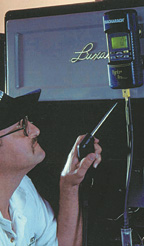
Bacharach's seminars train contractors on how to accurately perform carbon monoxide detection and combustion analysis.

CO TESTING

The Bacharach program begins with a discussion on CO — what it is, how it is generated, and why it is harmful. From there, Dwyer encourages participants to make CO detection a part of every routine furnace checkup. In fact, it should be “one of the first things you check when you enter any building or mechanical room,” says Dwyer.

This is especially true for furnace inspections that must be done in confined places. “It should be a number-one criteria,” says Dwyer, “to make sure this is a safe place [for the tech] to be in.” Because CO cannot be detected through any of the five senses, it is important for a service tech to use a CO detector before working on the furnace.

Dwyer tells his students it also is important to check the level of CO again before they leave, after they have completed their service, to ensure that the home is safe for its residents. Dwyer also recommends that the technician leave a consumer brochure on CO health effects, and to recommend the use of CO alarm/detectors.

Dwyer also says the technician must inform the homeowner that s/he limited the CO testing to the furnace if that is all they tested. If CO is measured in the living space and testing verifies it did not come from the furnace, the technician must decide if he wants to test all the combustion sources in the building, or refer it to someone who will complete the testing.

If high levels are found while testing, it is the job of the technician to find out if this is due to a problem with the furnace or if it is generated from another source. According to Dwyer, one of the major causes of CO poisoning is automobile exhaust. A home can have traces of CO if it has an attached garage and the homeowner frequently warms up the vehicle while it is in the garage.

Another source of CO can be from unvented or poorly installed gas and oil appliances. It can also be produced from improperly sized or installed vent systems.

COMBUSTION ANALYSIS

The premise of testing combustion is to make sure that the furnace is working up to the standards that the manufacturer claims. Dwyer explains that although furnaces have a rated efficiency, they must still be tested in the field to determine if this efficiency is correct.

If a new system is not tested at installation, it is guesswork; this testing includes fuel pressures, stack draft, temperature rise, and static pressure.

Looking for quick answers on air conditioning, heating and refrigeration topics? Try Ask ACHR NEWS, our new smart AI search tool. Ask ACHR NEWS →

Combustion efficiency is determined by how well heating equipment is converting a specific fuel into useable heat energy during a period of system operation. Using the proper test instruments, a technician can determine the efficiency at which the furnace is actually working. This is an important test because improper combustion can lead to the generation of CO, inefficient operation, or overheating.

Dwyer explains that it comes down to simple chemistry. If there is too much or too little fuel mixed with the combustion or primary air, this can result in CO production. If the system is operating hotter than necessary, this can also create problems.

Overheating can cause damage within the system, or it can cause objects near the system to catch fire. And, it can cause the system to cycle on the limit or safety.

Bacharach’s course teaches techs how to check system efficiency by using test instruments to measure flue gases for content and temperature. It also teaches how to measure stack temperature and draft. This allows the technician to determine if there is a correct amount of air and fuel to create the energy for operation. It will enable the technician to determine how much heating value the equipment is losing, therefore determining efficiency.

Dwyer says the proper location to measure flue gases is before the introduction of dilution air, through a draft hood or barometric control. If systems do not have access to this undiluted air, an access will have to be made by drilling a hole in the vent connector and sealing it after testing with a high-temperature silicon product. If the oxygen measurement changes dramatically when an air handler comes on (in forced-air systems), there is likely a crack in the heat exchanger.

MAKE IT A HABIT

These applications are not time consuming, but, according to Dwyer, a great number of companies do not measure combustion products or CO. There are a few reasons why.

“Some technicians only use it when they think there is a problem,” said Dwyer. “But you don’t know there is a problem unless you test. Customers assume technicians provide accuracy, not guesswork.”

For those who do not test at all, it comes down to ignorance or lack of education on proper testing procedures. That is why Bacharach is making it a mission to reach as many hvacr contractors, manufacturers, fuel companies, and others in the business as possible.

The message is not only to keep contractors physically healthy, but financially healthy as well.

Dwyer says many companies also can avoid litigation if they properly check for CO. It also provides verifiable accuracy for the customer. It can even help out a contractor’s reputation.

“Many are on the threshold of litigation and don’t know it,” says Dwyer.

He explains that if a technician provides a service tune-up and says the system is OK, he needs to make sure that it is backed up with documentation. The homeowner could have another technician come in who tests and measures the performance of the system, only to find out that combustion and CO measurements have not been done.

“If you don’t test, you don’t know,” says Dwyer.

To find out more about Bacharach’s training or to find more in-depth information on CO testing and combustion analysis, go to www.bacharach-training.com (website). You can also find information on upcoming seminars and how to attend.

Publication date: 03/11/2002

Share This Story

Looking for a reprint of this article?
From high-res PDFs to custom plaques, order your copy today!


Jay

James J Siegel is the associate editor of SNIPS magazine. He has been with the magazine for eight years and is based in San Francisco.

Recommended Content

JOIN TODAY
To unlock your recommendations.

Already have an account? Sign In

  • HVAC-enrollment

    The Trades Are Back: HVACR Programs See Nearly 30% Enrollment Spike

    A new wave of future technicians is entering the pipeline.  
    News
    By: Matt Jachman
  • 2025 Top 40 Under 40

    2025 Top 40 Under 40 HVACR Professionals List

    The 11th annual Top 40 Under 40 list highlights those...
    HVAC Light Commercial Market
    By: Hannah Belloli-Oster
  • LG Ductless Mini-Split Systems

    The 9 Types of Heat Pumps

    As the U.S. moves toward electrification, heat pumps are...
    HVAC Commercial Market
    By: Joanna R. Turpin
Subscription Center
  • Create an Account
  • Start a Subscription
  • Manage My Account
  • Sign Up for Newsletters
  • Visit Customer Service
  • Update Preferences

More Videos

Sponsored Content

Sponsored Content is a special paid section where industry companies provide high quality, objective, non-commercial content around topics of interest to The News audience. All Sponsored Content is supplied by the advertising company and any opinions expressed in this article are those of the author and not necessarily reflect the views of The News or its parent company, BNP Media. Interested in participating in our Sponsored Content section? Contact your local rep!

close
  • Piggy Bank
    Sponsored byWatercress Financial

    Energy Prices, Inflation, and HVAC: What Today’s Homeowners Care About

  • Refrigerated Food
    Sponsored bySolstice Advanced Materials

    R-455A Refrigeration: A Cold Storage Solution for the Future

  • Airex Rooftop Units
    Sponsored byAirex Manufacturing Inc

    Consolidating Roof Penetrations: A Growing Trend in Multifamily HVAC Design

Popular Stories

Lennox equipment

Platinum Equity to Sell Heat Controller to Lennox

HVAC-tech-van.jpg

Report: Only 65% of HVAC Technician Time is Billable Hours

HVAC Minute retail refrigeration system

EPA Final Rule’s Impact on R-410A Deadlines

Lovato-refrigerant-rooftop_AC_Units_.jpg

When Refrigerants Change, So Do the Contactors

Dealer_Couple2_Kitchen_Estimate.jpg

Predicting the Next Service Call

View The ACHR NEWS
Centennial Anniversary Timeline

The ACHR News Timeline Chart
Submit a Letter
Submit a letter to our editors.

Events

November 6, 2025

Next-Gen Data Center Cooling: HVAC Innovation and Real-World Solutions

On Demand As AI workloads and high-density computing push traditional cooling methods to their limits, the data center industry is accelerating the adoption of next-generation HVAC technologies.

July 28, 2026

How Top Home Services Companies Turn Every Conversation Into Predictable Revenue

In this webinar, we'll outline how top contractors are turning every conversation into predictable revenue by coaching every comfort advisor visit, not just the ones a manager rides along on.

View All Submit An Event

Poll

Summer Staff

Are you fully staffed for the summer season?
View Results Poll Archive

Products

BNI Mechanical/Electrical Square Foot Costbook, 2026 Edition

BNI Mechanical/Electrical Square Foot Costbook, 2026 Edition

See More Products
Designing Systems Using A2L Refrigerant - Free Webinar - 7/22/2026

Related Articles

  • GAMAzine: Leading the Way in Carbon Monoxide Awareness, Action

    See More
  • Raising Awareness About Carbon Monoxide

    See More
  • Bacharach Inc.: Carbon Monoxide Analyzer

    See More

Related Directories

  • TOXALERT International Inc.

    Carbon Monoxide (CO), Carbon Dioxide (CO2), NO2 and other toxic gases, combustible gas detectors, refrigerant leak monitors and Control panels. IAQ. BACnet. Integration. Design.
×

Sign Up. Stay Informed.

The #1 trusted source for the HVACR industry since 1926

SUBSCRIBE
  • RESOURCES
    • Advertise
    • Contact Us
    • Advisory Board
    • Classifieds
    • Submit a Letter
    • Directories
    • Store
  • ACCOUNT CENTER
    • Create an Account
    • Start a Subscription
    • Manage My Account
    • Sign Up for Newsletters
    • Visit Customer Service
    • Update Preferences
  • SERVICES
    • Marketing Services
    • Reprints
    • Market Research
    • List Rental
    • Survey/Respondent Access
  • STAY CONNECTED
    • LinkedIn
    • Facebook
    • Instagram
    • YouTube
    • X (Twitter)
  • PRIVACY
    • PRIVACY POLICY
    • TERMS & CONDITIONS
    • DO NOT SELL MY PERSONAL INFORMATION
    • PRIVACY REQUEST
    • ACCESSIBILITY

Copyright ©2026. All Rights Reserved BNP Media, Inc. and BNP Media II, LLC.

Design, CMS, Hosting & Web Development :: ePublishing