ACHR News
search
Ask ACHR NEWS AI
cart
facebook twitter instagram linkedin youtube
  • Sign In
  • Subscribe
  • Sign Out
  • My Account
ACHR News
  • NEWS
    • Breaking News
    • New HVAC Products
    • Featured Products
    • Manufacturer Reports
    • HVAC Data
    • Legislation
    • ACHR NEWS Centennial
  • RESIDENTIAL
    • Air Conditioners
    • Furnaces
    • Residential Heat Pumps
    • Ductless
    • Residential IAQ
    • Testing, Monitoring, Tools
    • Components & Accessories
  • COMMERCIAL
    • Air Handlers
    • Rooftop Units
    • Chillers and Cooling Towers
    • Commercial Heat Pumps
    • Boilers and Hydronics
    • VRF/Ductless
    • Commercial IAQ
  • REFRIGERATION
    • Refrigerants
    • Refrigerant Regulations
    • Leak Management
  • CONTRACTOR PRO
    • Geothermal
    • Homeowner Study
    • VRF and VRV Ductless
    • Unitary Trends
  • EDUCATION
    • Training and Education
    • Business Management
    • Service and Maintenance
    • Continuing Education
    • Market Research >
      • HVAC Brand Awareness Report
      • VRV, VRF, VRVZ Report
      • Unitary Trends Report
      • Water Heat Professionals Report
    • Webinars
    • Sponsor Insights
    • eProducts Info
    • White Papers
  • EVENTS
    • HVAC Contractor Forum
    • Industry Events and Webinars
  • MEDIA
    • Videos
    • AHR Expo 2025 Videos
    • Podcasts >
      • ACHR News Podcast
      • HARDI Podcasts
      • AHR Expo Podcasts
      • ACCA Podcasts
    • Interactive Spotlights
    • Quizzes
    • eBooks
    • HVAC Talkback
  • HVAC GROUP
    • ACHR NEWS >
      • Current Issue
      • Digital Edition
      • Subscribe
    • Distribution Trends
    • SNIPS NEWS >
      • Join SNIPS NEWS
    • Engineered Systems News >
      • Join ES News
    • HVACR Directory
    • Contests
    • Newsletters
    • Contact
    • Advertise
    • My Account

Online Answers for Boiler Breakdowns

February 2, 2001
WHEELING, IL — There are a number of possible causes for a boiler’s breakdown or less-than-optimum operation. Miura Boiler has introduced an online analytical software package in North America that incorporates many of the variables that could affect its boilers’ operations. The system provides remote monitoring to help keep boilers up and running.

If a boiler experiences a shut down, for example, the online software is capable of storing all data points it has received every second during the four seconds prior to the event. It saves this data for each of the last five shutdowns. At company headquarters, a master computer receives all of the data.

The information includes operational settings, operational history, and diagnostic information. It then configures this data to:

  • Create a snapshot of the boiler’s operation from four seconds prior to alarm;
  • Group-related settings and operational modes (as a doctor would group symptoms that are related to a specific diagnosis); and
  • Graph trends.
  • When a boiler goes down, any of 27 possible alarms or cautions is automatically transmitted to headquarters. Miura relays a summary of this information during normal working hours to the customer’s authorized service company. The service company is then armed with critical data to more quickly and efficiently isolate the problem and effect repairs, before a technician even goes to the site.

    All of its boilers with the XJ1 expanded enunciator can take advantage of the Miura Online Maintenance (MOM) system. Fee options are a yearly contract or per-use charge. The customer only needs to provide a dedicated telephone line. MOM can handle up to 37 boilers on a single line.


    What MOM Checks

    Though the system is capable of conveying real-time operating data on every connected boiler, at any time, this explanation will just address an event that triggers an alarm.

    An alarm always causes a shutdown. And one cause of boiler shutdown is low-water cutouts. Low-water cutouts can result from three different causes:

    1. The amount of total dissolved solids (TDS) in the water is too high.

    2. Steam is being pulled off the boiler faster than it’s being made.

    3. The feedwater pump is bad.

    To identify which of the three is causing the low-water cutout, MOM looks at the status of the low-water cutout probe in each of the four seconds before shutdown. It then selects reports on all operating data related to the cutouts.

    Looking for quick answers on air conditioning, heating and refrigeration topics? Try Ask ACHR NEWS, our new smart AI search tool. Ask ACHR NEWS →

    These reports are called “signatures.” They present the four seconds of each item as a bar graph. The graphs show the status of the steam pressure, flame signal, water levels, surface blowdown valve, feedwater pump, damper position, and conductivity sensor. The signature also shows the last four seconds’ measurements of the scale monitor, temperatures, etc.

    Next, the accumulated alarm histories are compared to the current alarm. Finally, MOM’s 31-day chart shows rates of change over the past month, such as if and how quickly the feedwater ratio was dropping.

    With the full picture of the boiler’s operating history and shutdown status, the manufacturer can isolate which of the three low-water cutout causes needs to be corrected.


    Analyzing the Signature

    In one application, a textile manufacturer was seeing its Miura boiler go down on low water every 20 minutes. The boiler was only two years old, so age wasn’t a factor. Miura recommended using MOM.

    The textile manufacturer installed a dedicated phone line, ran a phone cable from the control box (XJ1 expanded enunciator) to the jack, flipped the dipswitch, and there, revealed to MOM, was all the data accumulated in the XJ1 since the boiler was installed.

    In the snapshots that the XJ1 had of the boiler’s status in the four seconds before each of the previous five shutdowns, the system revealed that low-water cutouts were occurring because of high TDS.

    The signature was always the same for each low-water cutout, showing high TDS. Total dissolved solids were above 5,000 microsemens. It showed that the feedwater pump was running up until some of the shutdowns.

    It didn’t matter whether the boiler was in low fire or high fire, the signature showed that the boiler just shut down, sending an alarm. This set of events is indicative of a low-water cutout due to water treatment problems. In other words, total dissolved solids are too high.

    With the above information, the other two possible causes of low-water cutouts were eliminated.

    If the problem had been too much steam drawn off the boiler, the signature would have been different. TDS would be consistently below 4,000 microsemens. The “pump-on” and “pump-off” probes would have been dry. The boiler would be in high fire with the pressure dropping. The feedwater pump would be on, trying to keep up with steam demand, but it wouldn’t be able to, so the pressure would drop and the water, being pulled out of the water tubes, would cause low-water cutout.

    Then there is the final possible cause, which is a difficult one to identify. That is whether the feedwater pump capacity is dropping or not.

    This was checked out by looking at MOM’s 31-day chart. The feedwater ratio should be at 2:1 or higher at all times. This ratio indicates there is twice as much water going in as steam coming out. If this ratio keeps dropping, there is a problem with cavitation or a plugged strainer, and this will result in low-water cutout.

    So why was TDS so high and causing the low-water cutouts?

    Steam output goes down as the amount of TDS goes up, but the system still needs the same amount of steam, no matter what. So, it keeps trying to draw the steam so much that the water itself will start to lift off the boiler. TDS has to be limited in order to maintain a specified pressure.

    For example, in the range of 100 to 130 psi, you don’t want to have more than 4,000 microsemens of solids in the water. The only way to maintain that level is to take out a certain amount of solids through a blowdown.

    Blowdown rates are typically from 4% to 7% on a boiler. So at 10,000 lb of steam per hour, the user is blowing down (flushing out) 400 to 700 lb of water through the boiler’s water tubes, once an hour. The textile manufacturer had set the blowdown rate at 1%, and using only 1% of a boiler’s water wouldn’t flush enough solids out of the tubes.


    Simple Solution

    Mark Utzinger, manager of Miura’s U.S. operation, noted, “To show our customer that the blowdown rate was the cause of the low-water cutouts, we remotely set the blowdown rate at 10% (the maximum rate). We asked them to flush the whole boiler down. In other words, we had them stop the boiler, clean it completely out, and fill it back up. It stopped their low-water cutouts.

    “Then we backed off to 5% to see how good their system was, to see if their water was normal or not. Even at 5%, they were fine. You want the blowdown rate as low as possible because then you are blowing down less hot water. As a minimum, you want 4%. What the U.S. Department of Energy recommends is 4% to 7%.”

    The problem was solved.

    Publication date: 02/05/2001

    Share This Story

    Looking for a reprint of this article?
    From high-res PDFs to custom plaques, order your copy today!


    Recommended Content

    JOIN TODAY
    To unlock your recommendations.

    Already have an account? Sign In

    • HVAC-enrollment

      The Trades Are Back: HVACR Programs See Nearly 30% Enrollment Spike

      A new wave of future technicians is entering the pipeline.  
      News
      By: Matt Jachman
    • 2025 Top 40 Under 40

      2025 Top 40 Under 40 HVACR Professionals List

      The 11th annual Top 40 Under 40 list highlights those...
      HVAC Contracting
      By: Hannah Belloli-Oster
    • LG Ductless Mini-Split Systems

      The 9 Types of Heat Pumps

      As the U.S. moves toward electrification, heat pumps are...
      HVAC Residential Market
      By: Joanna R. Turpin
    Subscription Center
    • Create an Account
    • Start a Subscription
    • Manage My Account
    • Sign Up for Newsletters
    • Visit Customer Service
    • Update Preferences

    More Videos

    Sponsored Content

    Sponsored Content is a special paid section where industry companies provide high quality, objective, non-commercial content around topics of interest to The News audience. All Sponsored Content is supplied by the advertising company and any opinions expressed in this article are those of the author and not necessarily reflect the views of The News or its parent company, BNP Media. Interested in participating in our Sponsored Content section? Contact your local rep!

    close
    • Piggy Bank
      Sponsored byWatercress Financial

      Energy Prices, Inflation, and HVAC: What Today’s Homeowners Care About

    • Refrigerated Food
      Sponsored bySolstice Advanced Materials

      R-455A Refrigeration: A Cold Storage Solution for the Future

    • Airex Rooftop Units
      Sponsored byAirex Manufacturing Inc

      Consolidating Roof Penetrations: A Growing Trend in Multifamily HVAC Design

    Popular Stories

    HVAC-Price-Increase-graphic

    HVAC Price Increase List: June 2026

    Trump-Section-232.jpg

    Trump Reduces Section 232 Tariffs on HVAC Equipment to 15%

    R410A-Refrigerant-Cylinder.jpg

    Refrigerant Recovery is a Revenue Opportunity

    Heat-pump-cutaway.jpg

    PFAS Rules and A2L Building Codes Continue to Evolve

    Kroger.jpg

    Kroger to Spend $100 Million to Reduce Refrigerant Leaks

    View The ACHR NEWS
    Centennial Anniversary Timeline

    The ACHR News Timeline Chart
    Submit a Letter
    Submit a letter to our editors.

    Events

    November 6, 2025

    Next-Gen Data Center Cooling: HVAC Innovation and Real-World Solutions

    On Demand As AI workloads and high-density computing push traditional cooling methods to their limits, the data center industry is accelerating the adoption of next-generation HVAC technologies.

    June 9, 2026

    Before You Go All In on AI: Set Up Your Business to Actually Win

    In this webinar, we'll walk you through exactly what to get in place before you add AI to your business. You'll leave with a clear picture of where you stand today and a practical action plan to set yourself up for real results.

    View All Submit An Event

    Poll

    Summer Staff

    Are you fully staffed for the summer season?
    View Results Poll Archive

    Products

    BNI Mechanical/Electrical Square Foot Costbook, 2026 Edition

    BNI Mechanical/Electrical Square Foot Costbook, 2026 Edition

    See More Products
    A2L Refrigerants - Free Webinar - May 21, 2026

    Related Articles

    • July 17, 2009: New NATE Website Feature Provides Online Answers

      See More
    • NATE Provides Online Answers

      See More
    • Chilling Answers for a Variety of Customers

      See More

    Related Products

    See More Products
    • imageServlet.jpg

      Delmar Online Training Simulation: HVAC 4.0, 4 terms (24 months) Printed Access Card

    • 9781482253894.jpg

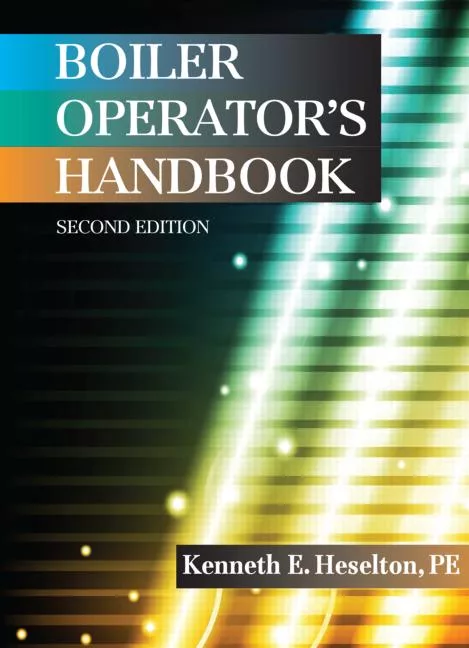
      Boiler Operator's Handbook, Second Edition

    • Lessons Learned in a Boiler Room: A common sense approach to servicing and installing commercial boilers

    See More Products

    Related Directories

    • Rite Boiler

      Rite manufactures and provides Low- and High-Pressure Steam Boilers, Hot Water Boilers, Blowdown Tanks, Boiler Feed System, Water Softeners, Chemical Feed Systems, and more.
    ×

    Sign Up. Stay Informed.

    The #1 trusted source for the HVACR industry since 1926

    SUBSCRIBE
    • RESOURCES
      • Advertise
      • Contact Us
      • Advisory Board
      • Classifieds
      • Submit a Letter
      • Directories
      • Store
    • ACCOUNT CENTER
      • Create an Account
      • Start a Subscription
      • Manage My Account
      • Sign Up for Newsletters
      • Visit Customer Service
      • Update Preferences
    • SERVICES
      • Marketing Services
      • Reprints
      • Market Research
      • List Rental
      • Survey/Respondent Access
    • STAY CONNECTED
      • LinkedIn
      • Facebook
      • Instagram
      • YouTube
      • X (Twitter)
    • PRIVACY
      • PRIVACY POLICY
      • TERMS & CONDITIONS
      • DO NOT SELL MY PERSONAL INFORMATION
      • PRIVACY REQUEST
      • ACCESSIBILITY

    Copyright ©2026. All Rights Reserved BNP Media, Inc. and BNP Media II, LLC.

    Design, CMS, Hosting & Web Development :: ePublishing